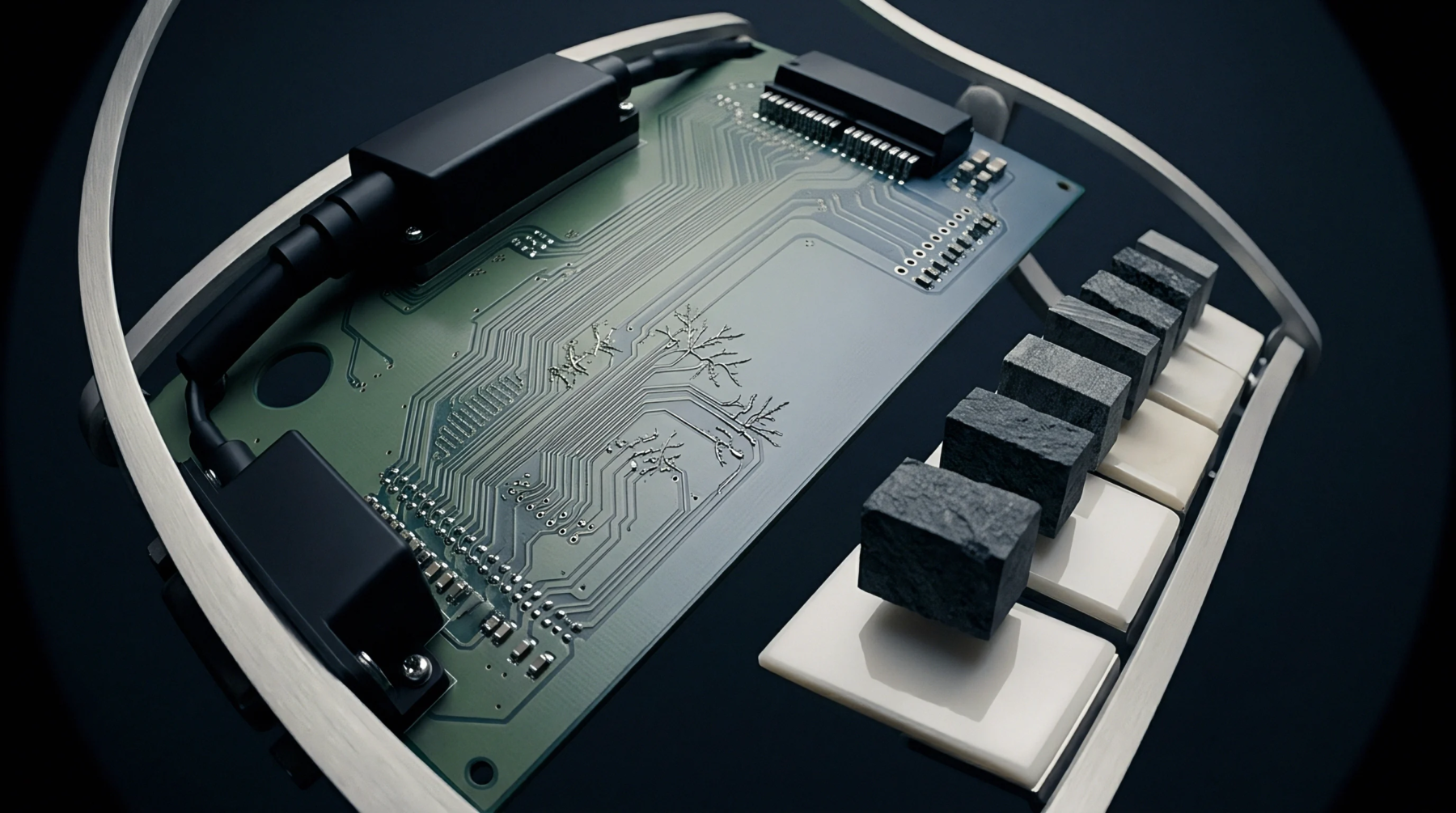
Thermal Variance
Divergence mapping calculates temperature differentials across printed circuit board assemblies during reflow soldering stages. Coefficient divergence isolates specific thermal gradients between ceramic components and organic substrates during surface mount technology processing. Mathematical models quantify this mechanical stress before automated optical inspection catches solder joint micro-fractures.
High local heat input expands heavier copper planes faster than surrounding laminate layers, generating shear forces along component terminations. Differential expansion rates between dissimilar materials trigger interfacial delamination if values exceed material elasticity limits.
Substrate Distortion
Mechanical warpage alters coplanarity across ball grid array packages during cooling cycles. Coefficient divergence tracks the physical displacement of pads relative to package balls during thermal contraction phases. SMT line supervisors monitor these deviations to prevent opens and bridging defects during paste printing operations.
Laser profilometers measure board bow and twist profiles before components enter the placement machine. Excessive warpage prevents proper paste transfer efficiency across fine pitch gull-wing leads. Thermal gradients generate uneven strain profiles across multi-layer circuit boards during high temperature processing.
Process Verification
Reflow profile optimization mitigates excessive mechanical stress during electronic hardware manufacturing. Coefficient divergence establishes acceptable limits for differential expansion rates within incoming raw laminate materials. Destructive physical analysis confirms joint integrity when thermal mismatch parameters approach critical thresholds.
Quality engineers adjust conveyor speeds and zone temperatures to minimize peak thermal gradients across densely populated circuit boards. Assembly reliability depends entirely on maintaining thermal equilibrium between attached components and underlying substrates.