Polymerization Rate
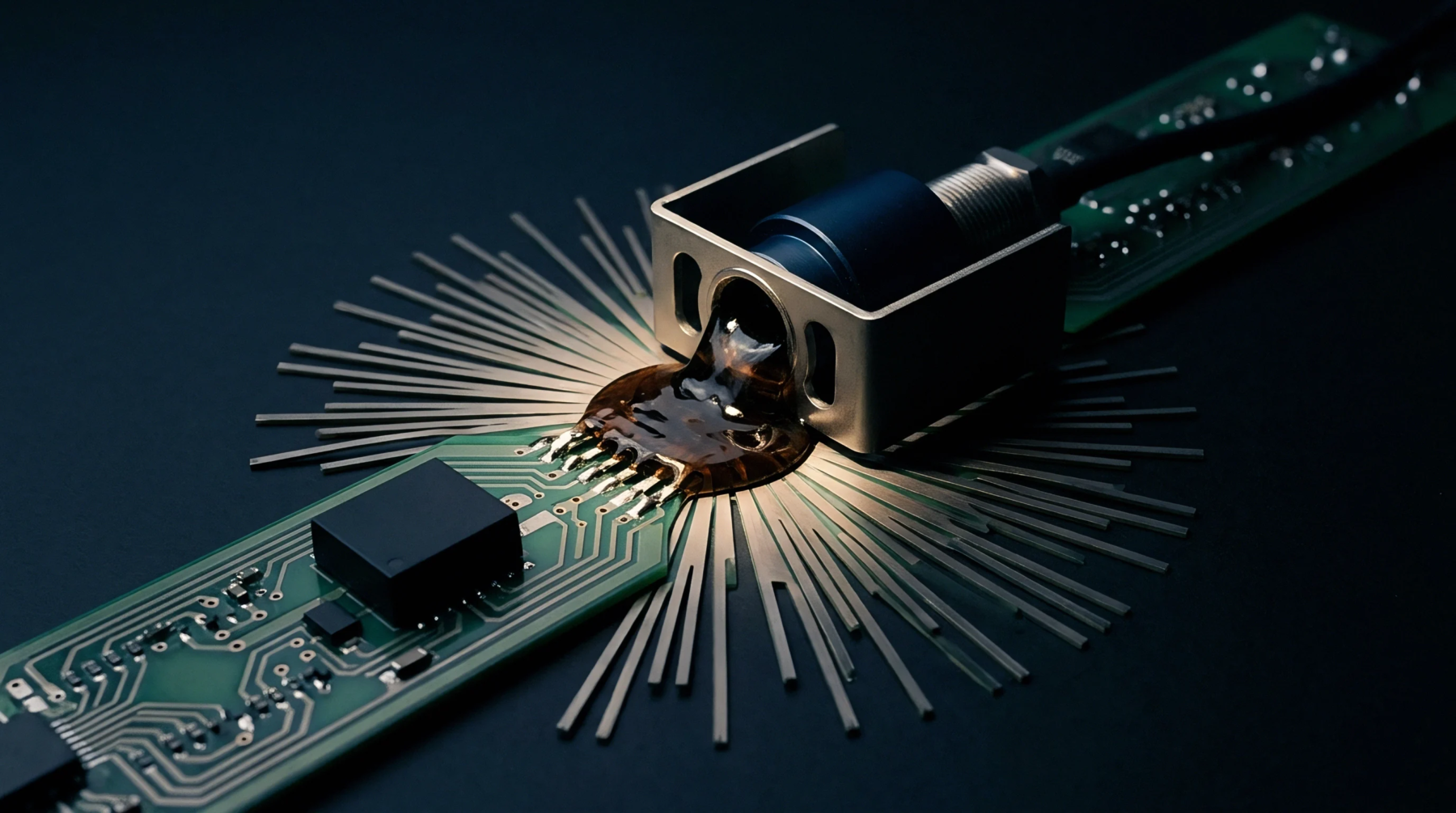
Curing speed governs how rapidly thermoset encapsulants solidify during thermal processing. Conversion kinetics describe the mathematical progression of chemical bond formation within epoxy molding compounds during printed circuit board encapsulation. Thermoset resins advance through liquid, gel, and solid states under specific thermal profiles.
Reaction rates depend directly upon activation energy thresholds and surrounding temperature gradients. Enthalpy release during crosslinking alters local thermal conditions within dense component arrays. Residual unsaturation degrades long-term mechanical reliability under operational thermal cycling.
Thermal Threshold
Glass transition temperatures dictate the boundary where structural integrity shifts from rigid to elastomeric behavior. Differential scanning calorimetry measures heat flow variations to establish reaction progress at specific time intervals. Isothermal testing isolates activation energies by holding tooling at predetermined temperature plateaus.
Reaction progression slows significantly as vitrification restricts molecular mobility within the polymer matrix. Accelerated thermal curing schedules risk generating internal voids through localized exothermic runaway conditions.
Yield Stress
Microscopic deformation resistance measures the mechanical robustness of hardened encapsulation barriers against thermal fatigue. Shear stress testing evaluates interfacial adhesion between cured resins and surrounding copper lead frames. Volumetric shrinkage during polymer conversion induces residual mechanical loads on delicate wire bonds.
Post-mold cooling rates determine final warpage characteristics across large area circuit board substrates. Environmental stress screening validates that completed assemblies withstand mechanical deflection without delamination.