Flow Resistance
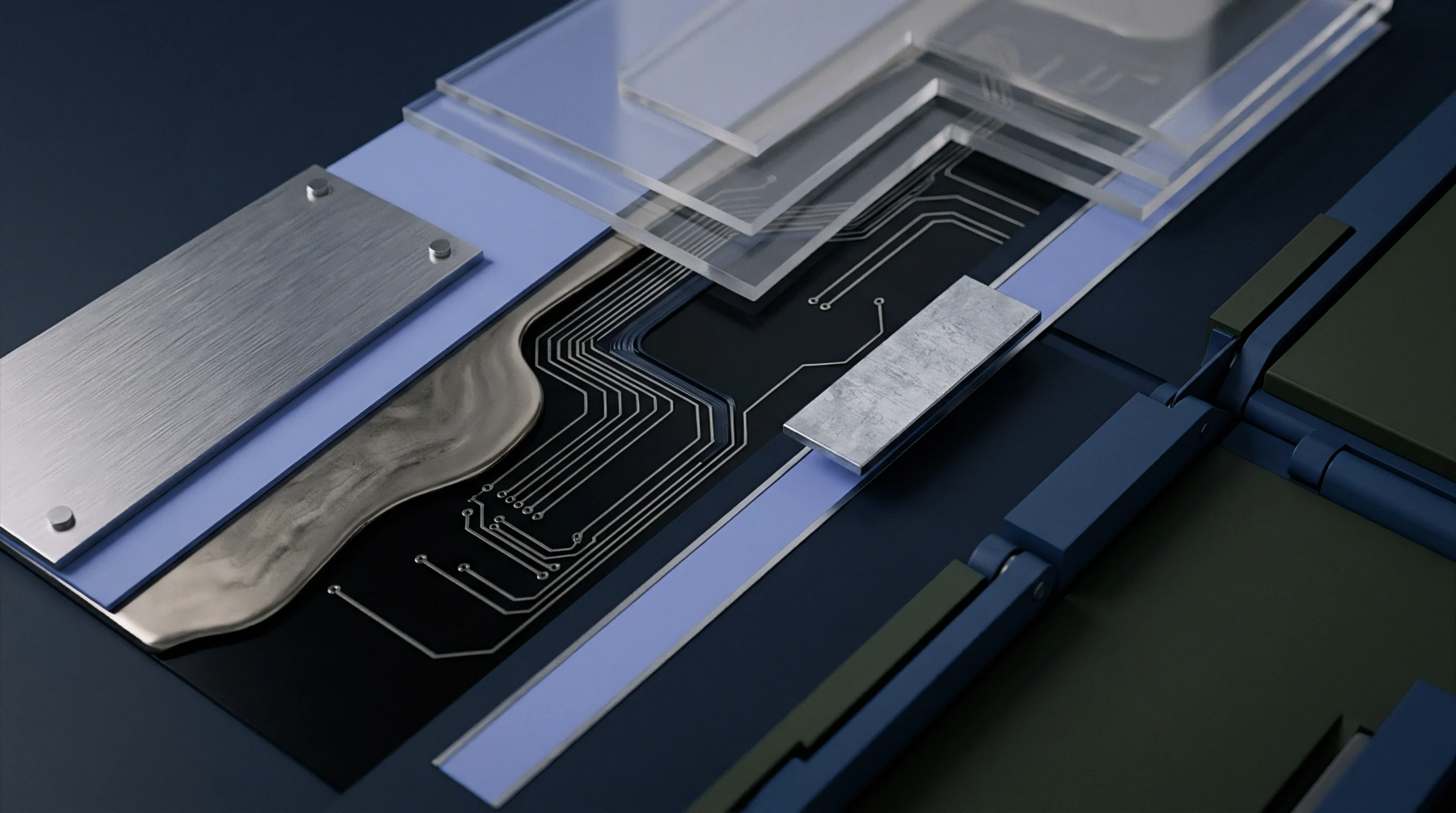
Internal friction within liquid thermoset polymers defines the ability of a material to wet surfaces during circuit board lamination. Resin viscosity governs the rate of spread when heated under pressure within a multi-layer stack. Molecular weight distributions and temperature settings dictate how much material flows from the prepreg into the gaps between copper traces.
High values impede proper wetting and potentially leave voids in the dielectric layers. Low values allow excessive bleedout during the pressing cycle which reduces the final thickness of the insulator. Precise control of this property ensures consistent insulation thickness and electrical performance across the entire board surface.
Thermal Response
Processing parameters rely on accurate predictions of the liquid state during the ramp phase of the cure cycle. Resin viscosity drops significantly as the heat increases until reaching a minimum point where the chemical reaction gains momentum. Engineers calibrate the press cycle to match this window to ensure optimal consolidation of the composite layers.
Variations in the gel time or the ramp rate change the duration of this low-resistance state. Prolonged heating at the minimum point risks draining too much epoxy from the core materials. Stable flow characteristics maintain the integrity of the board during high-pressure cycles.
Measurement Standard
Rheological testing provides the primary data for verifying the batch consistency of uncured materials. Laboratories use rotational viscometers or parallel plate plastometers to track the force required to shear the sample at a specific temperature. Standards define the rotational speed and the duration of the test to simulate the actual conditions encountered inside the laminating press.
Data from these tests provide the technical baseline for certifying the processing limits of new dielectric materials. Consistent rheological behavior reduces the frequency of delamination defects in finished assemblies.