Viscosity Kinetics
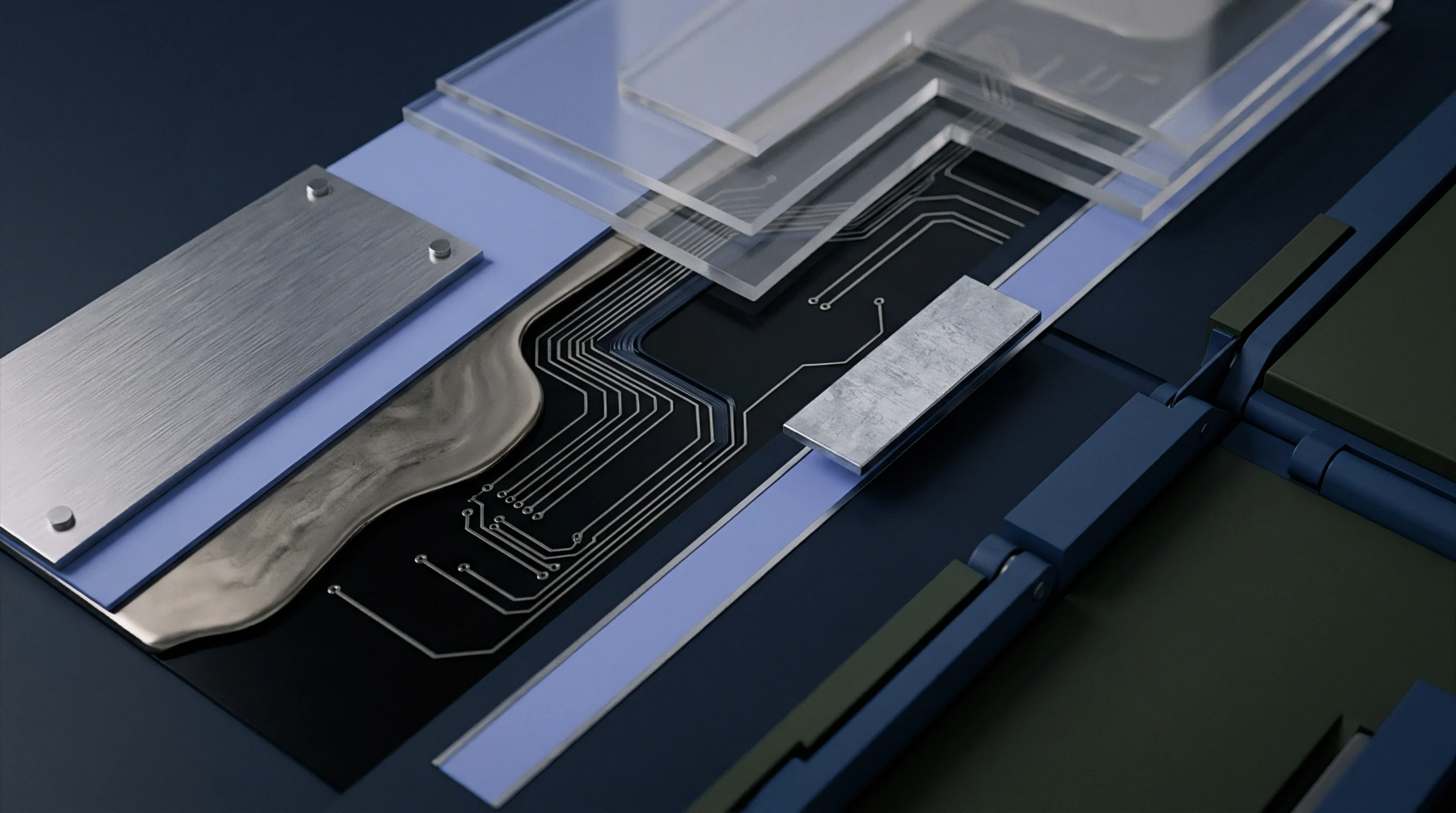
Temperature-dependent flow and deformation behaviors govern polymer resin movement during the multilayer circuit board lamination cycle. Solid B-stage prepreg resin softens under thermal input, passing through a minimum viscosity state before polymer cross-linking drives final gelation and hardening. The study of these dynamic viscosity changes and flow kinetics is resin rheology.
This physical property governs resin encapsulation of inner-layer copper features, microvia filling, and finished dielectric thickness. Rheological modeling stops applying once polymer curing completes and the resin transitions into a rigid C-stage thermoset solid.
Thermal Gelation
Lamination press cycles must match thermal ramp rates to the specific viscosity window of the prepreg system. If the press applies pressure before the resin reaches its melt phase, the high viscosity prevents complete resin flow around thick inner-layer copper traces, leaving internal air voids. Conversely, applying pressure during an overly fluid viscosity window expels excessive resin, creating resin-starved areas and non-uniform dielectric thicknesses.
Mastering resin rheology enables fabricators to time press pressure application precisely during the minimum viscosity window. This controlled flow drives trapped air outward while fully filling blind microvias and buried via holes.
Void Elimination
Differential scanning calorimetry and parallel-plate rheometers map resin flow curves across varying press heating rates. Fabricators verify curing kinetic models to establish optimal temperature dwell times for complex high-layer-count panels. Microsection analysis of lamination test coupons confirms void-free dielectric margins between closely spaced conductor lines.
Correct rheological control ensures consistent finished core thicknesses that satisfy controlled impedance tolerance limits.