Material Composition
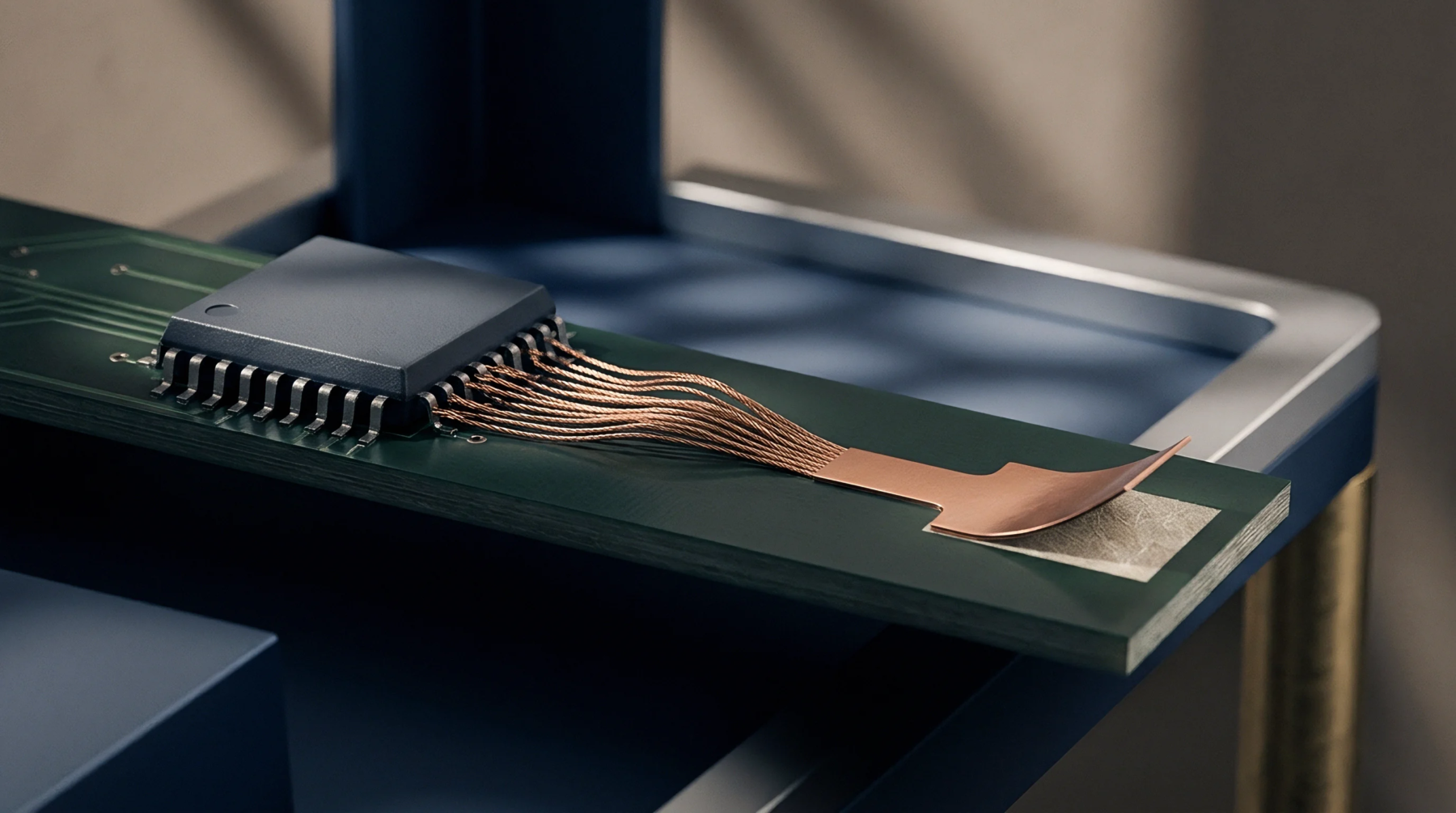
Polymer films used for flexible circuit protection rely on a specialized thermosetting layer to secure the dielectric to the copper surface. The coverlay adhesive fills the voids between circuit traces and encapsulates the conductors during the lamination process.
Lamination Flow
Controlled squeeze out during the press cycle ensures that the material seals the edges of the pads without contaminating the solderable areas. This flow behavior is a critical property of the coverlay adhesive, as excessive movement can cover landing patterns and lead to assembly failure. Modern pre-pregs and adhesive films are engineered to a specific tack and flow rate to balance encapsulation against dimensional stability.
Since the adhesive is a dielectric, its thickness and dielectric constant influence the impedance of the underlying signal lines.
Adhesion Integrity
Adhesion strength remains the primary metric for long term performance in harsh environments. A failure in the coverlay adhesive often results in delamination or moisture ingress, which can trigger dendritic growth and electrical failure. Vacuum lamination is typically employed to remove air bubbles that might otherwise create weak points in the bond.
The material must remain inert after the final cure to prevent the release of ionic contaminants that would compromise the insulation resistance of the circuit.