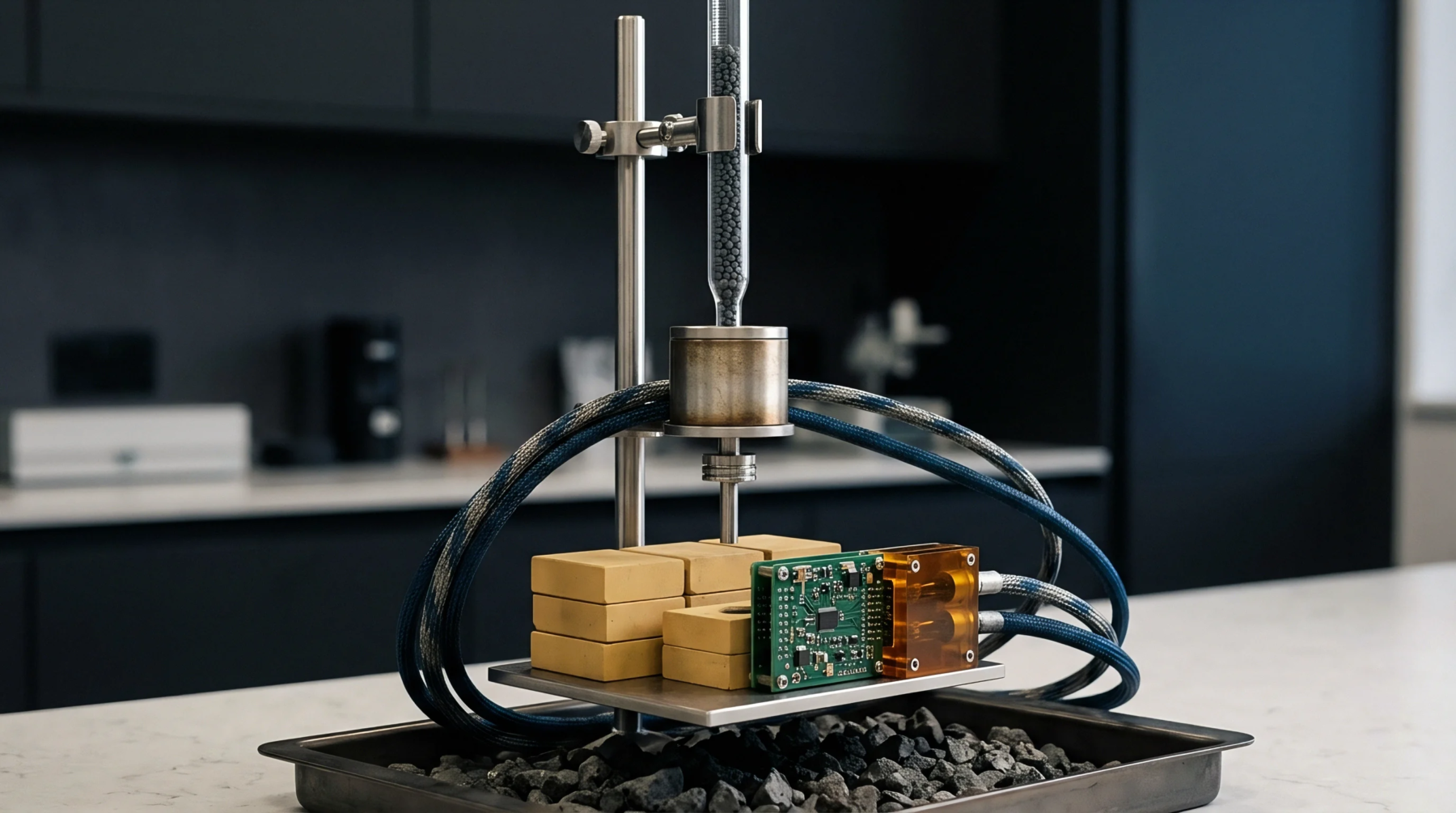
Dissipation Characteristic
Energy loss occurring during repeated loading and unloading cycles appears as a lag between the application of stress and the resulting strain within a material. In solder alloys and polymer substrates, cyclic hysteresis represents the work converted into heat and internal structural changes during every thermal or mechanical oscillation. The area enclosed by the loop on a stress-strain plot indicates the total energy absorbed per cycle.
This behavior is fundamental to understanding how printed circuit boards manage the mechanical strain caused by coefficient of thermal expansion mismatches.
Material Reaction
Molecular restructuring within the solder grain matrix occurs as the material moves through its elastic and plastic regions. When cyclic hysteresis is present, the unloading path does not follow the loading path, leading to a permanent deformation known as plastic strain. Over thousands of cycles, this cumulative energy absorption leads to microstructural coarsening and the initiation of cracks.
The shape of the hysteresis loop changes over time as the material softens or hardens in response to the strain history. This evolution provides a view into the state of the interconnect before a physical break is visible.
Fatigue Indicator
Engineering models use the width of the loop to predict the number of cycles until electrical failure. A stable cyclic hysteresis loop suggests a predictable fatigue life, while a rapidly widening loop often signals the onset of rapid crack propagation.