Dielectric Behavior
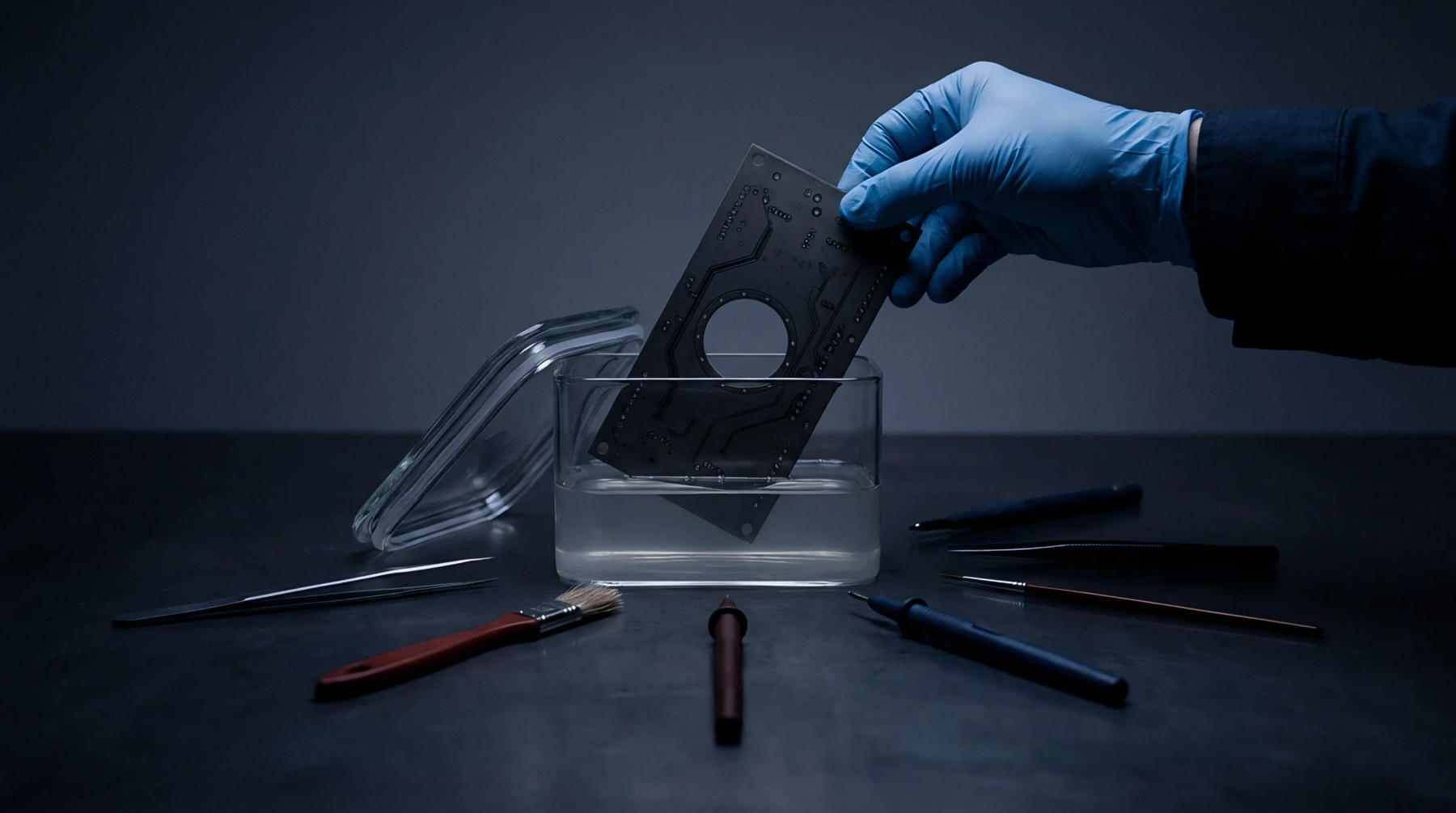
Alternating electric fields applied to printed circuit board laminates induce a time-dependent polarization of the molecular dipoles within the dielectric material. The physical delay in this polarization response relative to the oscillating field is described by debye relaxation. This phenomenon arises because molecular dipoles cannot realign instantaneously with high frequency signals, resulting in energy dissipation as heat within the substrate.
Mathematical Characterization
The complex permittivity of a dielectric is modeled as a function of frequency using a single characteristic relaxation time. This model assumes that the dipoles do not interact with one another and that their return to equilibrium follows a simple exponential decay. In practical board laminates, the frequency-dependent dielectric constant and loss tangent are extracted from this relation to predict signal attenuation.
Engineers use these mathematical curves to calculate the dielectric loss of high-speed transmission lines at gigahertz frequencies. Because real polymers possess a distribution of relaxation times rather than a single value, modified equations are often employed for complex resin systems.
Material Response
Temperature changes alter the viscosity of the polymer matrix, which shifts the peak loss frequency to higher or lower ranges. Higher temperatures accelerate dipole mobility and shorten the relaxation time of the system. Moisture absorption in epoxy resins creates additional polar groups that modify the dielectric response.
These changes directly impact the impedance consistency of trace geometries on the board.