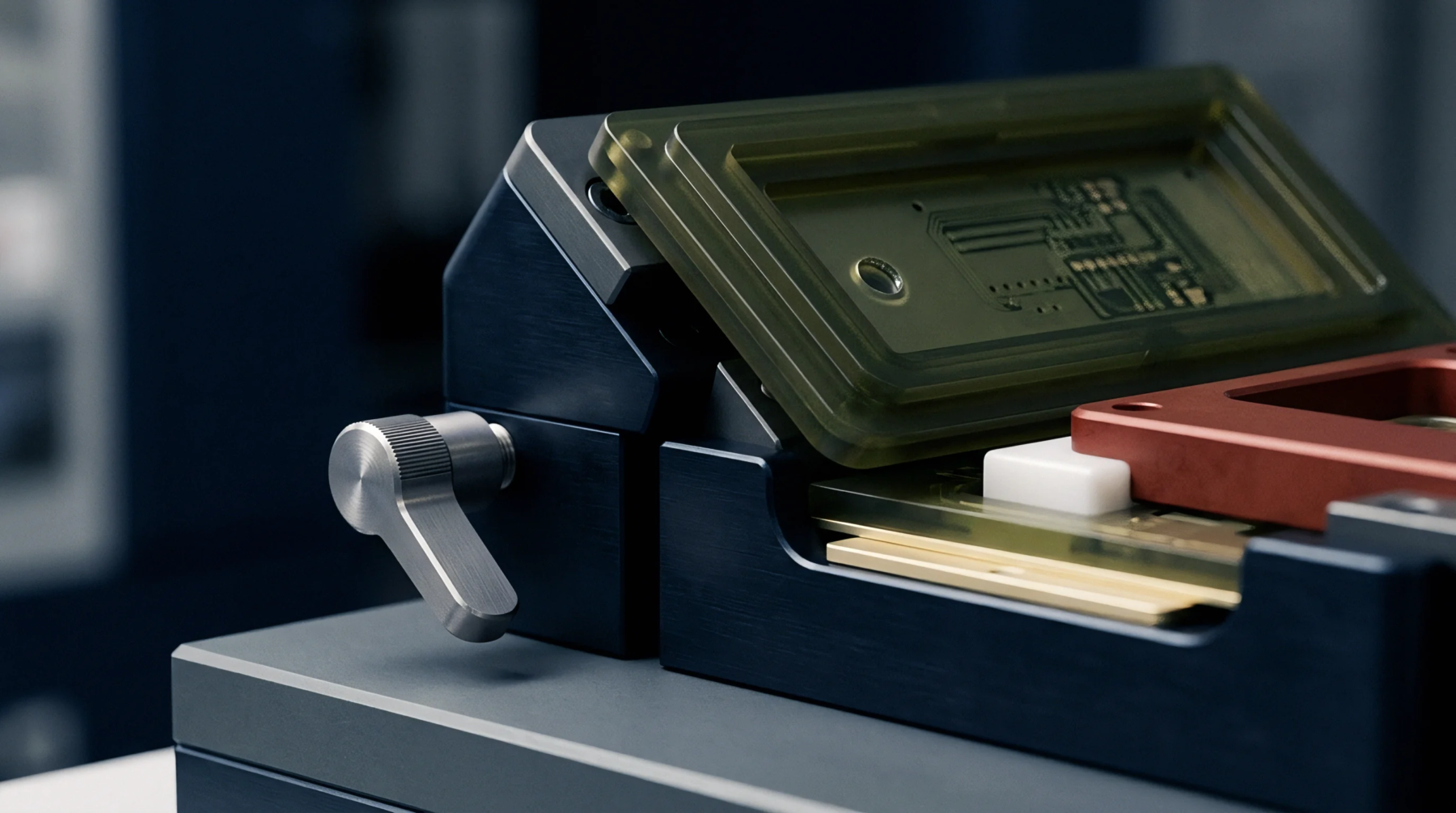
Actuating Pressure
Polyacetal thermoplastic components provide mechanical load to printed circuit board assemblies during final testing or bed of nails inspection cycles. These delrin push fingers move through guided apertures to establish consistent contact between a board and test probes. The material choice prevents scarring or marring of sensitive solder masks or board surfaces while providing necessary structural rigidity.
High friction coefficients and electrical insulation properties ensure that transient electrical paths do not form during the compression cycle.
Contact Alignment
Dimensional stability under repeated compression ensures that the interface remains perpendicular to the contact plane. Precision manufacturing of these delrin push fingers guarantees that the force applied is evenly distributed across the designated test point area. Small variances in finger length cause uneven loading which results in unreliable probe contact or board deflection.
Mechanical stops limit the travel distance to protect delicate components located underneath the board during the testing process.
Compression Wear
Environmental humidity variations exert minimal influence on the physical dimensions or structural integrity of polyacetal parts. Periodic inspection of the tip geometry detects flattening or deformation which indicates the end of the operational life for the component. Worn tips exert excessive localized force on the laminate which potentially fractures internal signal traces or surface vias.
Replacing these delrin push fingers maintains signal integrity and consistent test yield across long production runs.