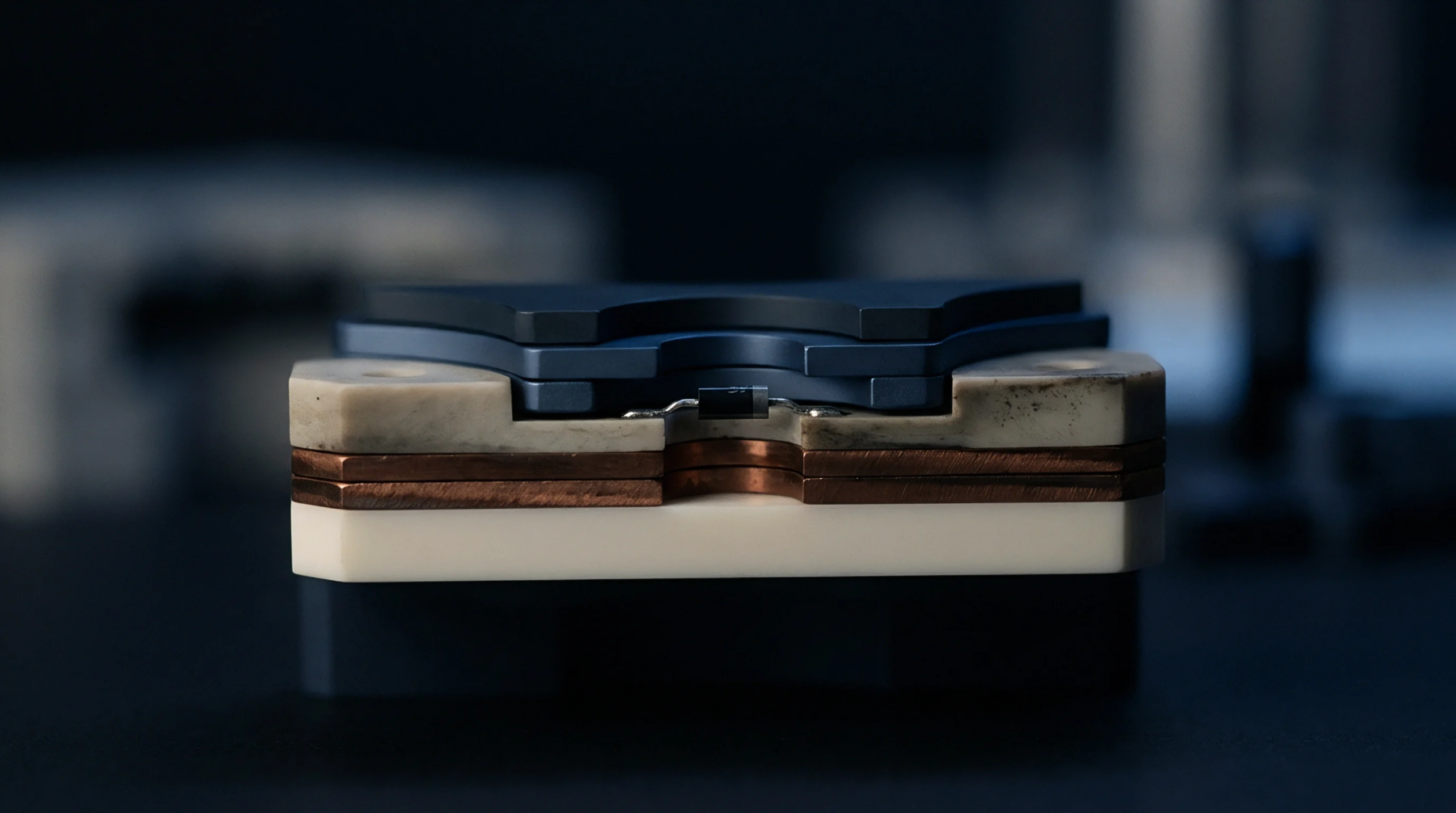
Sectioning Precision
Specimen preparation for metallographic analysis demands tools that minimize structural deformation in soft metal and brittle glass. Controlled diamond abrasive cutting isolates microsections without smearing copper layers or fracturing glass fibers. Sectioning provides flat boundaries for subsequent grinding steps.
Liquid cooling prevents thermal degradation of resin systems during sectioning.
Blade Dynamics
Rotating wheels embedded with synthetic diamond particles shear through copper foils and ceramic substrates at fixed rotational speeds. Variable speed drives allow operators to select lower rotational speeds for delicate multilayer boards and higher speeds for solid ceramic carriers. Fluid coolants remove abrasive swarf while carrying heat away from the cut interface.
Synthetic diamond grains bound in metal matrix wheels maintain continuous cutting efficiency without flexing during processing. Excessive feed force induces microcracks in fragile dielectric materials, whereas light pressure ensures smooth surface finishes.
Surface Integrity
Microstructural accuracy depends directly on preventing mechanical artifacts during initial sample division. Distorted copper edges hide true plating thickness measurements and obscure thin interplane separation boundaries. Quality control laboratories rely on low-deformation sectioning to evaluate barrel plating voids and solder fillet geometries under optical microscopes.
Microsections prepared with diamond abrasive cutting preserve true material boundaries required for failure analysis reports.