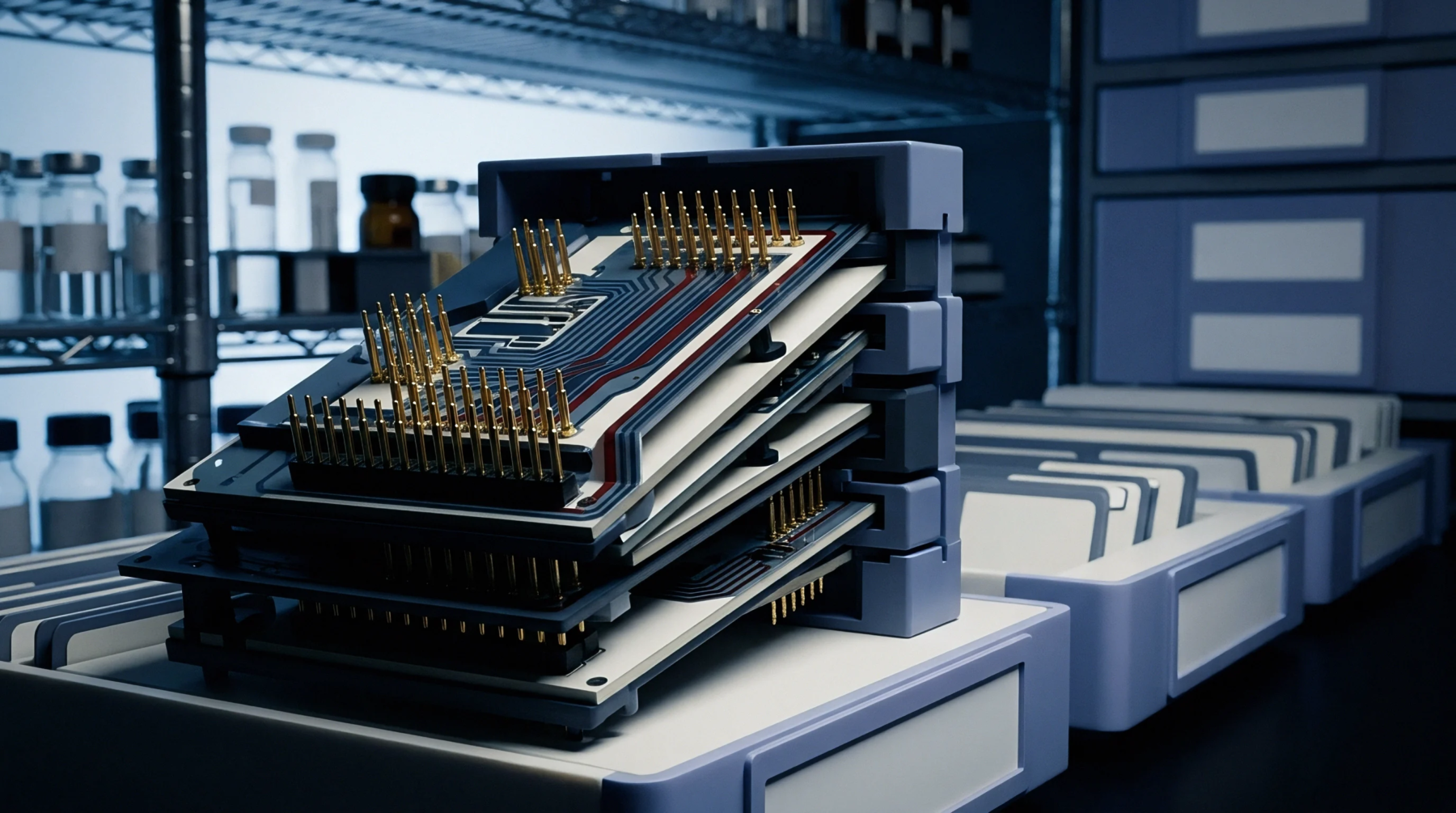
Electromagnetic Barrier
Electrostatic and electromagnetic isolation of sensitive circuit components is achieved by surrounding them with a continuous conductive barrier that redirects external electrical noise and stray fields. This protective enclosure, referred to as a Faraday shield, utilizes the principle that an external electrical charge will distribute itself along the outer surface of a conductor, leaving the interior space unaffected by static electrical fields. In high-frequency printed circuit board assemblies, these shields are used to isolate sensitive analog or radio-frequency circuits from high-speed digital switching noise.
The shield works by absorbing and reflecting the incident electromagnetic waves, preventing them from inducing unwanted currents in the protected circuitry.
Shielding Effectiveness
The performance of the shielding structure is heavily dependent on the electrical conductivity of the material used and the presence of any physical gaps or apertures in the enclosure. Small openings, which are often necessary for thermal ventilation or signal routing, must be kept significantly smaller than the wavelength of the electromagnetic radiation being blocked to prevent leakages. High-frequency signals can easily penetrate large openings, rendering the shield ineffective against short-wavelength interference.
Furthermore, the shield must be securely connected to a low-impedance ground plane to ensure that captured electrical charges are quickly and safely dissipated without radiating secondary noise into the board. This connection is typically made using multiple solder points or conductive gaskets to minimize inductance at the grounding interface.
Structural Integration
Physical implementation on a printed circuit board typically involves soldered metal cans or conductive coatings applied directly over the sensitive areas during the assembly process. Removable shielding cans allow for inspection and rework of the enclosed components while providing reliable protection during normal operation.