Resin Geometry
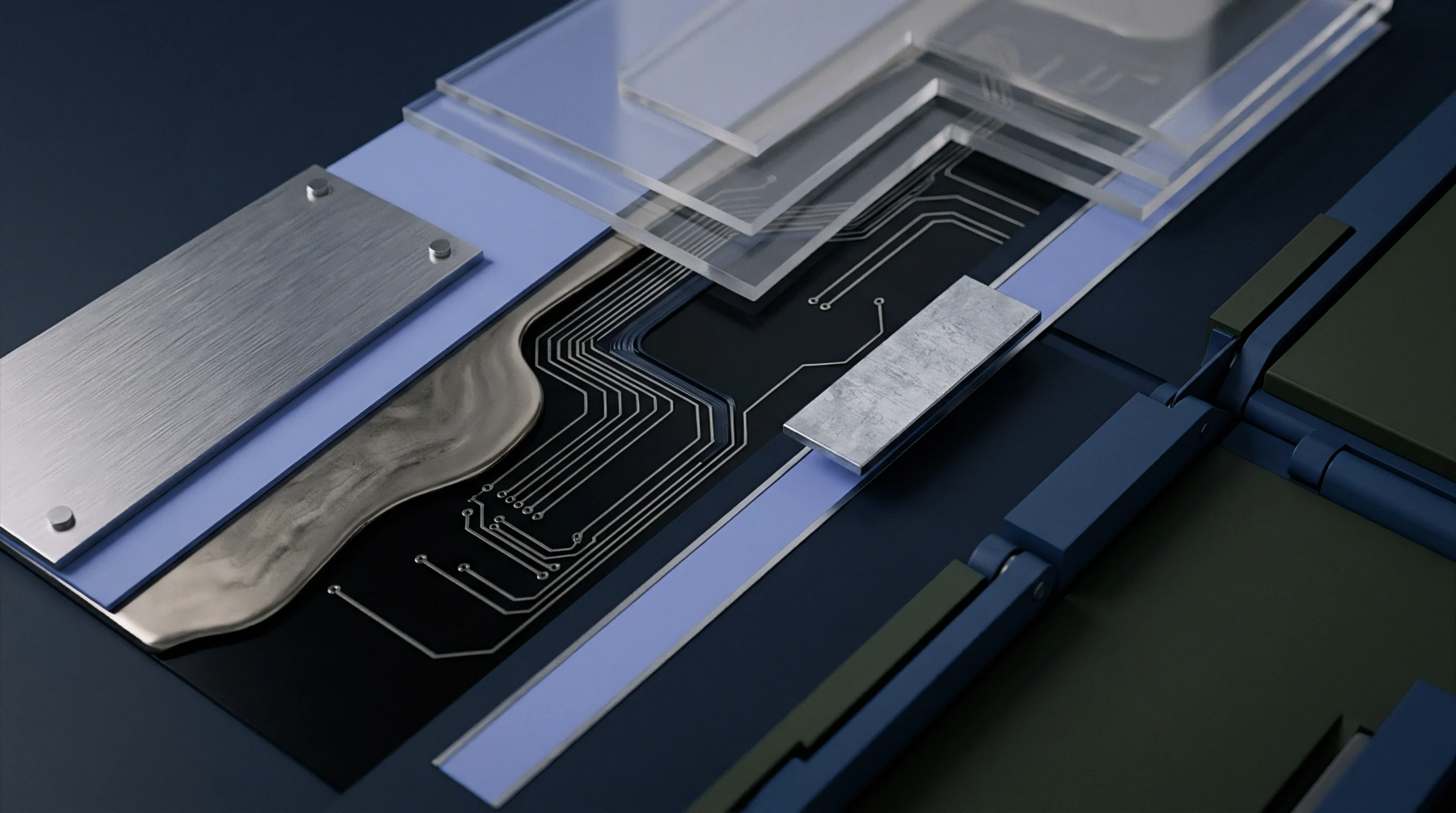
Structural anomaly migration within printed wiring board prepreg layers involves lateral translation of reinforcement filaments during hydraulic consolidation. Glass yarn positioning shifts under applied lamination pressure because low viscosity matrix material forces filament strands outward from high density reinforcement intersections. Optical cross section examination reveals localized thinning of dielectric boundaries whenever resin flow vectors push strand bundles toward adjacent conductor planes.
Automated optical inspection equipment detects this structural defect by measuring dimensional shifts in internal reinforcement patterns against reference Gerber data before outer layer etching begins.
Lamination Shear
Hydraulic pressing mechanics generate lateral forces that distort woven glass reinforcement inside multilayer circuit board panels. Press cycles apply uniform vertical clamping loads, yet local resin pocket variations create horizontal sliding vectors that displace continuous yarn bundles across dielectric cores. Automated X ray inspection systems quantify internal layer registration errors caused by such reinforcement movement during high temperature cure stages.
Dielectric thickness reduction frequently accompanies lateral filament displacement because resin starvation develops directly above displaced yarn bundles.
Impedance Variance
Signal propagation speed depends on local dielectric constants that change whenever internal reinforcement strands shift position relative to copper traces. Differential impedance calculations incorporate measured yarn displacement values to predict high frequency signal degradation in controlled impedance printed circuit boards. Automated test equipment flags transmission line anomalies when dielectric thickness deviations exceed twenty five micrometres across high speed digital buses.
Signal integrity losses intensify whenever repetitive yarn bunching alters distributed capacitance along differential pair routing paths.