Dielectric Variation
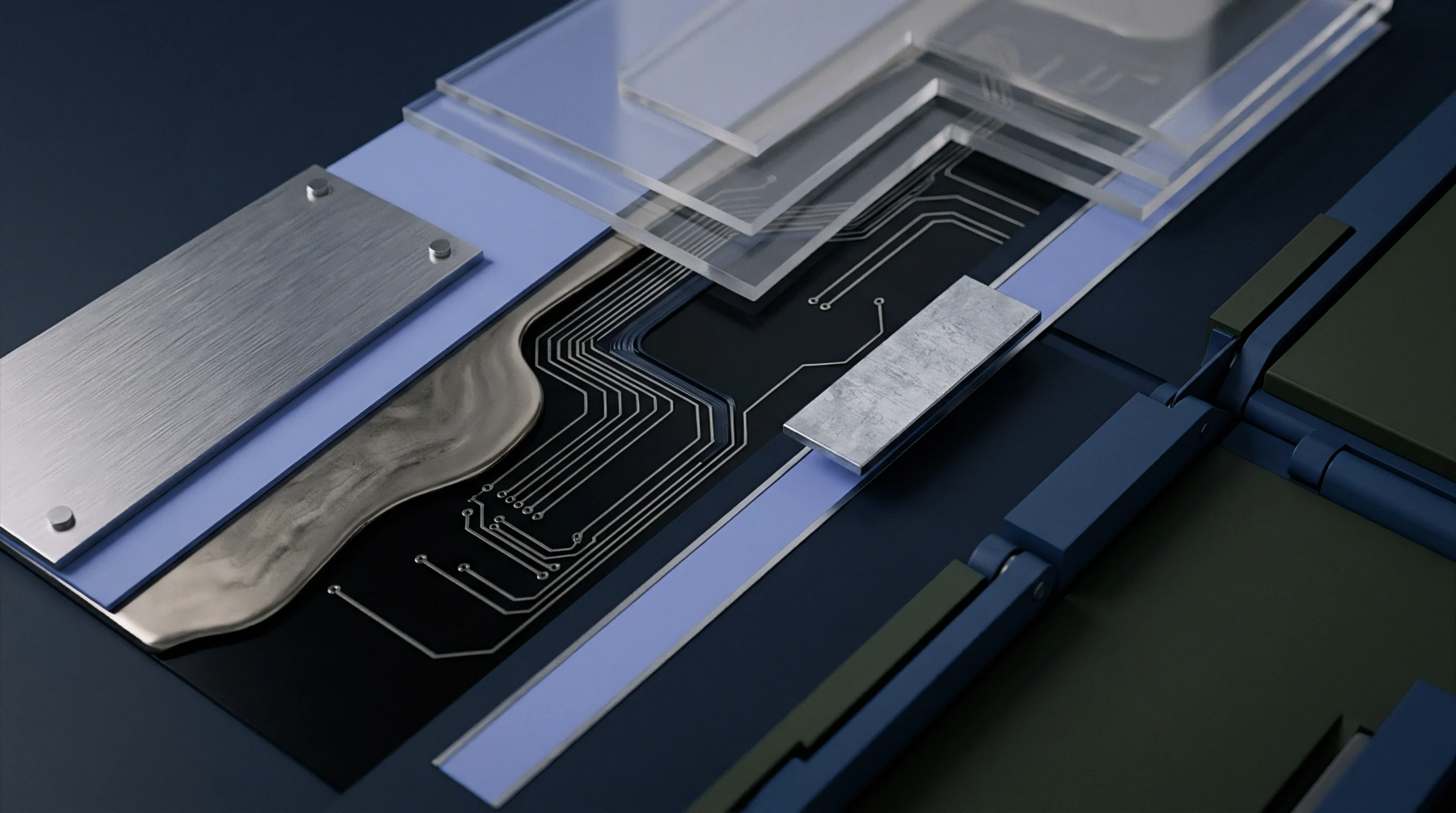
Fiber reinforced laminate construction relies on a structured grid of resin impregnated fiberglass bundles. The glass weave effect describes the localized shift in impedance experienced by high speed differential signals when trace paths pass over regions of unequal dielectric density. Copper traces routed on these boards often sit atop either the resin rich gaps or the dense fiberglass bundles of the base cloth.
Signal propagation velocity changes based on the effective dielectric constant of the immediate environment. Differential pairs encountering this imbalance experience phase skew between the positive and negative legs.
Impedance Modulation
Production controls attempt to minimize this fluctuation through specific trace routing strategies. Designers rotate circuit patterns at an off axis angle relative to the primary board axes to distribute path length across both glass bundles and resin gaps. Mechanical zig zag routing geometry forces the signal to cross multiple weave intersections during every unit of length to balance the effective dielectric constant.
Boards fabricated with spread glass styles use flattened filaments to reduce the open resin spaces between bundles. Laminate suppliers quantify this performance by measuring the difference in propagation delay between specific test patterns aligned with the weave and those aligned at an angle.
Signal Degradation
High frequency data integrity suffers when the differential skew becomes a significant fraction of the unit interval. Increased jitter at the receiver reduces the eye opening and raises the bit error rate in serial communication links. Timing margins shrink as the phase offset between legs grows beyond the compensation capability of the physical layer hardware.
Transmission lines reaching speeds above ten gigabits per second require strict management of this material behavior to maintain link stability.