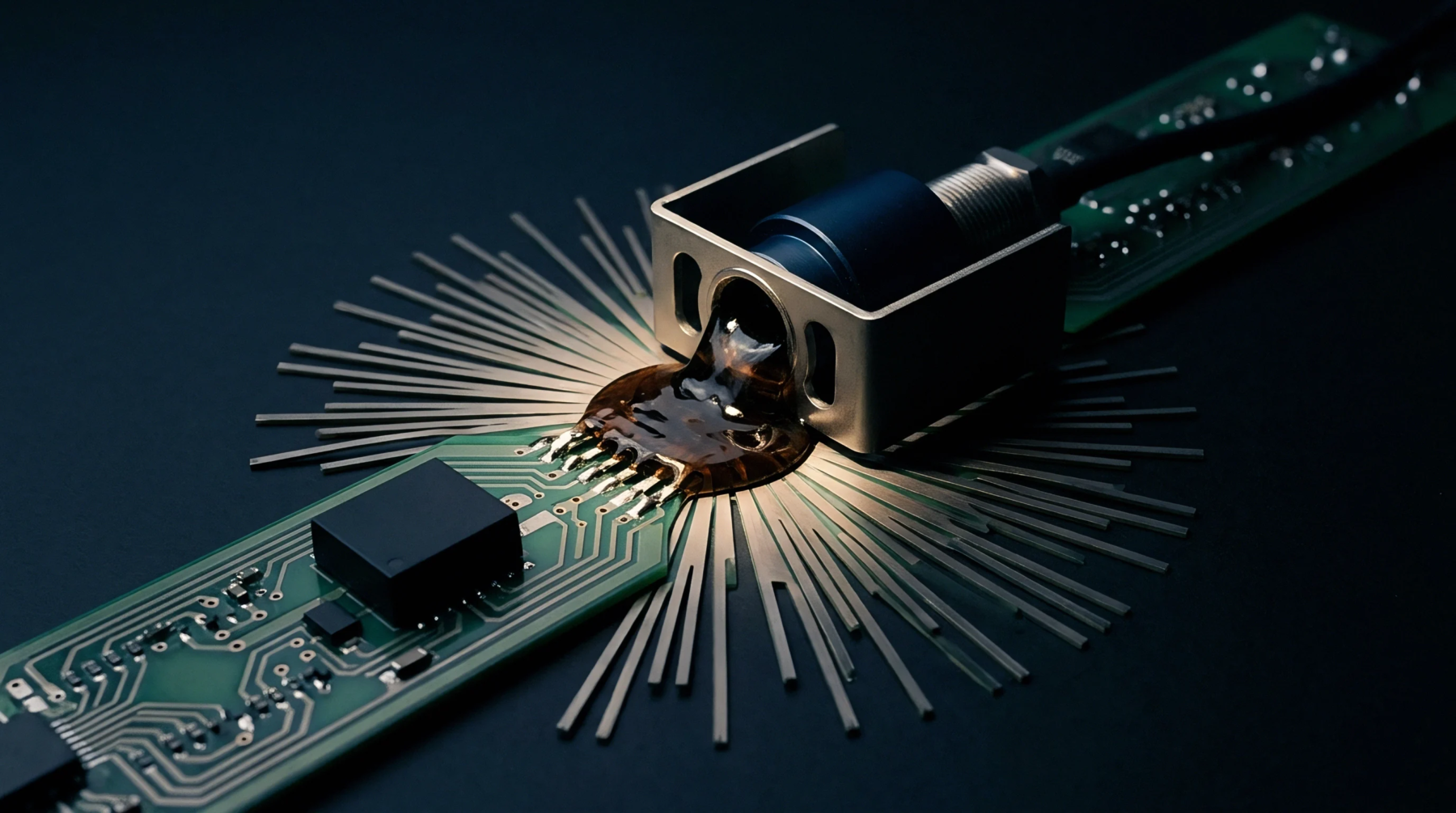
Spatial Displacement
Positional shifting of an optical inspection frame relative to machine coordinates degrades feature recognition in automated surface mount verification. Systemic field of view drift causes target pads, fiducials, component leads, and solder fillets to register away from their programmed pixel coordinates across successive production panels. Inspection algorithms fail or misclassify acceptable joints when spatial references wander outside calibrated target windows.
The displacement accumulates gradually across extended operating shifts without abrupt mechanical slippage.
Thermomechanical Causation
Internal heat generation from camera sensors and linear drive stages drives uneven thermal gradients through optical mounting brackets. As structural brackets warm and expand, field of view drift generates micro-radian tilt and micron-scale translation of the primary lens assembly. Cantilevered optical heads magnify small angular distortions at the mounting base into substantial lateral shifts across the focal plane.
Machine illumination sources, particularly high-intensity light emitting diode arrays operating at high pulse currents, emit heat directly into camera barrel housings. Mechanical vibrations from high-speed gantry accelerations also cause micro-slippage in adjustable lens collars, compounding thermal movements over continuous production shifts. Periodic fiducial reassessment routines quantify these optical movements by comparing fixed board references against stationary machine datum plates at predetermined batch intervals.
Metrology Tolerance
Calibration artifacts containing chrome-on-glass dot grids quantify optical alignment stability under varying ambient production environments. Uncorrected field of view drift exceeding one tenth of a solder pad pitch produces false bridge and false open alarms in fine-pitch component assemblies. Vision processing software applies dynamic coordinate offsets derived from periodic recalibration targets to maintain measurement fidelity.
Acceptance testing requires the optical center to remain stable within defined sub-pixel boundaries across an eight-hour thermal stabilization run.