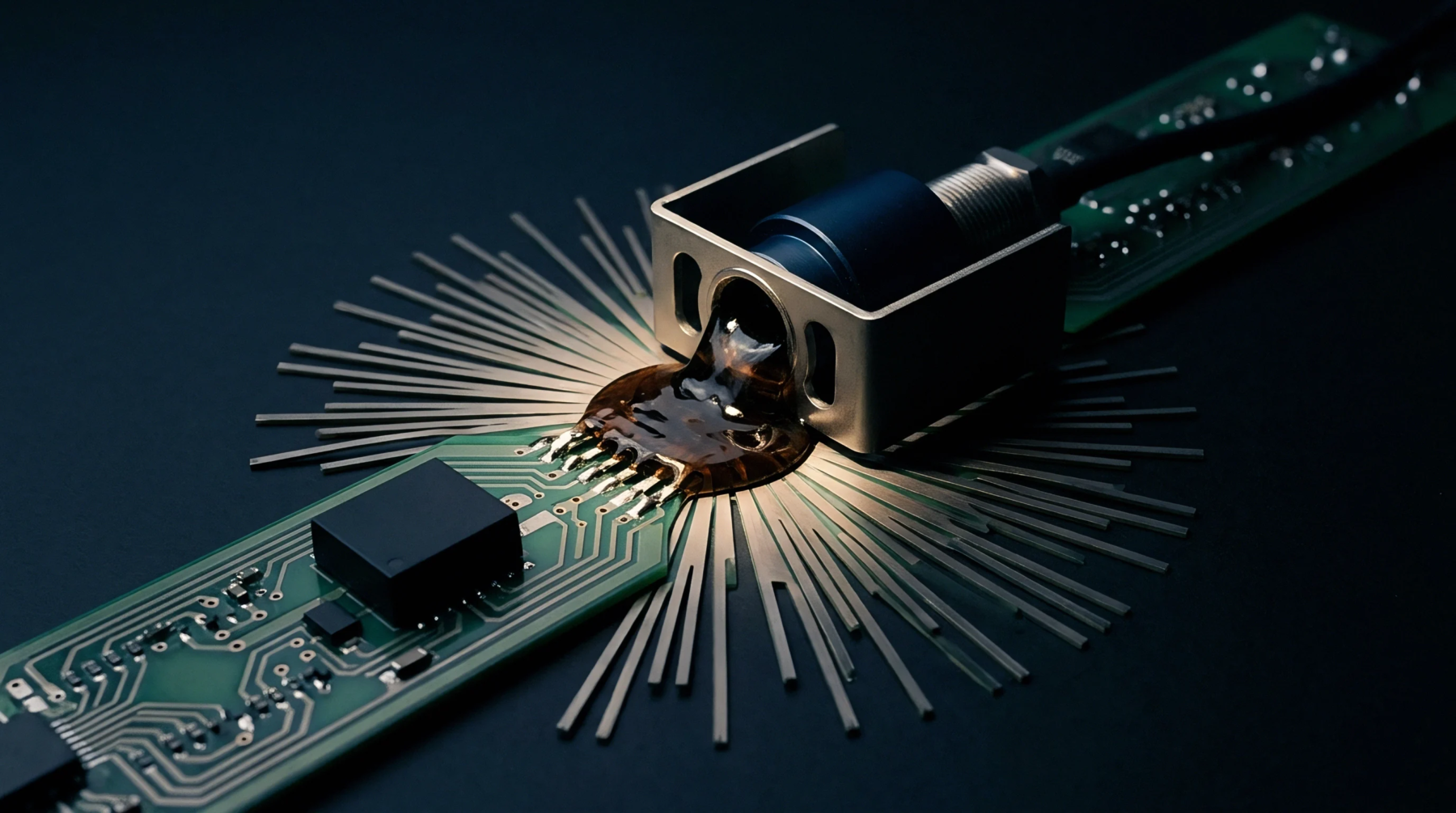
Optical Defocus
Axial displacement of the optical imaging plane away from the subject surface degrades image sharpness in automated visual inspection systems. In automated optical inspection and direct imaging tools, focal plane drift shifts the sharpest image plane away from component leads and solder joints along the vertical z-axis. Contrast degradation prevents edge detection filters from isolating fine-pitch feature boundaries accurately.
Spatial resolution degrades across entire inspection panels if axial positioning is left uncontrolled.
Mechanical Warpage
Z-axis focus shifts originate from internal camera thermomechanics and structural frame expansion during sustained machine operation. When internal components warm up, focal plane drift develops through thermal elongation of the optical tube and expansion of camera mounting posts. Printed circuit boards also introduce focal errors through mechanical warpage induced by reflow thermal cycles or uneven conveyor clamping pressures.
Telecentric imaging lenses exhibit narrow depth of field tolerances, often below fifty micrometers on high-magnification systems, making small vertical variations immediately destructive to image clarity. Mechanical vibrations transmitted from underlying motion gantries shake optical elements within their retaining rings, shifting internal lens spacing over time. Active pneumatic clamping alongside vacuum hold-down chucks suppresses vertical board deflection to maintain mechanical flatness beneath the imaging head.
Depth Verification
Laser triangulation sensors and chromatic confocal probes track substrate surface height dynamically during high-speed scanning passes. Continuous z-axis tracking loops counteract focal plane drift by commanding rapid voice coil actuators or piezo stages to reposition objective lenses in real time. Resolution targets evaluated under modulated transfer function algorithms quantify contrast falloff across varying working distances.
Acceptance standards dictate that optical assemblies maintain nominal focus across the entire panel thickness tolerance range.