Material Integrity
Fracture mechanics represents an analytical discipline dedicated to quantifying the load bearing capacity of components containing flaws or cracks. This engineering field predicts the extension of discontinuities under stress by applying energy release rates and stress intensity factors to evaluate the probability of sudden failure. The framework defines the stability of a structure based on the material toughness and the geometry of the crack.
Such calculations apply only to cracked geometries where linear elastic conditions dominate the local field.
Structural Loading
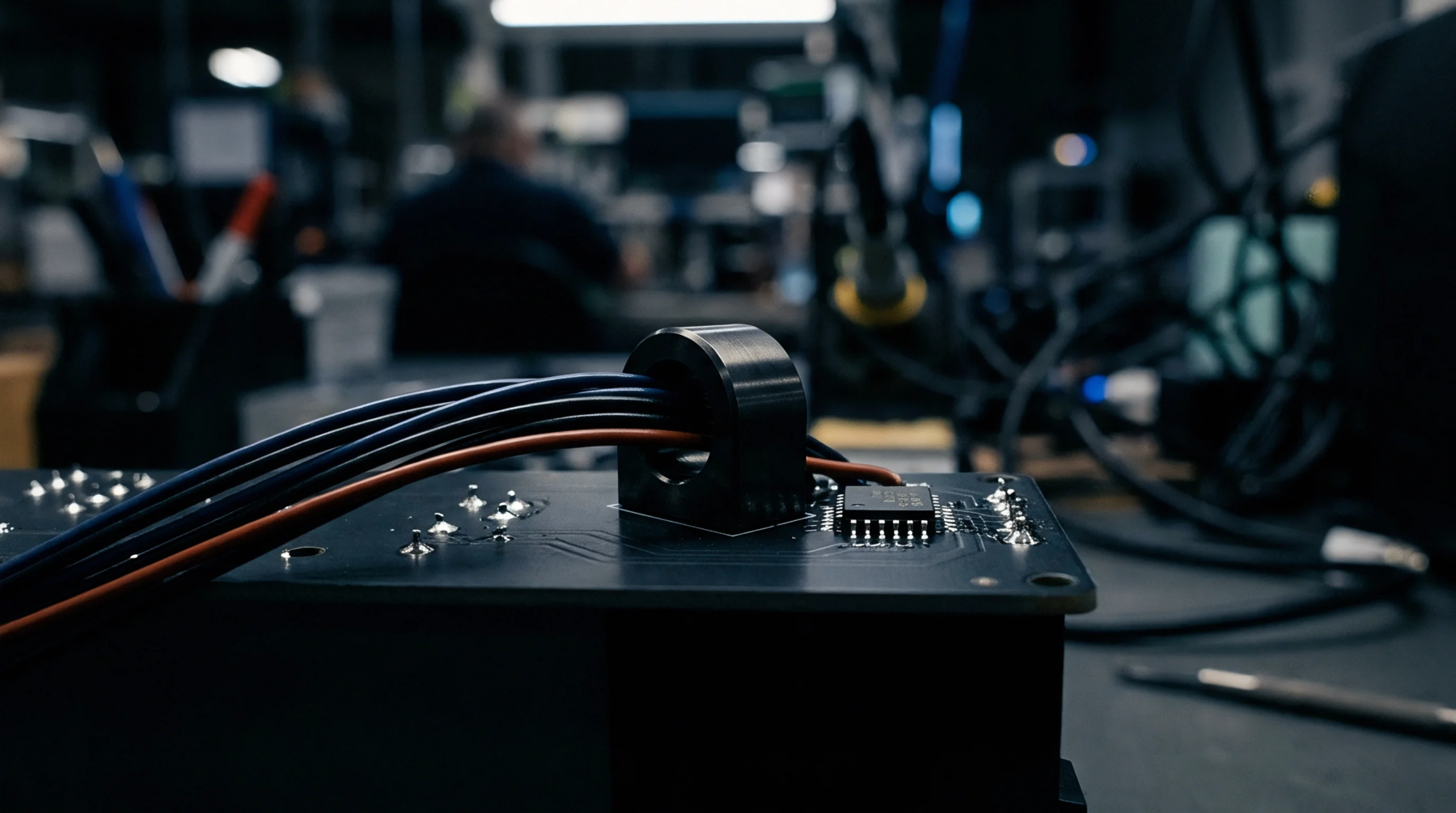
Manufacturing defects like microscopic inclusions or voids within circuit board laminates act as stress concentration sites during thermal cycling or mechanical shock. Fracture mechanics models these specific points to determine if a crack propagates through the substrate or copper interconnects after repeated solder reflow exposure. Engineers utilize these models to verify that the stress intensity at the tip of an inclusion remains below the critical threshold defined by the material plane strain fracture toughness.
A low value indicates that the crack stays dormant throughout the operating lifespan of the assembly. The analysis provides the mathematical limits for allowable defect sizes in high reliability electronic enclosures where structural rigidity is the primary constraint.
Interface Decoupling
Failure analysis of interface delamination requires a calculation of the strain energy release rate associated with the separation of heterogeneous layers. Engineers compute the work required to advance a debonding front along the interface between the molding compound and the lead frame to ensure the connection retains mechanical stability. Precise measurements of the energy absorbed during this separation distinguish between cohesive failure within the bulk polymer and adhesive failure at the metal junction.
The result allows designers to adjust the chemical composition of adhesives to improve thermal dissipation and structural reliability. Numerical prediction of crack growth provides a quantitative basis for assessing the survivability of solder joints under extreme strain environments. Proper application of these criteria prevents unexpected brittle fracture during long term field deployment.