Cure Metric
Thermal polymerization measurements define the duration required for a liquid resin or prepreg system to transition into an unworkable elastomeric state at a specific temperature. The measured gel time indicates the remaining window of high flowability before cross-linking restricts the molecular mobility of the polymer. This parameter helps laminate manufacturers calibrate their thermal recipes to ensure complete wet-out of the glass reinforcement.
It provides a quality checkpoint for incoming raw prepreg sheets to guarantee consistent lamination behavior.
Thermoset Evaluation
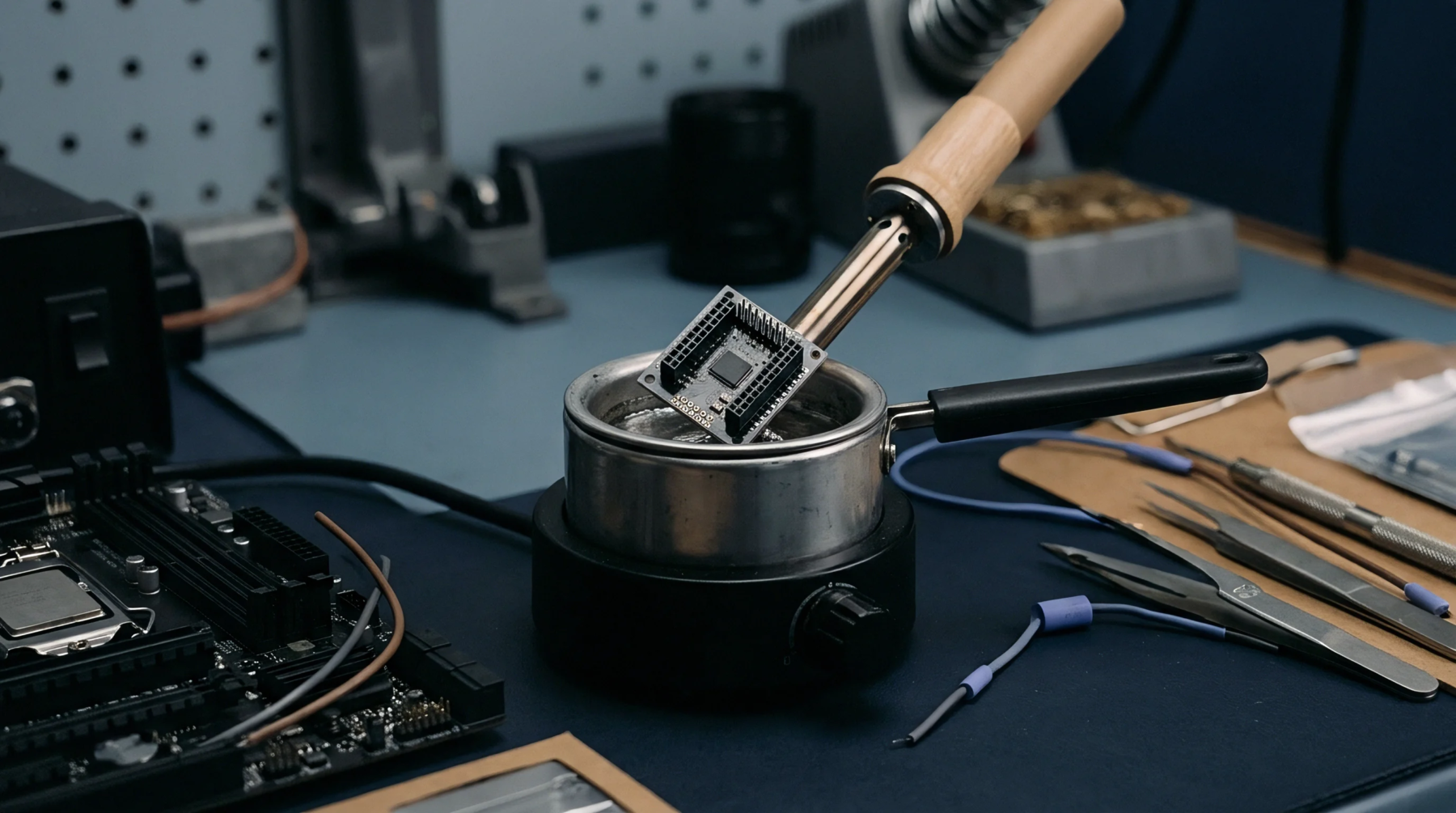
Testing instruments utilize a heated hot plate maintained at a constant temperature to determine this transition point manually or through rheological analysis. A technician places a small sample of the resin on the heated surface, agitating it continuously with a glass rod until the drawn fiber snaps and the material no longer flows. Modern automated rheometers track this transition by locating the crossover point of the storage and loss moduli during isothermal heating cycles.
Because the chemical reaction accelerates at higher temperatures, the measured gel time decreases exponentially as the plate temperature rises, demanding strict control over the test environment to obtain reproducible results.
Process Limitation
Incomplete resin flow occurs if the thermal cycle of the lamination press heats the material too quickly, driving the prepreg paste past its gelation point before the squeeze flow has filled the gaps between internal copper traces. Under these conditions, the trapped air fails to escape and forms voids in the cured board. Conversely, if the heat rise is too slow, the resin remains liquid for too long and escapes the edges of the panel, causing resin starvation.