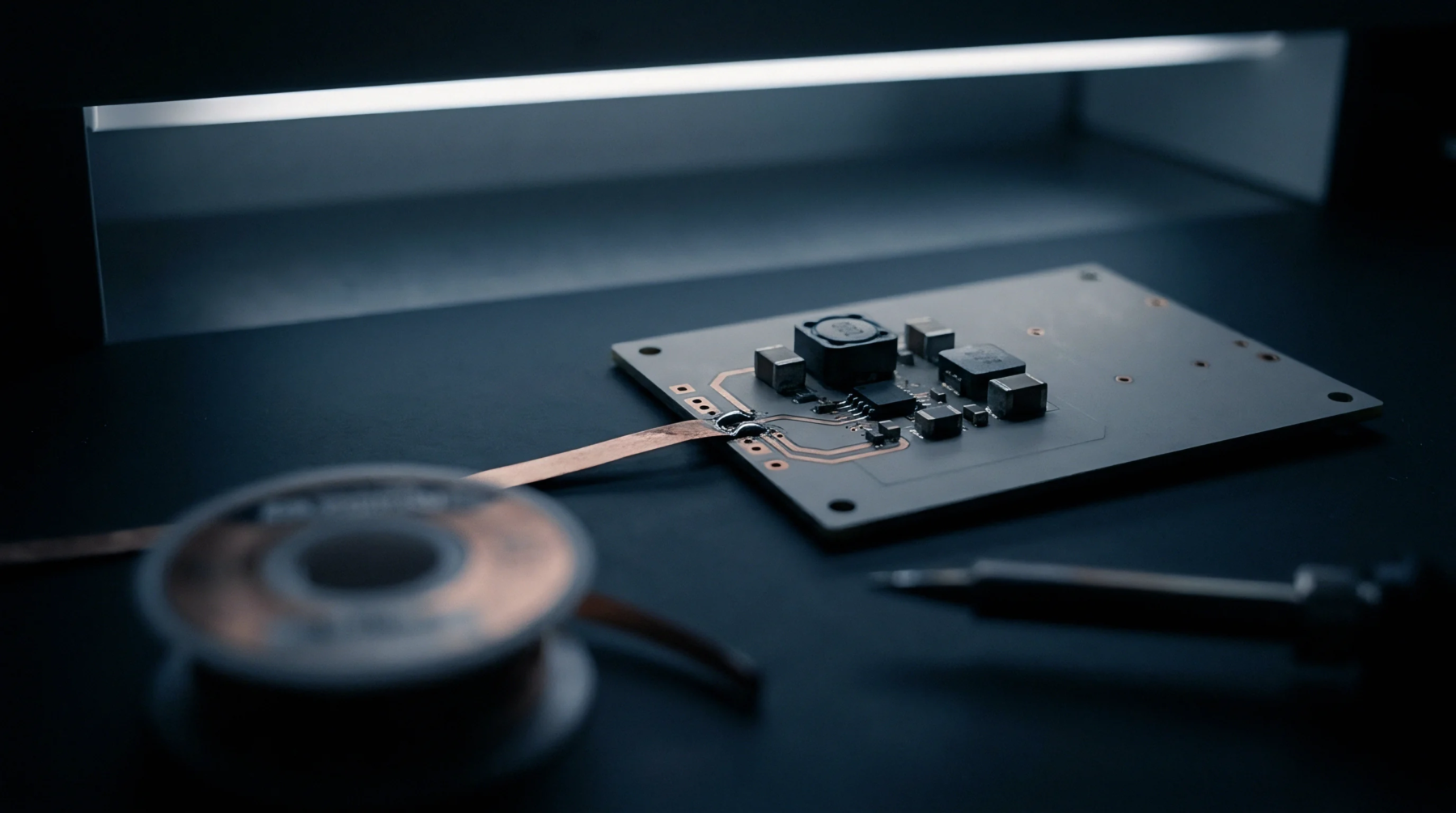
Dissolution Mechanism
The rapid dissolution of a surface-mount gold finish into molten solder during the reflow or wave soldering process can compromise the structural integrity of the joint. This gold plating erosion occurs because gold has an extremely high solubility in tin-based liquid alloys at standard assembly temperatures. As the gold layer dissolves, it exposes the underlying nickel barrier layer to the molten tin.
The resulting tin-nickel intermetallic compound forms the bond, but excessive gold dissolution can lead to embrittlement of the solder joint.
Solder Contamination
High concentrations of dissolved gold within a localized solder joint alter the crystalline structure of the alloy and cause micro-cracking under mechanical stress. In wave soldering machines, the gold plating erosion from thousands of processed boards gradually increases the gold content of the solder pot itself. If the gold concentration in the pot exceeds defined limits, typically zero point two percent by weight, it raises the liquidus temperature of the alloy and produces gritty solder joints that are highly susceptible to fatigue.
This solder pot contamination necessitates regular chemical testing and dilution of the bath with pure solder. Manufacturers must monitor the alloy composition through regular spectrographic analysis to prevent this defect from compromising outgoing board batches.
Mechanical Wear
Friction between mating connector pins during insertion cycles can also wear down the soft metal layer and expose the nickel substrate. Unlike the chemical dissolution that occurs during soldering, this mechanical gold plating erosion is driven by contact force and surface roughness. The exposed nickel undergoes rapid oxidation in ambient air and increases the contact resistance of the connector.