
ENIG against OSP When Shelf Life Sets the Order
ENIG guarantees 24-month solderability for staggered assembly runs, while OSP degrades beyond six months unless stored in vacuum-sealed moisture barrier bags.
ENIG guarantees 24-month solderability for staggered assembly runs, while OSP degrades beyond six months unless stored in vacuum-sealed moisture barrier bags.

Ensuring complete bottom-side nodal access with standard pad pitch and strain-mitigated fixturing locks in fault coverage and prevents field defect escapes.
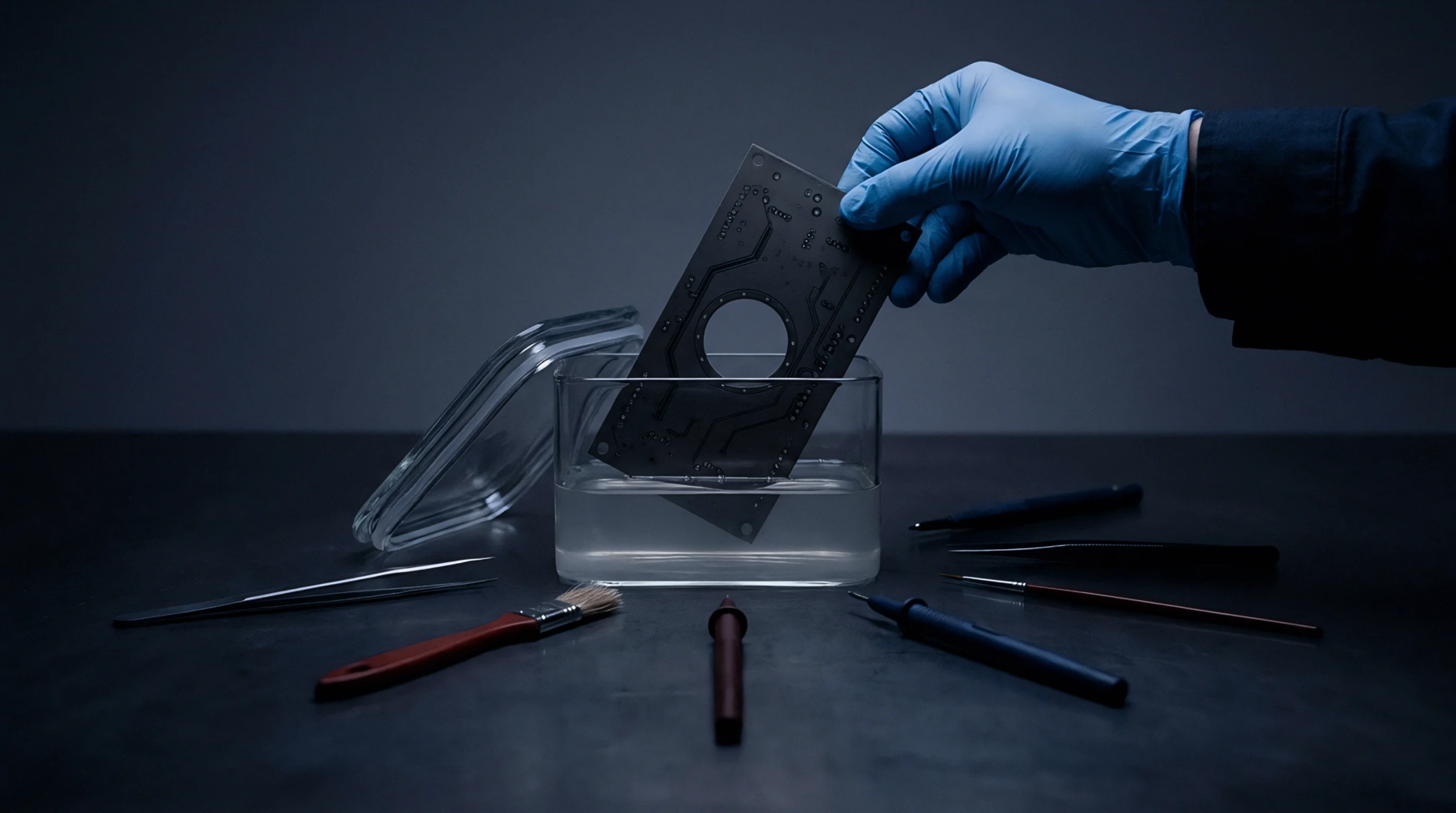
Balancing micro-probe forces with precision push-fingers prevents substrate strain over 500 microstrain, protecting fine-pitch BGAs and MLCCs from fixture damage.

Integrating IEEE 1149.1 boundary scan with flying probe target vectors maximizes fault coverage on high-density PCBs while slashing test times and fixture costs.

Boundary scan TAP probe evaluation demands dynamic contact resistance monitoring under 20mV dry-circuit limits to prevent false structural defect calls.

High speed fixture escape vectors for AC coupling caps demand high frequency TDR de-embedding to catch low frequency probe blind spots.
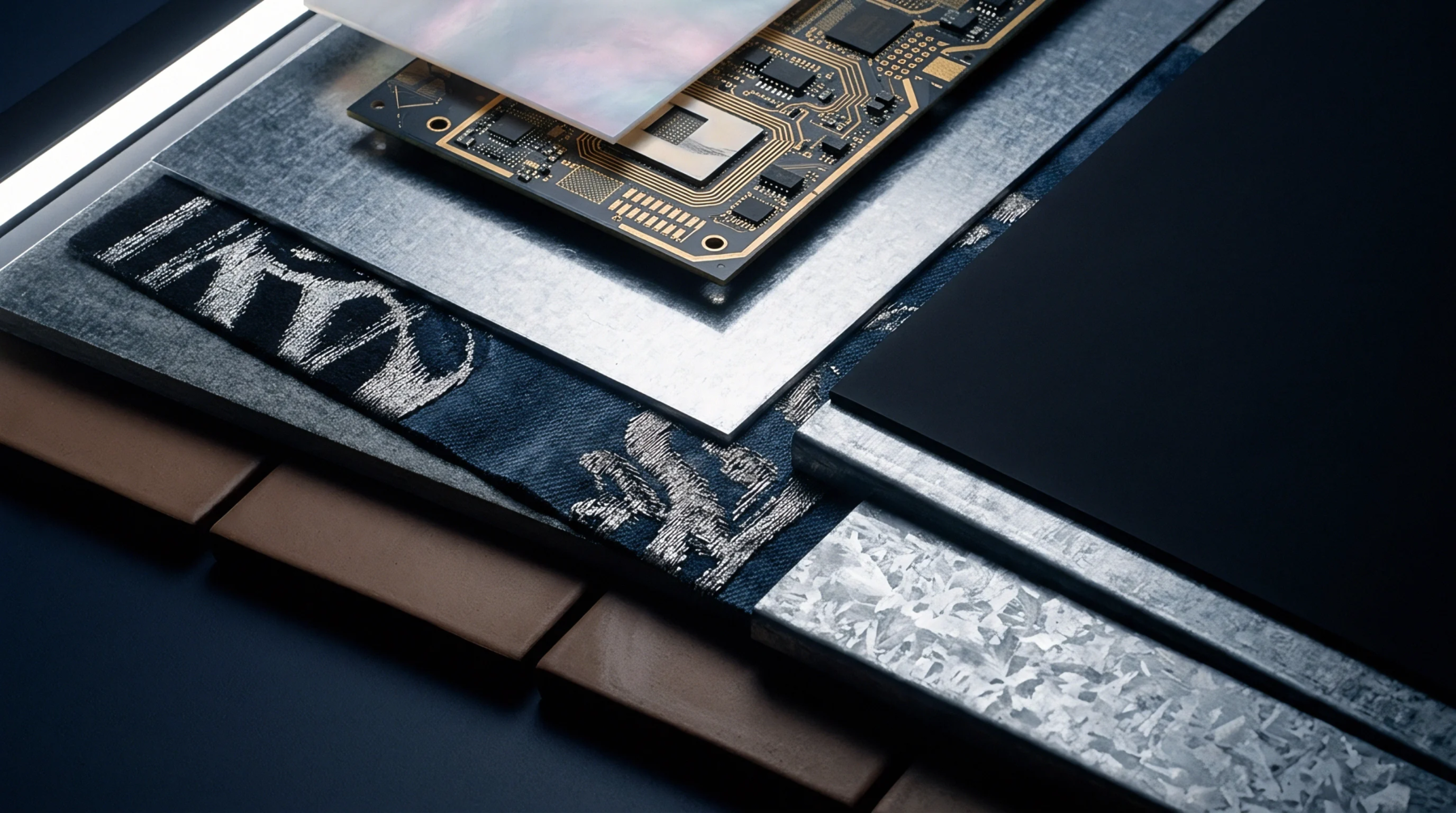
Modeling probe parasitics and edge skew on boundary scan nets prevents false test failures and maintains scan chain timing margins under fixture actuation.
Hybrid execution matrices combine physical probe mechanics with boundary scan cell vectors to maximize structural fault coverage on partially accessible ASIC clusters.
Buyer-owned test fixtures require explicit PO line items, complete source files, and calibrated limit audits to prevent factory lock-in.

Resolving test point access before layout release prevents costly PCB re-spins, ensures high fault coverage, and protects assembly yield.
Expertise is a utility, not a secret. sentiention™ publishes its working knowledge as open reference: intelligence layer covering the materials it sources, the markets it enters, and the reference that serves both.