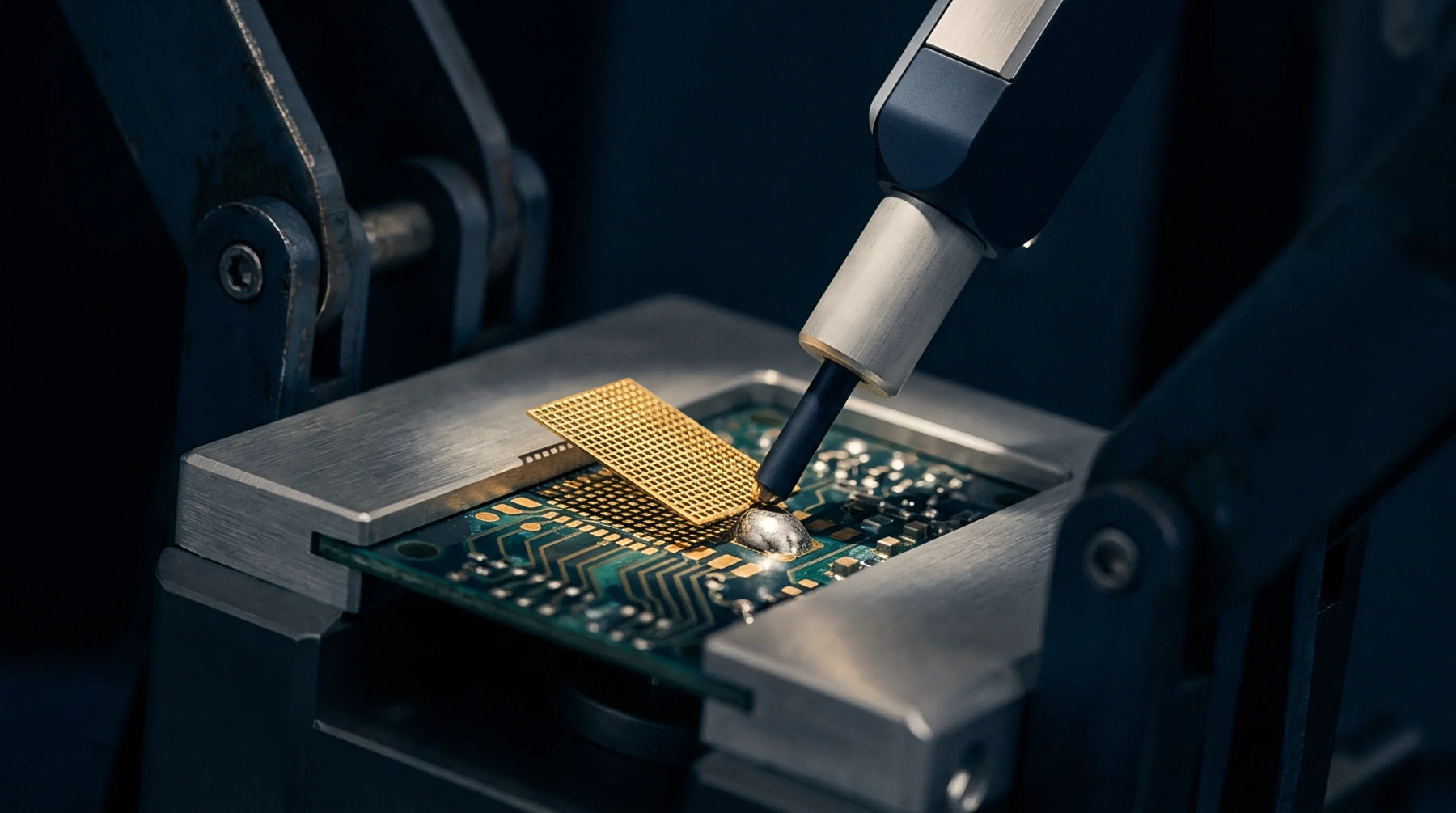
Optimizing IEEE 1149.1 Boundary Scan Register Architectures in High Density System Layouts
Partitioning boundary scan registers into parallel sub-chains cuts test vector execution time while maintaining high fault coverage on dense boards.
Partitioning boundary scan registers into parallel sub-chains cuts test vector execution time while maintaining high fault coverage on dense boards.
Quantifying boundary scan interconnect fault coverage pairs extracted netlist node universes with modified counting sequence vector execution logs.

Selecting boundary cells matching pin drive requirements enables full interconnect fault coverage and prevents system logic corruption during shift sequences.

Integrating IEEE 1149.1 boundary scan with flying probe target vectors maximizes fault coverage on high-density PCBs while slashing test times and fixture costs.

Boundary scan isolates structural opens and shorts on compliant nets, requiring hybrid physical probe testing to catch unmapped passives and dynamic failures.
Expertise is a utility, not a secret. sentiention™ publishes its working knowledge as open reference: intelligence layer covering the materials it sources, the markets it enters, and the reference that serves both.