ENIG against OSP When Shelf Life Sets the Order
ENIG guarantees 24-month solderability for staggered assembly runs, while OSP degrades beyond six months unless stored in vacuum-sealed moisture barrier bags.
Barrier
Exposed to air, bare copper traces form cuprous and cupric oxide layers within hours, ruining solderability. Surface finishes exist to keep copper pads wettable between board fabrication and final assembly. In high-density printed circuit boards, choosing between Electroless Nickel Immersion Gold (ENIG) and Organic Solderability Preservative (OSP) comes down to storage shelf life, environmental resistance, and how each protective coating breaks down over time.
OSP applies a water-based organic film ~ usually an alkylimidazole or benzotriazole derivative ~ directly over clean, micro-etched copper. The chemical reaction creates an organometallic coordination polymer film between 0.15 and 0.50 micrometers thick. This layer acts as a physical shield against ambient oxygen at room temperature without forming an intermetallic compound with copper.
The protective mechanism relies entirely on passivation, designed to decompose and dissolve under active flux during reflow.
A standard OSP film thickness of 0.20 to 0.40 micrometers protects copper pads for up to six months under strictly controlled warehouse conditions of 25 degrees Celsius and 60 percent maximum relative humidity.
ENIG works on a different principle altogether, using a dual-layer metallic finish. Fabricators plate an electroless nickel-phosphorus layer measuring 3.0 to 6.0 micrometers over copper, followed by a thin displacement deposit of immersion gold measuring 0.05 to 0.10 micrometers (2 to 4 microinches) per IPC-4552 specifications. The nickel acts as a structural diffusion barrier that keeps copper from migrating into the solder joint, while gold prevents oxidation of the underlying nickel.
During assembly, the gold dissolves instantly in molten tin-based solder, leaving clean nickel-phosphorus to form a strong nickel-tin intermetallic bond ~ specifically nickel-three-tin-four (Ni3Sn4).
| Finish Type | Protective Layer Thickness | Barrier Layer Thickness | Primary Degradation Mode | Standard Shelf Life Target |
|---|---|---|---|---|
| OSP (Alkylimidazole) | 0.15 to 0.50 µm organic film | None (copper base) | Thermal degradation and atmospheric oxidation | 6 to 12 months |
| ENIG (IPC-4552B) | 0.05 to 0.10 µm immersion Au | 3.0 to 6.0 µm Ni-P (7-10% P) | Nickel diffusion through gold pores | 12 to 36 months |
| Thick ENIG (Specialized) | 0.10 to 0.15 µm immersion Au | 4.0 to 7.0 µm Ni-P (9-11% P) | Phosphorus-rich black pad boundary | 24 to 48 months |
Once storage outlasts the design window of either finish, wetting performance degrades rapidly. High heat or humidity causes OSP’s organic chains to volatilize and oxidize, exposing the underlying copper. Once copper oxidizes under degraded OSP, standard no-clean fluxes lack the activity to strip the layer, causing non-wetting and solder balling.
With ENIG, thin gold or high porosity allows nickel atoms to diffuse along grain boundaries to the surface, forming nickel oxide (NiO). Liquid solder will not wet nickel oxide, resulting in dewetting, voiding, and pad separation.
Specifying OSP for an assembly timeline that outlasts the organic film turns an entire fabrication lot into unsolderable scrap.
Pack
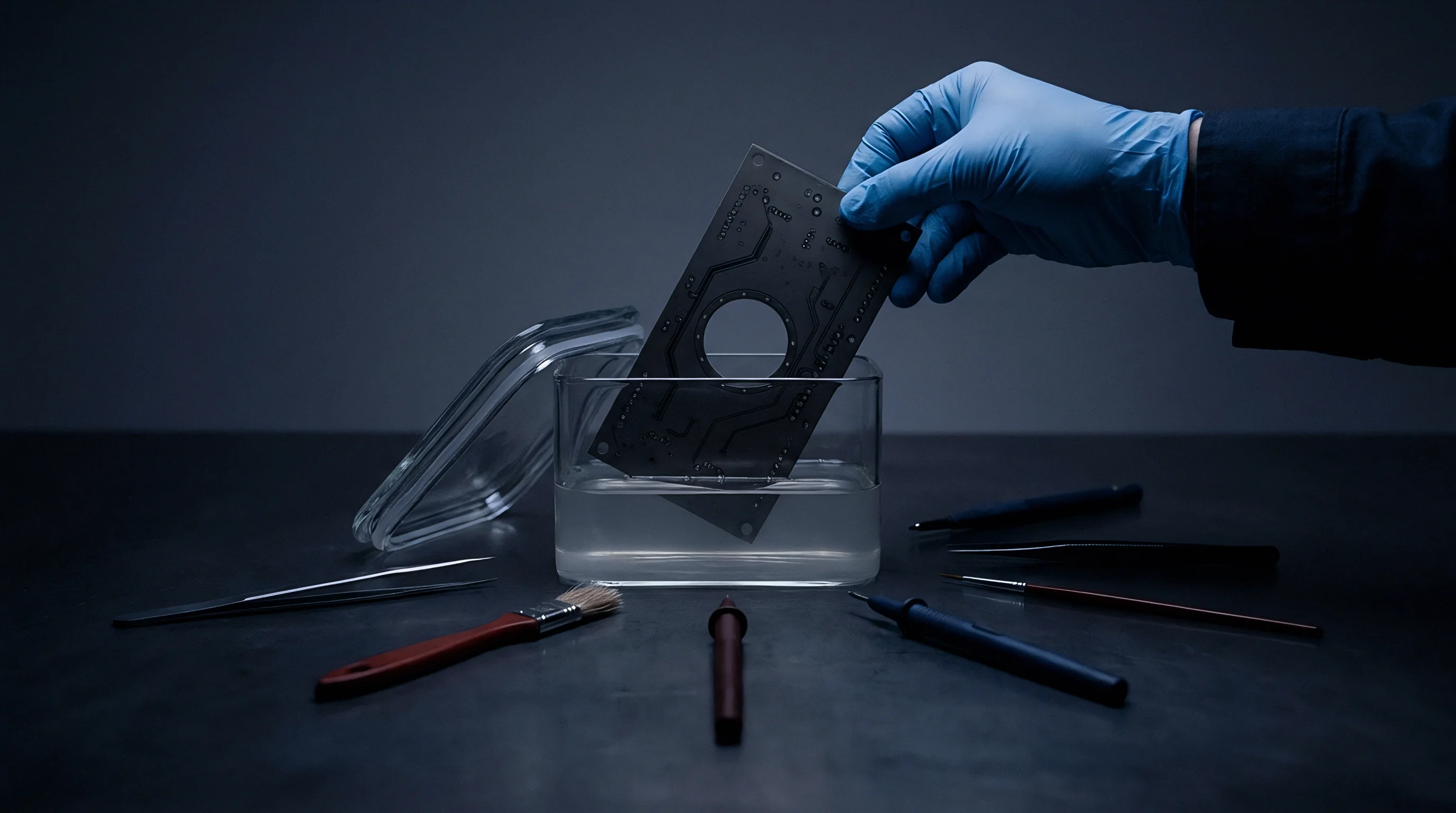
Moisture barrier bags, desiccants, and vacuum packaging determine how long bare boards survive in storage. Atmospheric water vapor, sulfur compounds, and airborne contaminants readily attack board finishes, making proper packaging essential to prevent moisture absorption and surface degradation.
Organic finishes break down quickly on shop floors exposed to humidity. OSP coatings are especially sensitive to acidic air, ambient sulfur, and halogen contaminants. Handling bare OSP boards with unprotected fingers transfers oils and salts that strip the thin organic film and induce local copper oxidation.
Fabricators must pack OSP panels with sulfur-free interleaf paper, activated desiccant packs, and humidity indicator cards inside sealed moisture barrier bags (MBB) compliant with J-STD-033 and IPC-1601.
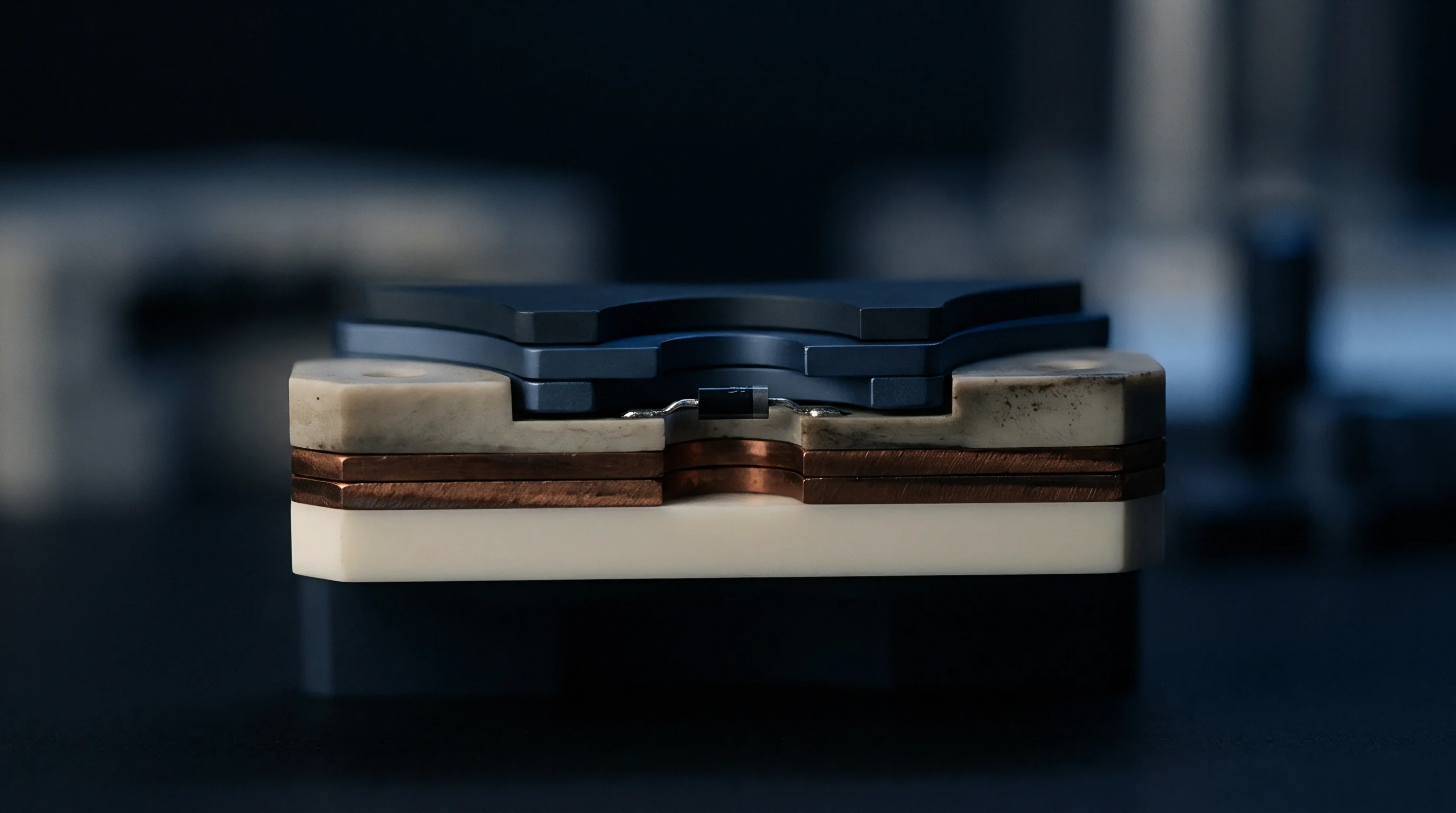
Which Storage Parameters Accelerate Organic Finish Breakdown?
Thermal cycling and relative humidity above 60 percent break the coordination bonds between copper atoms and the alkylimidazole film. As the organic structure shrinks, micro-pinholes open up, allowing atmospheric oxygen to diffuse through. ENIG handles wider temperature swings and ambient exposure far better because metallic gold remains chemically inert to oxygen at room temperature.
- Desiccant Loading Calculations determine the quantity of clay or silica units required per area of barrier pouch to maintain internal relative humidity below 10 percent for the entire transit duration.
- Moisture Vapor Transmission Rate measures the speed at which ambient humidity penetrates the sealed plastic layers of the shipping pouch, governed by ASTM F1249 testing standards.
- Sulfur Scavenging Interleaves neutralize atmospheric hydrogen sulfide before the aggressive gas can tarnish copper traces or react with nickel interfaces through porous surface finishes.
IPC-1601 section 3.3.4 sets the standard packaging baseline for moisture barrier bags containing bare printed boards at a relative humidity threshold of under ten percent.
Gold coatings remain susceptible to atmospheric contaminants if immersion deposition leaves microscopic pores behind. Porous gold lets industrial sulfur dioxide or chlorine reach the underlying nickel, forming nickel sulfide and nickel chloride blooms over the gold that block solder spread. Proper packaging halts this degradation by cutting off reactive gas exchange during transit and long warehouse holds.
A purchase order that omits the specific IPC-1601 packaging class allows the vendor to ship bare boards in standard polyethylene bags, voiding the finish warranty the moment the seal breaks.
Reflow
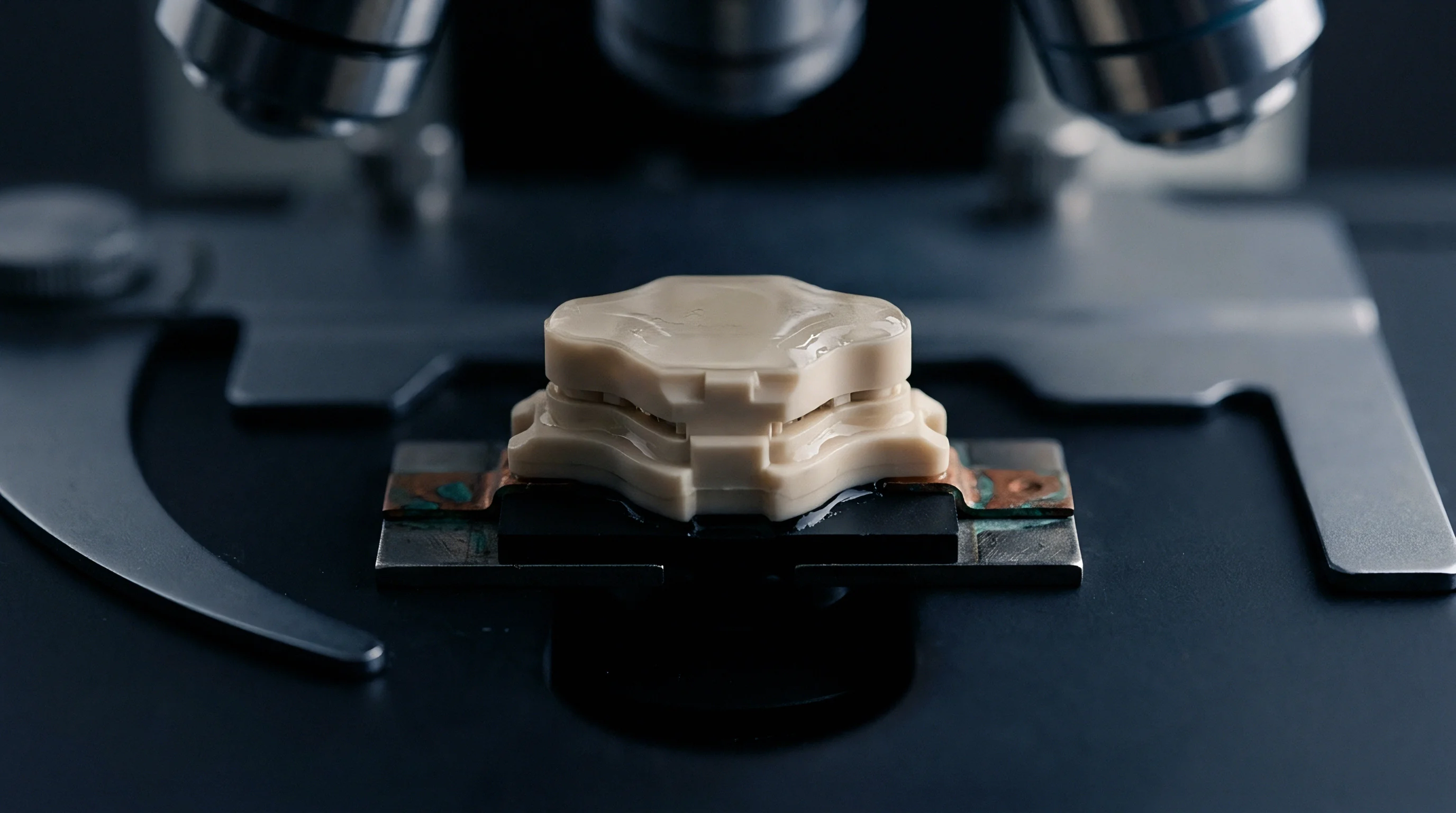
Double-sided surface mount assembly puts severe thermal stress on exposed metal pads. As a board passes through a primary convection reflow oven ~ reaching peak temperatures of 245 to 260 degrees Celsius for lead-free SAC305 alloys ~ unpopulated pads on the secondary side experience full thermal exposure in air or nitrogen.
Standard OSP chemistries degrade significantly during this initial thermal pass. Intense heat breaks the polymer bonds, causing alkylimidazole molecules to decompose and evaporate. Without flux covering unprinted pads, the copper beneath oxidizes quickly in heated air.
By the time the board enters secondary reflow, these degraded pads resist solder wetting, requiring aggressive flux or a nitrogen blanket with oxygen levels below 500 parts per million to form sound joints.
Why Do Multi-Pass Assemblies Favor Nickel Gold Metallurgies?
Repeated heating cycles do not decompose ENIG’s metallic layers. Gold dissolves into molten solder where paste is printed, while unprinted pads keep their protective gold layer intact through multiple cycles. The underlying nickel barrier stops copper migration at temperatures exceeding 250 degrees Celsius.
Because ENIG survives three to five consecutive reflow passes without losing solderability, it remains the standard choice for complex boards with selective wave soldering, press-fit connectors, or double-sided SMT layouts.
| Performance Factor | OSP (Air Reflow) | OSP (Nitrogen Reflow) | ENIG (Air Reflow) |
|---|---|---|---|
| Primary Pass Wetting Angle | 15 to 25 degrees | 10 to 18 degrees | 8 to 15 degrees |
| Secondary Pass Wetting Angle | 35 to 55 degrees (degraded) | 20 to 30 degrees | 10 to 18 degrees (stable) |
| Via In-Pad Solder Fill | Poor on aged boards | Moderate | Excellent (IPC Class 3) |
| In-Circuit Test (ICT) Contact | Poor (film builds residue) | Moderate | Superior (low contact resistance) |
| Press-Fit Pin Compatibility | Unacceptable | Unacceptable | Fully Compliant (stable friction) |
Beyond solder wetting, test fixture probing reveals another practical difference between these finishes. Contact pins on automated in-circuit test (ICT) fixtures struggle to pierce oxidized copper or leftover OSP residues after multiple reflow passes, causing high contact resistance and false open-circuit readings. ENIG provides a flat, oxidation-free surface with low contact resistance, ensuring consistent ICT probing and reliable spring-pin contact across long production runs.
Proprietary OSP chemistries may rate for three lead-free thermal passes in air, but assembly yields drop as soon as atmospheric relative humidity climbs on the factory floor.
Inventory
Procurement strategies balance unit fabrication pricing against inventory holding risks and scrap write-offs. Surface finish selection acts directly as a commercial lever: OSP offers the lowest upfront board cost, while ENIG carries a gold surcharge that protects long-term inventory value.
Fabricators quote OSP at a baseline cost, whereas ENIG adds between 10 and 25 percent to the bare-board unit price depending on layer count, copper balance, and pad coverage. For high-volume panels with immediate assembly turnaround, OSP delivers clear bill-of-materials savings. But when delivery schedules stretch or contract manufacturers hold buffer stock across quarters, OSP’s lower initial price transforms into a serious inventory liability.
A production run scheduled across a rolling twelve-month buffer demands ENIG to eliminate the scrap risk of oxidized copper pads.
The financial tipping point comes down to lot size, storage timeline, and the cost of scrapping assembled boards. Consider a worked procurement model comparing OSP and ENIG for an industrial controller board built on an 8-layer high-Tg FR-4 stackup.
Assume an annual procurement volume of 20,000 units delivered in four quarterly batches of 5,000 boards, with bare boards purchased in a single upfront fabrication run of 20,000 units to maximize panel discounts. Base fabrication costs 12.00 dollars per board with OSP and 13.80 dollars with ENIG (a 1.80 dollar premium per unit). Batch one enters SMT assembly at month one, batch two at month four, batch three at month eight, and batch four at month twelve.
- Upfront Procurement Expense totals 240,000 dollars for the OSP lot and 276,000 dollars for the ENIG lot, establishing a 36,000 dollar initial price differential favoring OSP.
- Batch Three Assembly Yield at month eight drops by 4 percent on OSP boards due to pad oxidation and solder voiding, generating 200 rework units costing 25.00 dollars each to touch up, adding 5,000 dollars in assembly line labor.
- Batch Four Scrap Failure at month twelve causes a 15 percent assembly reject rate on OSP boards due to non-wetting on critical BGA pads, ruining 750 fully populated boards with component values of 85.00 dollars each, generating an unrecoverable component scrap loss of 63,750 dollars.
- Net Financial Balance proves that the initial 36,000 dollar fabrication savings on OSP resulted in 68,750 dollars in assembly rework and component scrap, yielding a net loss of 32,750 dollars relative to the ENIG baseline.
Whenever inventory turns take longer than six months, the metallic stability of immersion gold over electroless nickel covers its upfront premium by eliminating line stoppages, rework costs, and scrapped components.