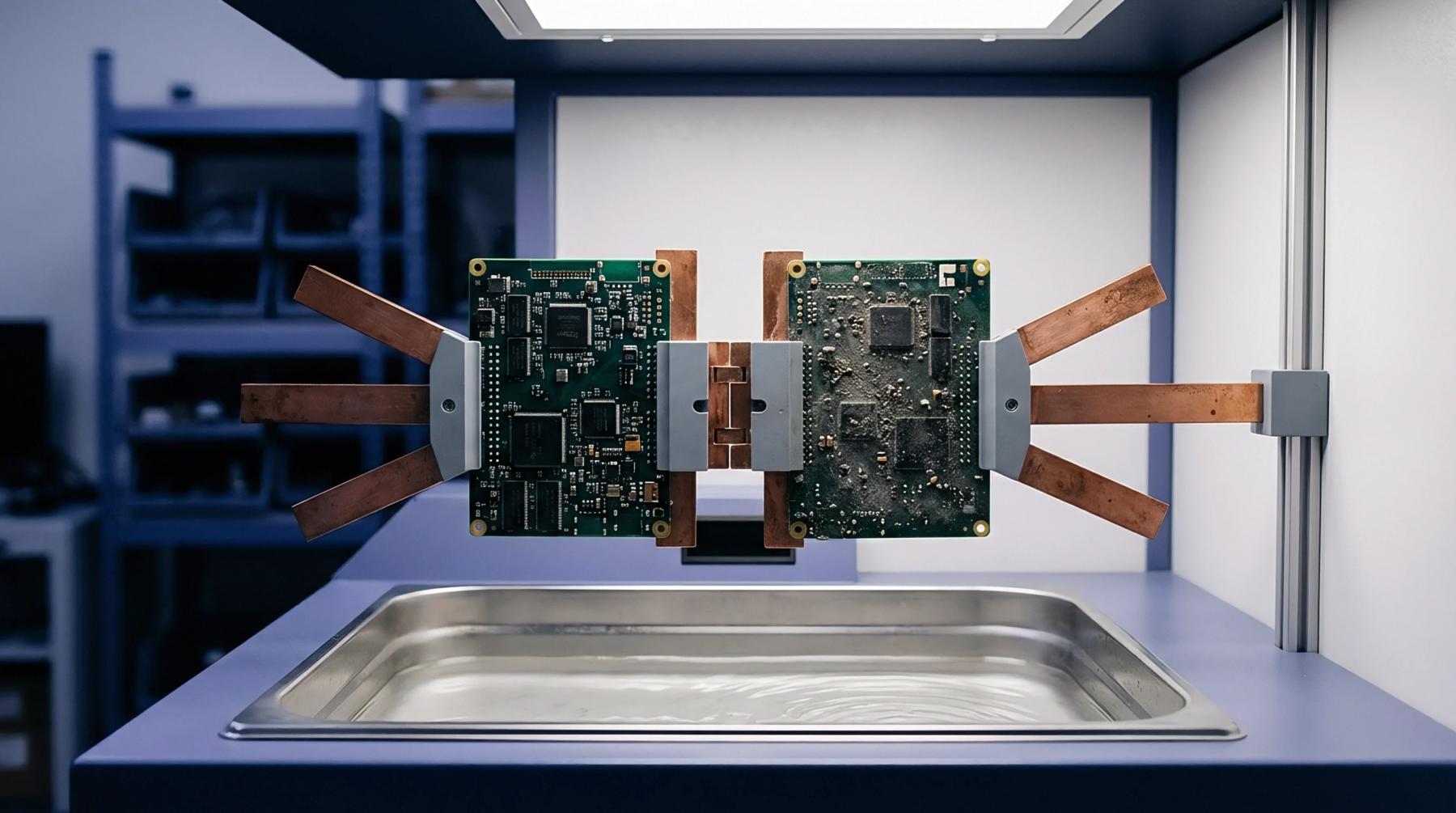
Residue Formation
Ionic contamination left behind after the reflow soldering process constitutes halogen flux residue when activating compounds based on chlorine or bromine remain unspent on the populated printed circuit board assembly. Chemical activators are added to liquid formulations to strip oxides from copper pads and component terminations during thermal excursions. Halogen flux residue appears on the assembly surface as a white or translucent film surrounding solder joints after cooling occurs.
Ionic Corrosivity
Chlorides and bromides attract atmospheric moisture when left on the printed circuit board assembly, creating galvanic cells that degrade copper traces and solder joints over time. Surface insulation resistance testing measures current leakage across parallel comb patterns to verify whether ionic contamination levels remain below predetermined thresholds. Elevated humidity accelerates chemical reactions within the residue, leading to electrochemical migration and dendritic growth between adjacent fine pitch conductors.
Cleaning processes using automated aqueous wash systems remove these active chemical species before conformal coating application.
Cleaning Verification
Post assembly cleanliness testing quantifies ionic residues by submerging completed printed circuit board assemblies in a heated solution of deionized water and isopropyl alcohol. Resistivity of solvent extract testing calculates the equivalent amount of sodium chloride per square centimeter of surface area to confirm chemical removal efficacy. Process engineers monitor ionic extraction values to ensure electrochemical reliability under operating conditions specified for automotive and aerospace hardware.
Thermal cycling performance depends heavily upon complete removal of halide contaminants during the final aqueous washing stage.