Mechanical Verification
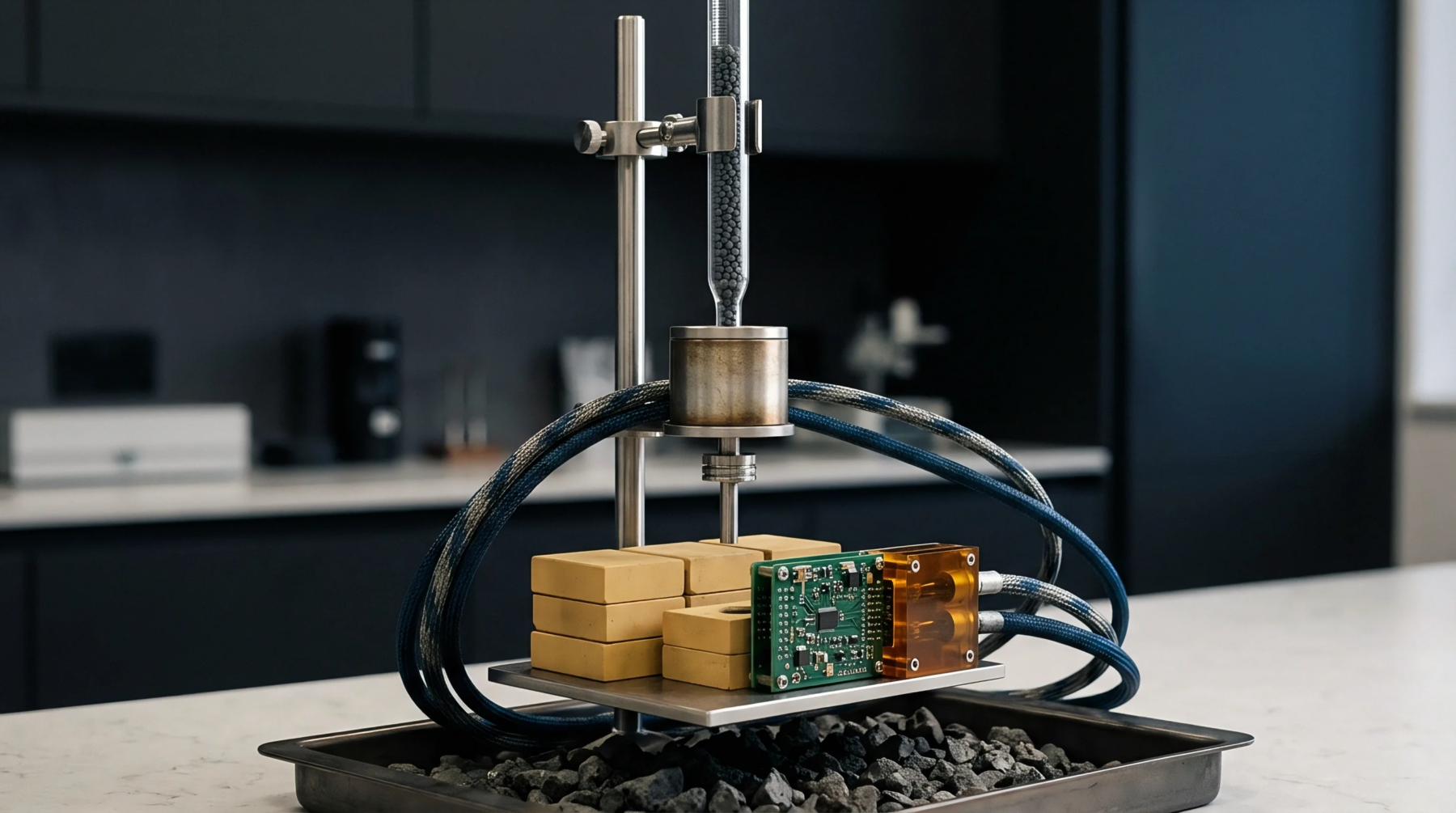
Quality assessment of ball grid array solder joints involves rapidly shearing attached solder spheres off interconnect pads to evaluate ductile-to-brittle transition behavior and intermetallic compound structural integrity. Standard quasi-static shear testing at low speeds often masks brittle intermetallic interfacial fractures by allowing the soft solder alloy to deform plastically. A high speed ball shear test drives a rigid shear ram into the solder ball at velocities reaching several meters per second to simulate mechanical shock forces experienced during device drops.
Test equipment records load-displacement curves and peak fracture force to verify joint toughness under sudden impact conditions.
Failure Analysis
Post-test optical microscopy classifies fracture surfaces into distinct modes based on the failure plane. Mode one represents desirable ducting rupture within the solder bulk, indicating strong metallurgical bonding at the pad interface. Mode four failure occurs as brittle interfacial separation between the nickel-tin intermetallic layer and the underlying copper pad, revealing compromised surface finish chemistry or excessive thermal aging.
Automated shear systems record force degradation curves during impact to calculate energy absorption values for each joint position across the component array.
Rate Sensitivity
Increasing ram impact speed sharply shifts the failure mode from ductile solder tearing to brittle interface fracture. Solder alloys exhibit strain-rate hardening that concentrates stress at the intermetallic interface during rapid displacement events.