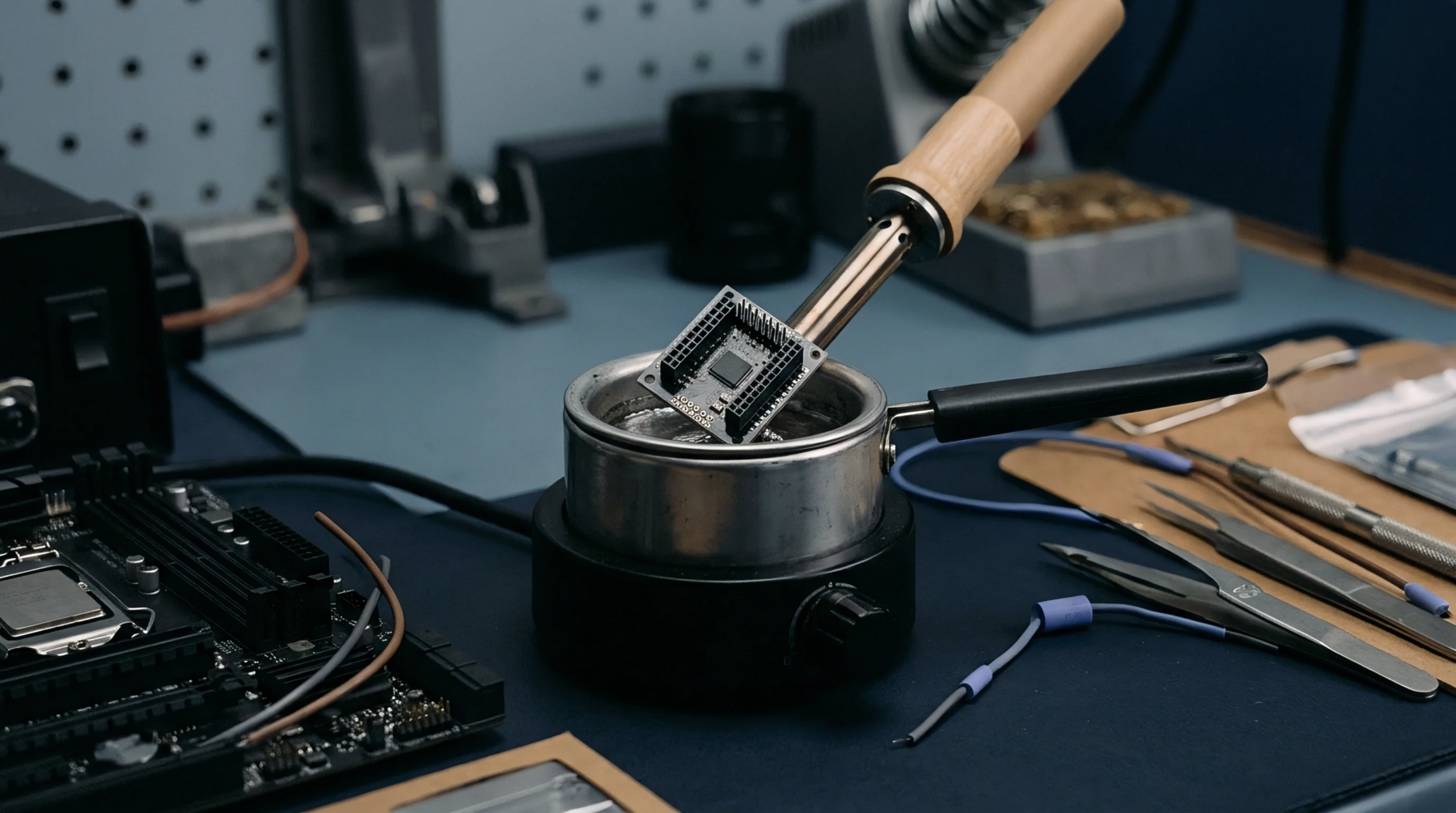
Thermal Stressor
Reliability test method that uses high speed temperature transitions to induce mechanical fatigue in printed circuit board interconnects. Unlike traditional cycling, highly accelerated thermal shock focuses on rapid air-to-air or liquid-to-liquid transfers to maximize the expansion mismatch between copper and resin. This test forces latent manufacturing defects to surface in a fraction of the time required by standard environmental chambers.
It serves as a primary tool for validating the strength of via plating and internal bond integrity.
Chamber Cycle
Specialized equipment moves the test vehicle between a hot zone and a cold zone within seconds. The highly accelerated thermal shock process subjects the via barrels to intense tensile and compressive forces as the substrate expands and contracts. Because the transition is nearly instantaneous, the material cannot relax, which leads to rapid crack propagation in weak copper.
Resistance monitoring during the test captures transient opens that might close again once the board reaches room temperature. These intermittent failures often point to poor plating thickness or hydrogen embrittlement in the copper.
Qualification Threshold
Qualification data help to determine the mean time to failure for a specific board design. Most aerospace and medical applications require survival through hundreds of these aggressive cycles without a major increase in circuit resistance.