Pressure Application
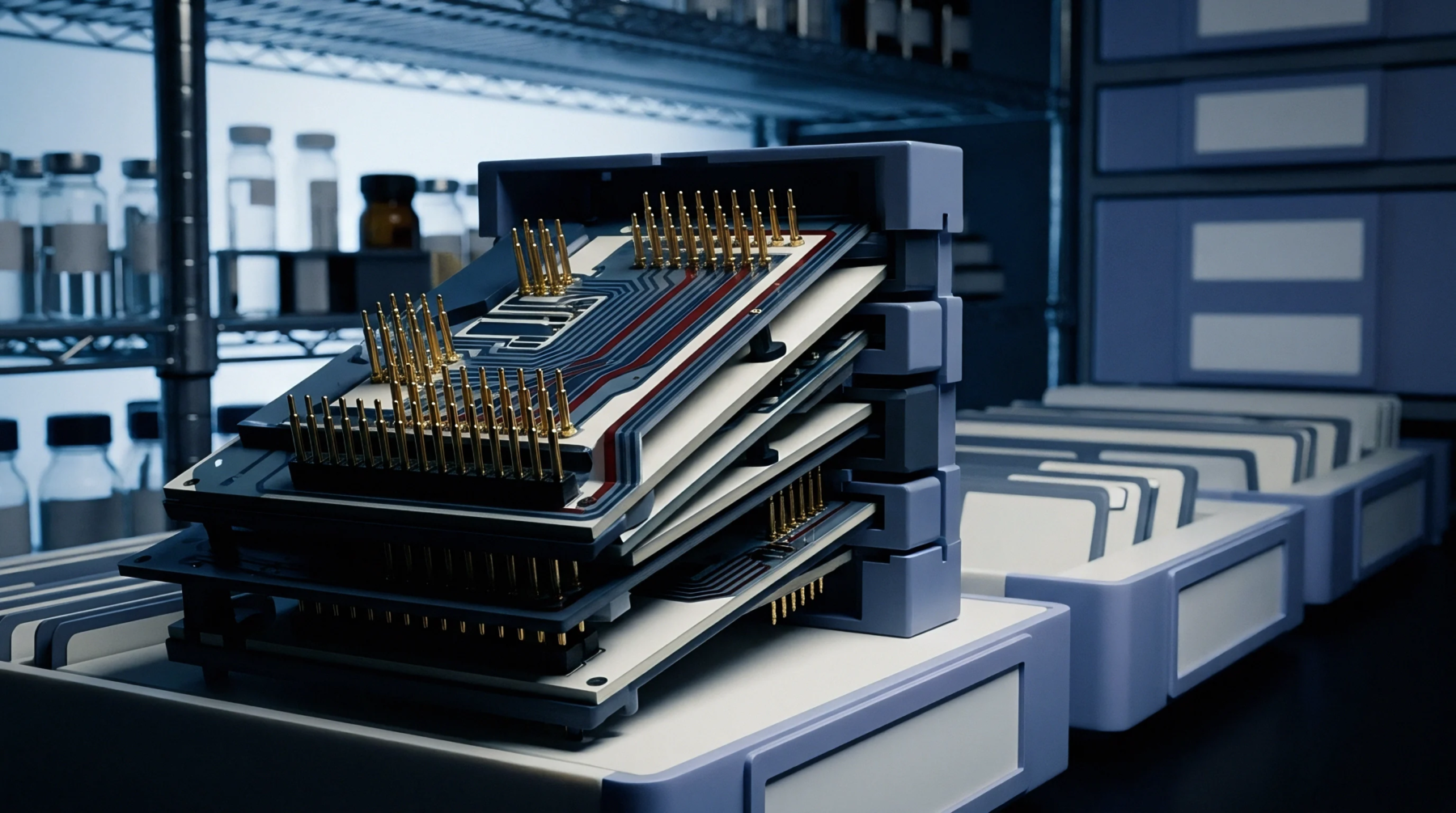
High-pressure vacuum lamination joins multiple layers of prepreg and copper foil into a single homogeneous panel. Multilayer circuit fabrication uses hydraulic consolidation to eliminate air gaps, compact the fiberglass weave, and spread the liquefied resin evenly across the internal circuit patterns. The primary mechanism utilizes a hydraulic ram to apply several hundred pounds per square inch of force to the stack within a heated vacuum chamber.
This step prevents internal delamination and ensures uniform dielectric thickness across the printed board. System controls must monitor the pressure profile to ensure that force is applied at the precise moment the resin reaches its lowest viscosity.
Material Flow
Under intense temperature and pressure, the epoxy resin in the prepreg softens and flows to fill the voids between copper traces. This flow must be carefully balanced because insufficient pressure leaves microscopic air pockets that cause electrical arc discharges. Conversely, excessive pressure squeezes out too much resin, leaving dry areas that lead to mechanical separation during subsequent drilling or soldering operations.
Operational Window
Thermal and pressure curves are controlled by a programmable logic controller that coordinates the heating rate and the ram force. A typical cycle ramp increases the temperature by five degrees Celsius per minute while the hydraulic pressure rises to twenty bar. Maintaining these precise parameters ensures that the cure cycle completes with minimum stress buildup in the fiberglass substrate.