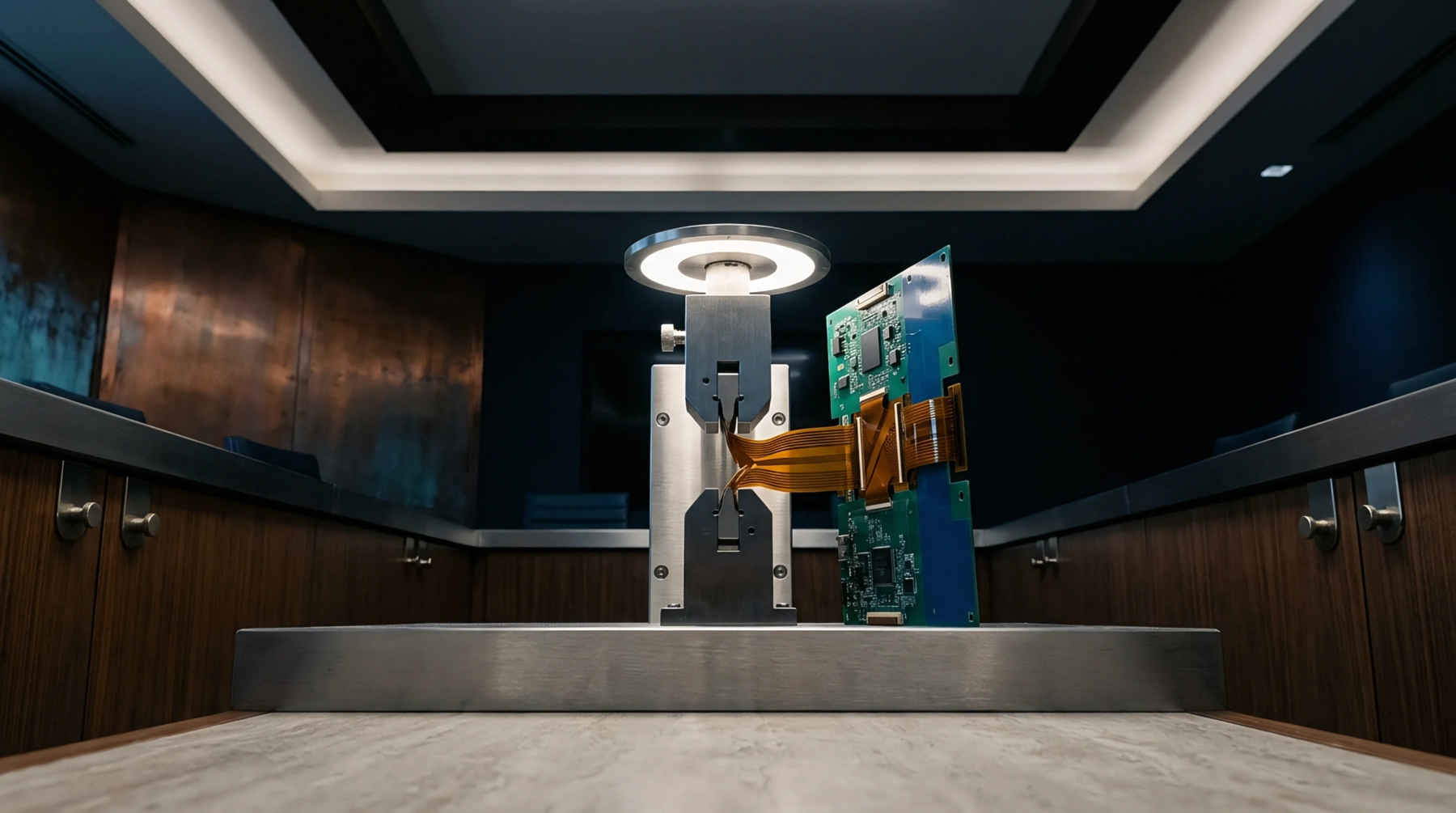
Probe Methodology
Four-terminal resistance measurements eliminate the influence of lead and contact resistance to provide highly accurate electrical characterization during continuous stress testing. By using in-situ four-wire kelvin sensing, test systems monitor sub-milliohm changes in solder joint resistance as temperature or mechanical load is applied. The method isolates the resistance of the interconnect itself from the test setup.
This precision is necessary when tracking early stage crack propagation in ball grid array packages.
Signal Isolation
Separation of the current delivery path from the voltage measurement circuit prevents error from lead wire impedance. In a typical in-situ four-wire kelvin sensing setup, two leads source a known current through the device while two independent high-impedance leads measure the voltage drop directly across the joint. Since negligible current flows through the measurement loop, the voltage drop across those test leads is virtually zero.
This circuit layout allows the tester to register minute fluctuations in resistance that signal the onset of thermal fatigue. Accurate measurement is maintained even when the testing chamber operates at elevated temperatures.
Sensing Performance
Small changes in contact resistance can indicate the initiation of microscopic fractures in the interconnect before a complete open circuit occurs. The in-situ four-wire kelvin sensing technique catches these microstructural changes as they occur. This real-time detection allows manufacturers to record the precise cycle count at which the joint begins to fail.
The resulting data enables accurate calculation of the fatigue life of the package.