Mechanical Stress
A mechanical stress acts parallel to the plane of contact between two bonded materials in an electronic assembly, such as a solder joint and a copper pad. This force, termed interfacial shear, arises from thermal expansion mismatches between the silicon components and the laminate substrate during operational temperature cycles. It threatens the physical and electrical integrity of the connection by concentrating stress along the intermetallic compound layer.
Failure Mode
Deformation under these parallel forces leads to microcracks that propagate along the boundary between the solder and the pad. This type of degradation is particularly dangerous because the electrical circuit may remain closed when the board is cold but open when thermal expansion pulls the surfaces apart. Over time, these cracks result in intermittent open circuits that are difficult to diagnose during routine service.
Test Methodology
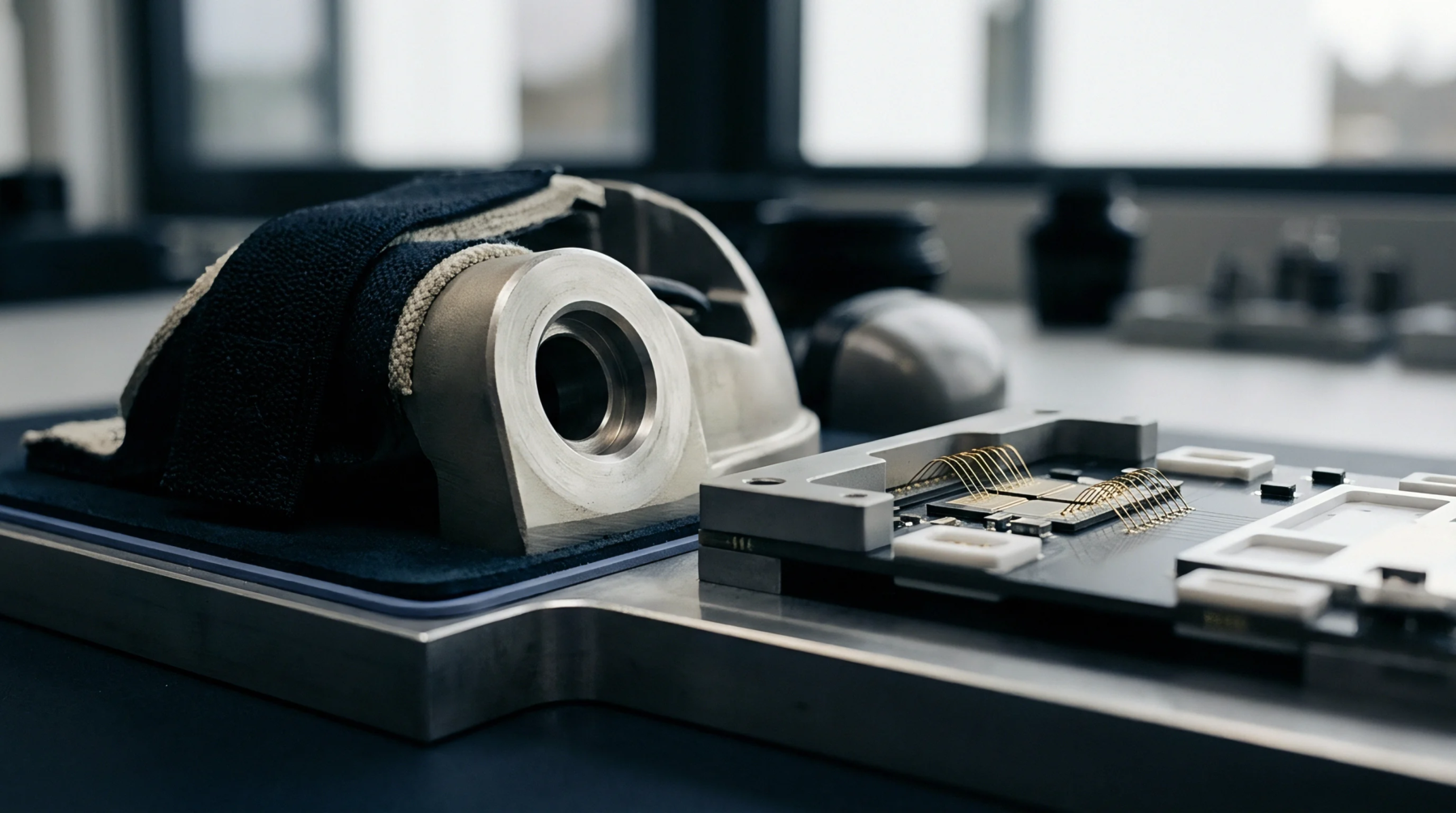
Measurement of the resistance to this mechanical force involves standardized shear testing using a specialized bond tester. A precise tool applies a lateral load to a soldered component at a controlled speed until the joint fails. The peak force recorded at the moment of fracture determines the shear strength of the interface.
This test is routinely conducted during process validation to ensure that the reflow oven temperature profile has created a sufficiently robust intermetallic layer without making it brittle. Analyzing the fracture surface under a microscope allows quality engineers to determine whether the failure was cohesive, occurring within the bulk solder, or adhesive, occurring along the intermetallic boundary.