Ion Transport
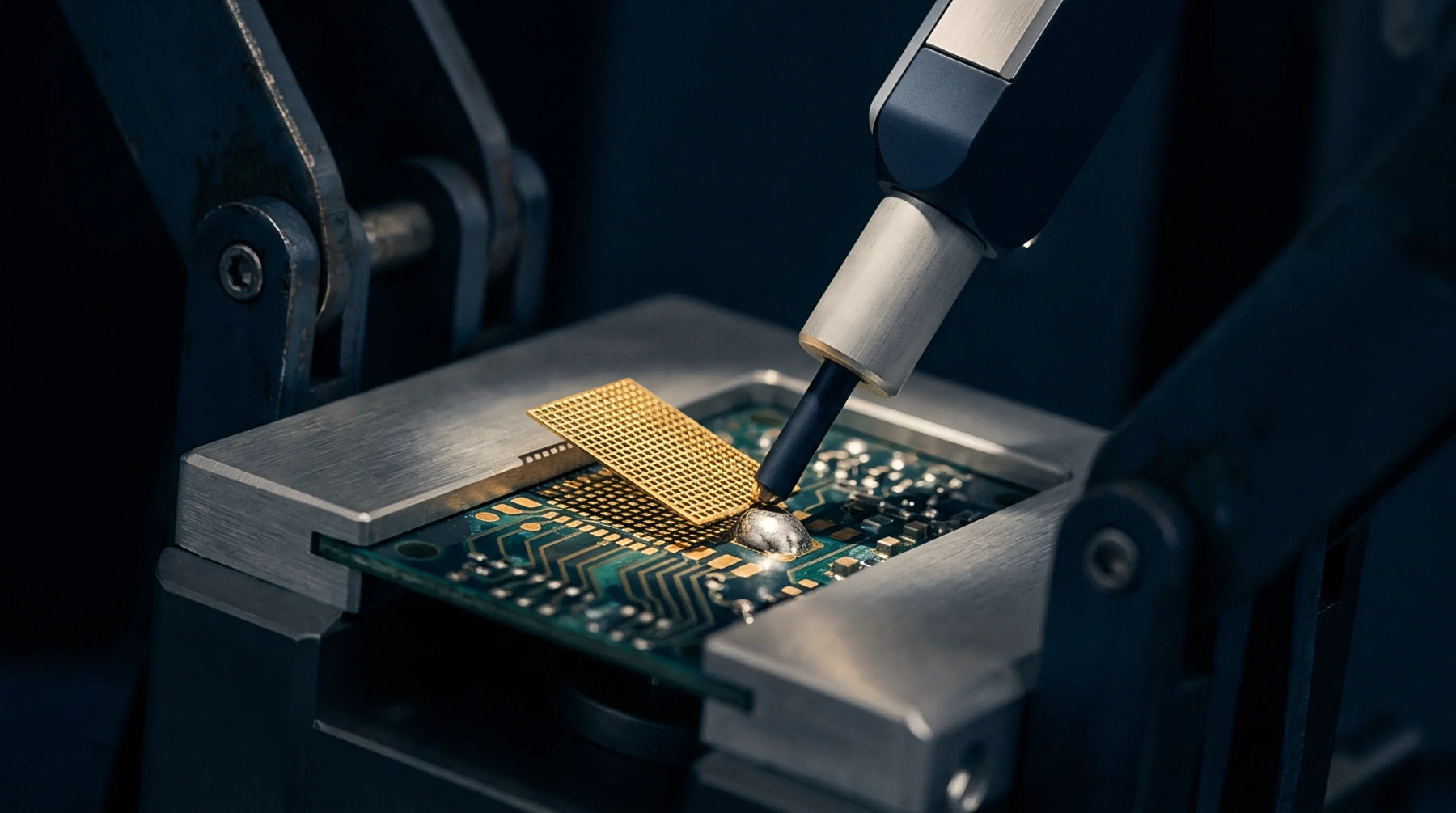
Migration of charged atoms through a solid or liquid medium occurs when an external electric field is applied. In the context of assembled electronics, ionic drift involves the movement of contaminant ions across the surface of the laminate or through the bulk of the material. This process is accelerated by high temperatures and the presence of moisture.
It leads to the accumulation of ions at the electrodes, which can change the local conductivity or initiate chemical reactions that degrade the circuit. The rate of the movement depends heavily on the mobility of the specific ions involved and the strength of the field.
Reliability Hazard
Residues from flux or cleaning agents provide the source material for electrochemical migration. As ionic drift continues over thousands of operating hours, metal ions from the solder joints can travel toward the opposite potential and form dendrites. These metallic growths eventually bridge the gap between traces and cause intermittent faults or permanent short circuits.
High impedance circuits are particularly sensitive to the leakage currents caused by this transport.
Detection Method
Cleanliness testing assesses the risk by measuring the conductivity of an extract solution. While ionic drift itself is a slow process, the use of surface insulation resistance testing under high humidity simulates years of service in a few hundred hours. This test monitors the leakage current to detect the exact moment when the ion movement creates a significant bridge.
Results determine if the cleaning process is sufficient.