Material Flow
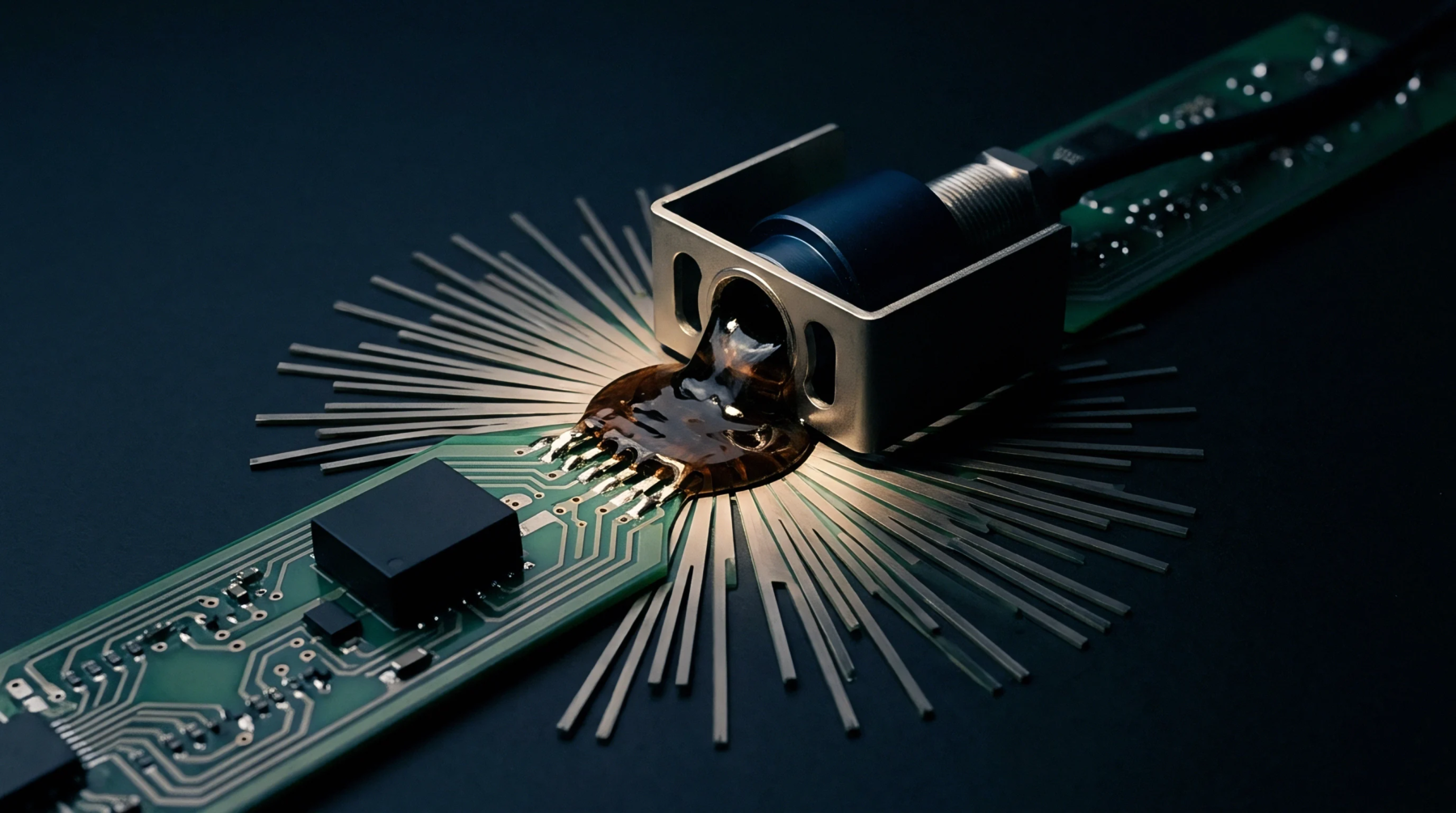
Melt rheology defines laminate resin flow during high temperature lamination cycles inside multilayer printed circuit board fabrication. Prepreg viscosity drops under applied hydraulic pressure, allowing liquid polymer to displace trapped air and wet inner layer copper foils. Excessive displacement causes dry spots and starved dielectric areas because insufficient matrix remains between conductors.
Conversely, inadequate expulsion traps volatiles and air pockets, resulting in voids that compromise dielectric strength and thermal shock resistance. Thermomechanical analysis establishes the curing window by measuring gel time and minimum viscosity points. Press operators adjust thermal ramps and clamping pressures to control polymer displacement before crosslinking locks the molecular structure.
Ultrasonic inspection detects internal delamination caused by improper resin migration after the press cycle concludes.
Displacement Limits
Viscosity profiles dictate laminate resin flow behavior during multi-opening press operations. Epoxies undergo a predictable thinning phase before polymerization increases molecular weight and halts movement. Resin content percentages and filler loading levels govern the total displacement volume available during the consolidation phase.
Tooling pins and book arrangements influence thermal transfer rates across large panel formats. Technicians monitor heat penetration using embedded thermocouples placed inside dummy panels during trial runs. Deviations from established thermal profiles alter the gel point timing, shifting the polymer from liquid to gel prematurely.
Consolidation Control
Post-lamination thickness measurements verify laminate resin flow adequacy across active routing areas and plane copper zones. Micrometer arrays map resin distribution from panel centers toward outer edge trim lines. Microsection analysis reveals resin pocket geometry and glass fiber bundle wetout quality under magnification.
Acoustic micro imaging exposes hidden voids located near heavy copper planes where thermal mass restricts local temperature rises. High frequency applications demand uniform dielectric spacing to maintain controlled impedance values throughout the finished circuit board. Proper polymer migration eliminates resin starved regions adjacent to copper features, ensuring long term reliability during subsequent thermal assembly processes.