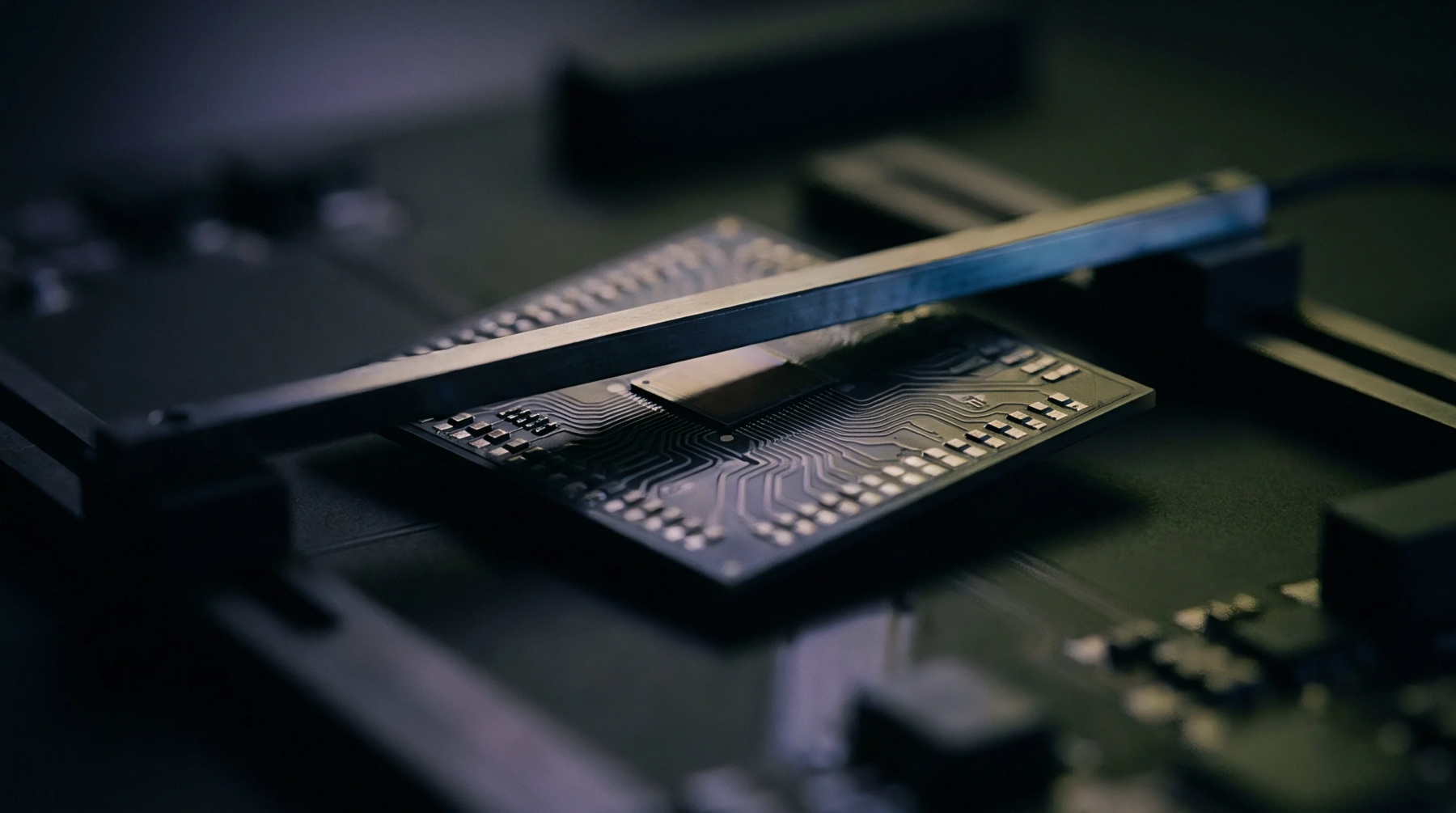
Microvia Alignment
The technical process of aligning a high-precision laser beam with internal copper target pads ensures the reliable formation of blind microvias in high-density printed circuit boards. Known as laser drill target registration, this method utilizes optical recognition of fiducial marks on the outer surface of the panel to calculate the coordinates of the buried copper layers. Accurate alignment prevents the laser from drilling off-center, which would damage the interconnect pattern or reduce the contact area of the microvia.
Alignment Execution
The drilling machine scans the panel before processing, using specialized cameras to capture the exact positions of the reference targets. The system then interpolates these measurements to correct for any material shrinkage, rotation, or stretch that occurred during lamination. After these calculations are complete, the laser pulse vaporizes the resin directly above the target pad, stopping when it reaches the copper layer.
This layer-by-layer adjustment is essential because laminate sheets shift during multi-layer lamination. Correcting for these sub-millimeter shifts on a panel-by-panel basis prevents drilling errors across large production runs.
Precision Factor
Small variations in registration can lead to breakout, where the microvia wall extends beyond the boundary of the capture pad, causing electrical failure. Fabricators run routine test runs and utilize automated optical inspection to monitor registration drift and adjust the scaling parameters of the drilling system. This calibration step holds drill accuracy to within a few micrometers.