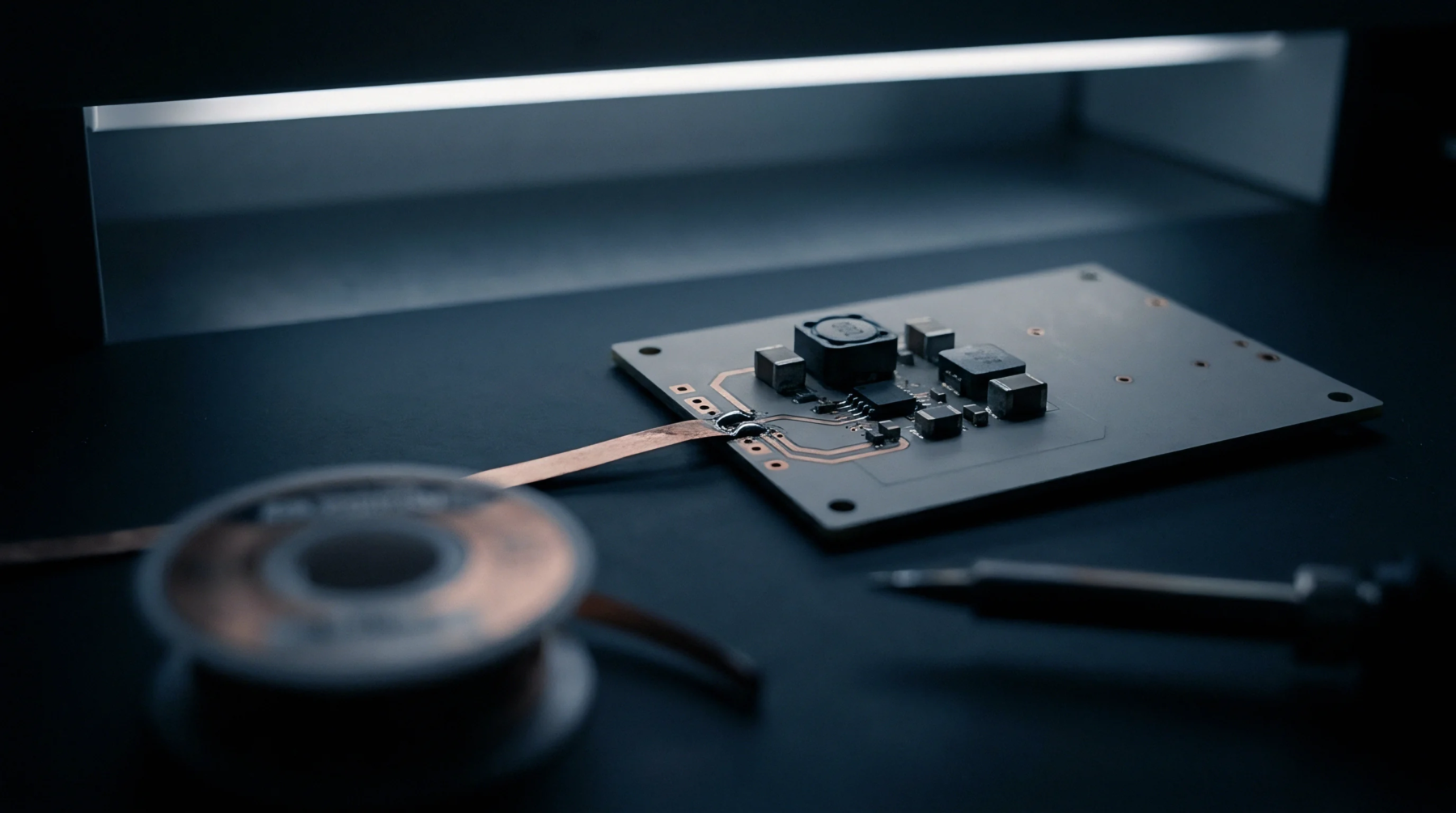
Electrochemical Modification
Electroplating bath components control the deposition rate of metallic ions onto copper-clad laminate surfaces during the formation of interconnecting traces. These leveler additives adsorb onto high-current density regions of the substrate to hinder local ion reduction. This selective inhibition encourages uniform thickness across complex geometry, preventing excessive buildup at narrow apertures or board edges.
The chemistry relies on the concentration balance of organic molecules that attach to the cathode.
Bath Maintenance
Performance consistency in acidic copper plating relies on analytical monitoring of additive depletion cycles. Operators calibrate the consumption rates against surface area processed to maintain the organic concentration within a specific parts per million range. Electrochemical analysis techniques detect the active inhibition strength of the solution to prevent metal distribution failure.
A low concentration causes uneven copper growth, while excess additive creates deposit brittleness or creates voids in through-holes.
Quality Impact
Microsection analysis verifies the effectiveness of the chemical control system by measuring the ratio of surface thickness to hole wall plating. Uniformity reduces the thermal stress on copper joints during subsequent soldering stages because even mass distribution handles expansion cycles without cracking. Thin traces resulting from poor leveling force high resistance paths that compromise signal integrity.
Consistent distribution prevents the formation of nodules that pierce dielectric masks.