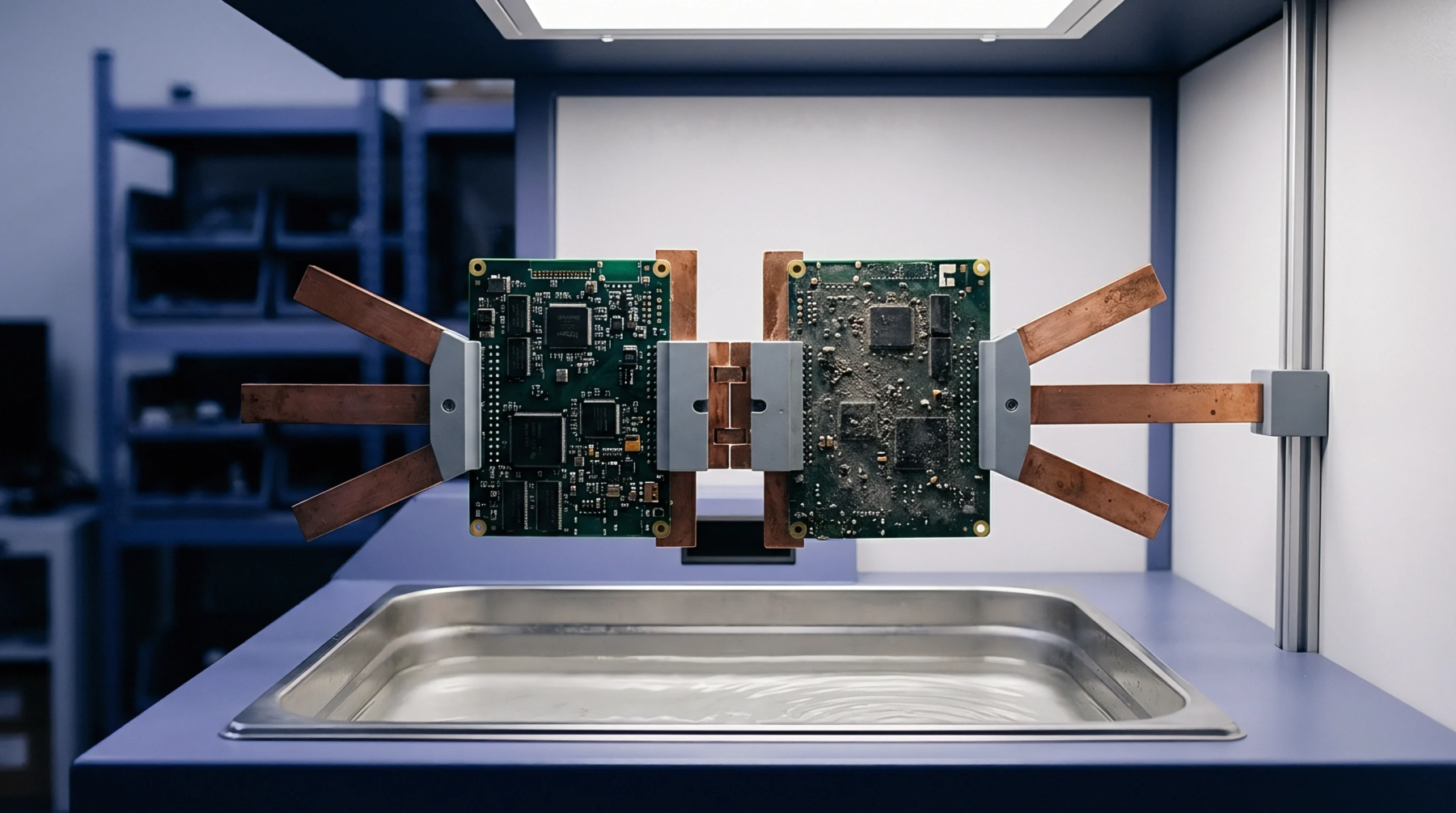
Electroforming Base
Manufacturing substrates used in the electrodeposition of metals function as the master patterns for creating high-precision stencil apertures. The mandrel cathode provides the conductive surface upon which nickel is electrolytically deposited to form the stencil sheet. This component determines the thickness of the resulting metal sheet used in solder paste printing.
Release Mechanism
Successful separation of the electroformed metal sheet from the underlying substrate requires a low-adhesion interface or a chemically passive surface layer. In this process, the mandrel cathode is often coated with a thin oxide or a release agent to ensure that the deposited foil can be peeled away without distorting the delicate aperture patterns. This separation stage determines the final yield of the stencil manufacturing run.
Accuracy Control
Surface finish and dimensional precision of the substrate must be maintained to prevent defects in the electroformed foil. Any scratches, pit marks, or irregularities on the mandrel cathode will be replicated on the stencil, leading to uneven solder paste release during board assembly. Therefore, the substrate is polished to a mirror finish and inspected for flatness before every electrodepositing cycle, ensuring that the stencil apertures remain perfectly formed across the entire board layout without any distortion or loss of fine-pitch fidelity.