Lamination Steel
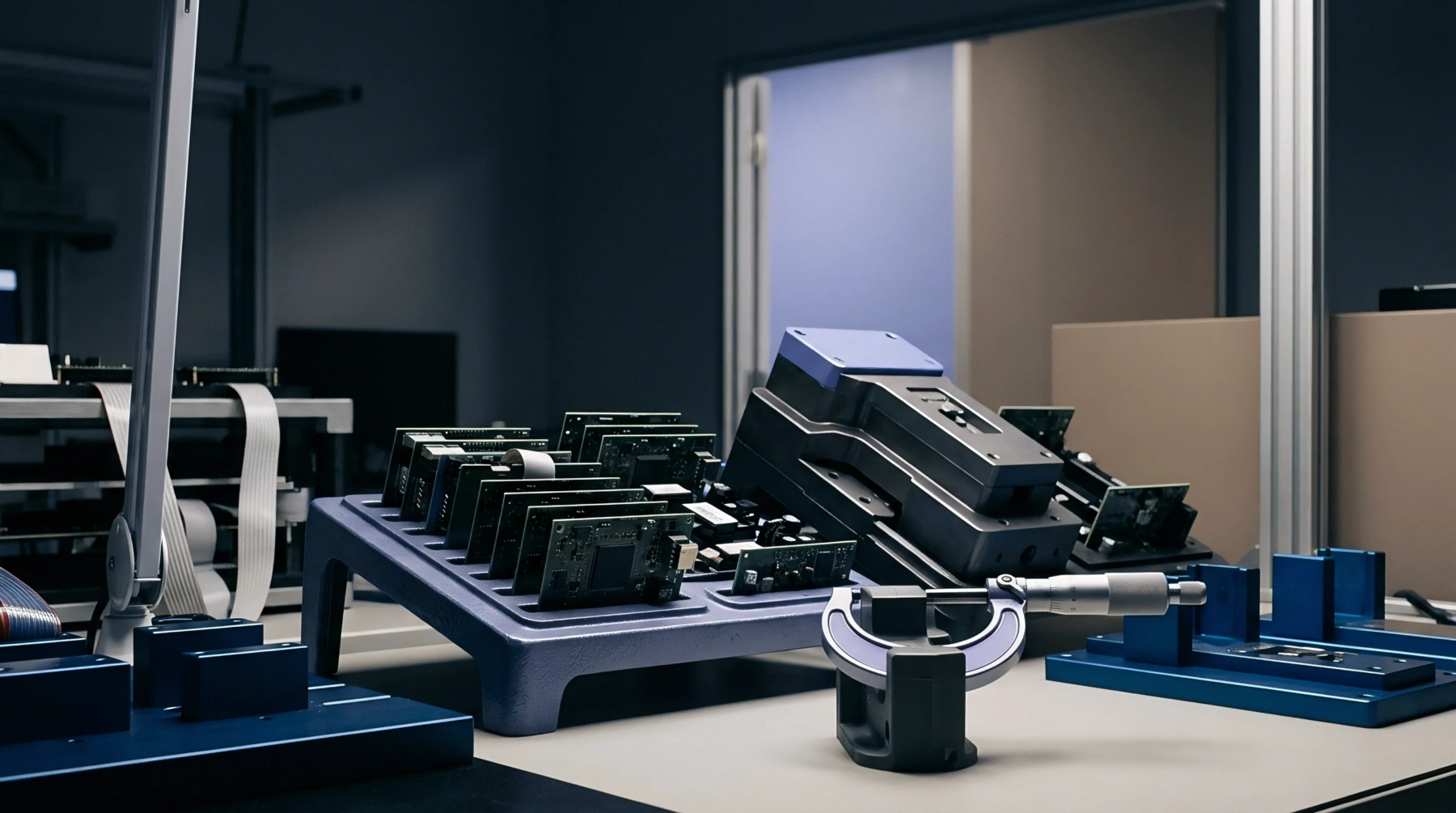
Rigid fixture tooling positions substrate panels inside a laminating press during multilayer circuit fabrication. A heavy mechanical press plate transfers uniform clamping force and thermal energy from hydraulic platens to prepreg laminate stacks during vacuum lamination cycles. Precision ground tool steel or high-strength stainless steel plates maintain flat parallel surfaces despite high thermal expansion and pressure cycling.
Smooth surface finishes prevent localized pressure spikes that produce dielectric thickness variations and copper foil wrinkles across the panel array. Heat transfer through the plate drives epoxy resin flow and cross-linking reactions necessary to bond internal circuit layers securely. Distorted or contaminated press surfaces introduce voiding and resin starvation across processed laminates.
Fabricators inspect plate flatness routinely to prevent structural defects during high-layer-count board press runs.
Pressure Distribution
Uniform pressure application relies on planarity across the entire contact surface during high-temperature pressing cycles. Non-uniform force transmission generates localized resin squeeze-out and board warp after cooling. Thermal expansion matching between press plates and laminate materials minimizes shear stress along outer foil surfaces.
Regular re-grinding and surface polishing restore required flatness tolerances after repeated thermal exposures.
Parallelism Control
Thickness consistency across multilayer panels requires precise alignment of each mechanical press plate inside the lamination press openings. Proper maintenance ensures target dielectric spacing according to IPC-4101 material standards. Proper maintenance of each mechanical press plate ensures consistent dielectric thickness across laminated panel arrays.