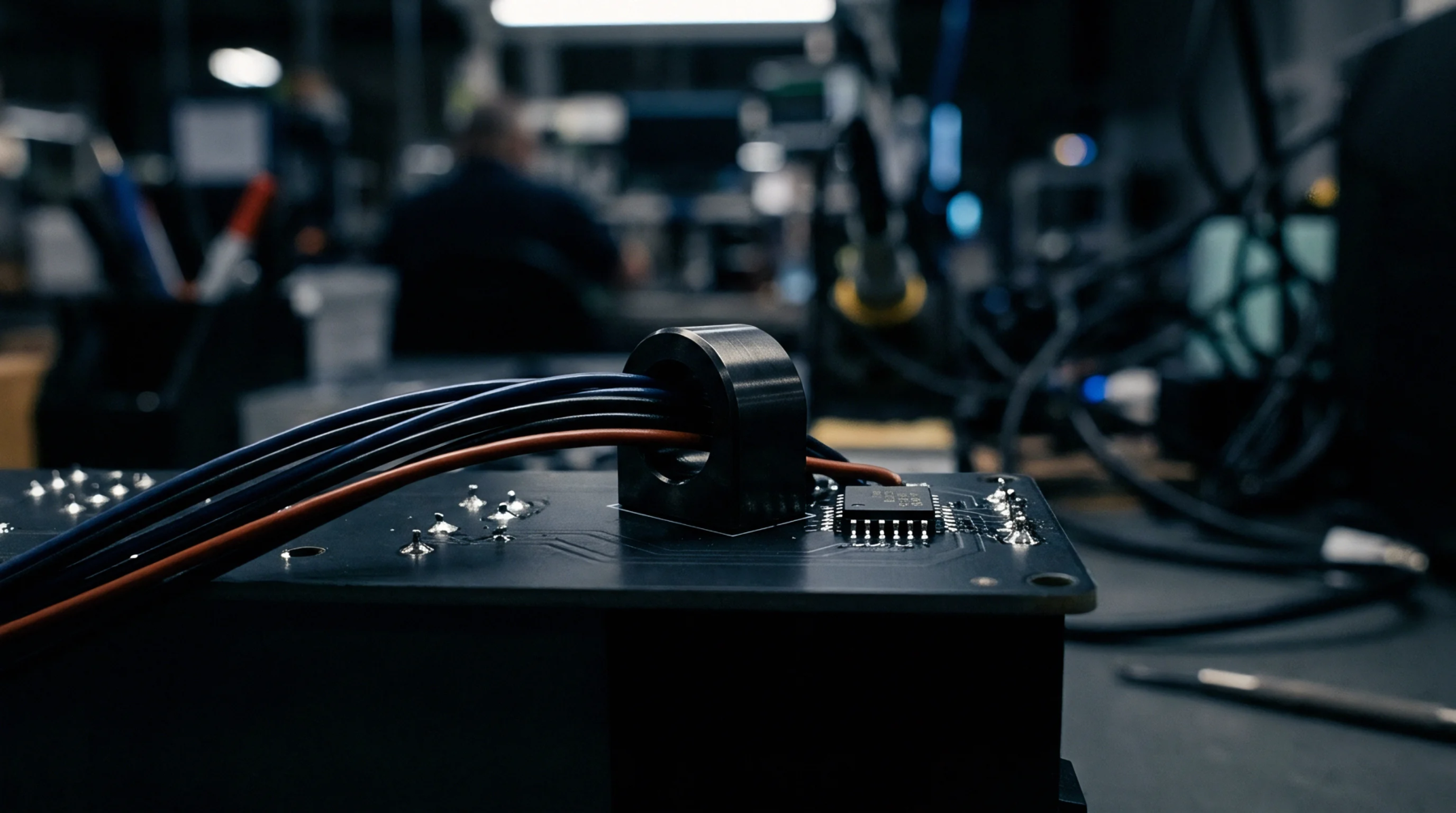
Cumulative Fatigue
A mathematical calculation aggregates simultaneous multi-directional dynamic stress inputs into a scalar value that indicates total fatigue consumption experienced by circuit board assemblies during random vibration exposure. The multi-axis damage index synthesizes dynamic vector inputs across three orthogonal translational axes and three rotational degrees of freedom, identifying localized structural vulnerability that single-axis uniaxial shaker testing overlooks. This methodology models structural strain across corner solder balls, tall electrolytic capacitor leads and stiff edge-card connectors subjected to turbulent field deployment.
The application stops where stresses remain purely static or when vibration profiles involve only single-axis sinusoidal inputs with negligible torsional cross-coupling.
Dynamic Interaction
Circuit boards subjected to actual operating environments, such as aircraft avionics bays or engine control modules, experience instantaneous multi-axis excitation that drives complex modal interactions. Cross-axis modal responses warp the planar substrate, forcing lead solder joints into combined tension, shear and bending loads simultaneously. Calculations utilize Miner cumulative damage hypotheses combined with triaxial accelerometer feedback to integrate stress cycle counts across high-density component arrays.
High-speed strain gauge rosettes mounted directly adjacent to critical ball grid arrays stream dynamic micro-strain data into multi-channel digital signal processors. Neglecting cross-axis coupling ratios yields non-conservative fatigue life predictions, allowing premature structural fractures to develop in deployment environments despite successful laboratory uniaxial qualifications.
Failure Prediction
Accelerometer data streams combine with finite element frequency response functions to extract localized mechanical stress tensors at individual component terminations. Exceeding a calculated damage index value of unity denotes full theoretical fatigue exhaustion of the solder joint alloy, triggering mandatory design revisions to stiffen board mounting points or relocate sensitive packages. Laboratory qualification confirms predictive modeling by mounting assemblies to multi-axis shaker tables, executing accelerated life testing while monitoring electrical continuity using high-speed glitch detectors.
Cross-sectional micro-structural examination correlates index predictions against physical crack propagation lines traversing through the primary bulk solder matrix. Incorporating multi-axis metrics prevents structural under-design in ruggedized systems destined for severe operating environments.