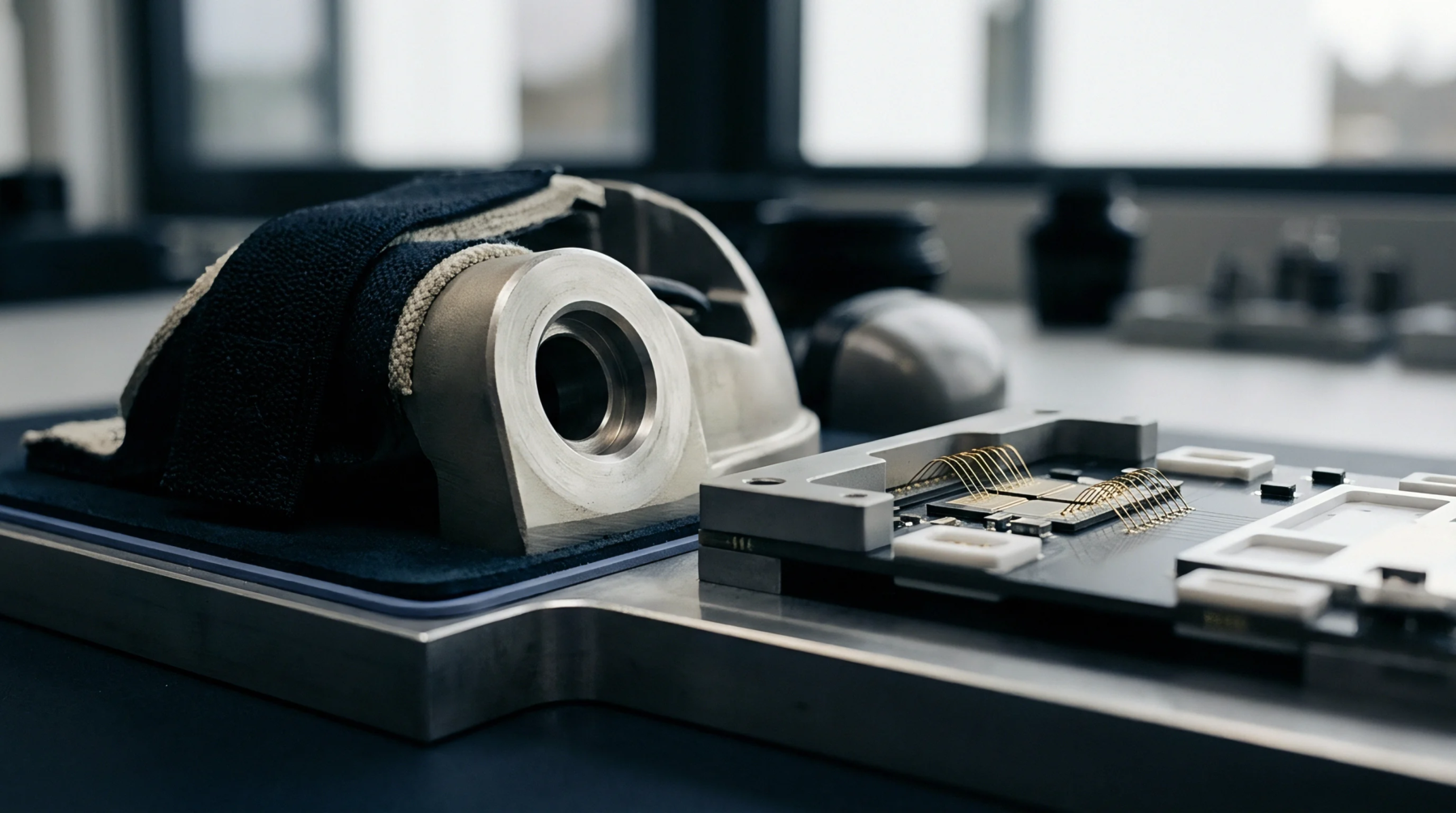
Dimensional Deformation
Mechanical displacement occurs along the Z-axis in a laminate assembly when thermal gradients or material mismatches force the board surface to deviate from its flat state. Practitioners define out-of-plane strain as the geometric distortion appearing perpendicular to the X-Y plane of a printed circuit board. Residual stresses during the curing of prepreg resins drive this physical shift.
Measurement Protocol
Optical profilometry captures the peak to valley height across the substrate surface to determine the degree of curvature. Technicians employ a laser scanning displacement sensor to map the topography of a sample under controlled temperature cycles. High precision coordinate measuring machines provide the raw data required to calculate total displacement relative to the ideal plane.
Disparities between the coefficient of thermal expansion for copper foil and glass fiber layers frequently exacerbate these vertical deviations.
Assembly Consequence
Excessive bowing or twisting prevents proper solder paste deposition and risks open circuits during the reflow process because the component leads lose contact with the land patterns. Standoff heights vary across the assembly surface when the board substrate fails to remain stable. Reliable interconnects require that the substrate maintains its flatness within industry limits during thermal excursions.
Permanent loss of board integrity follows when the internal interlaminar shear forces exceed the yield strength of the dielectric material.