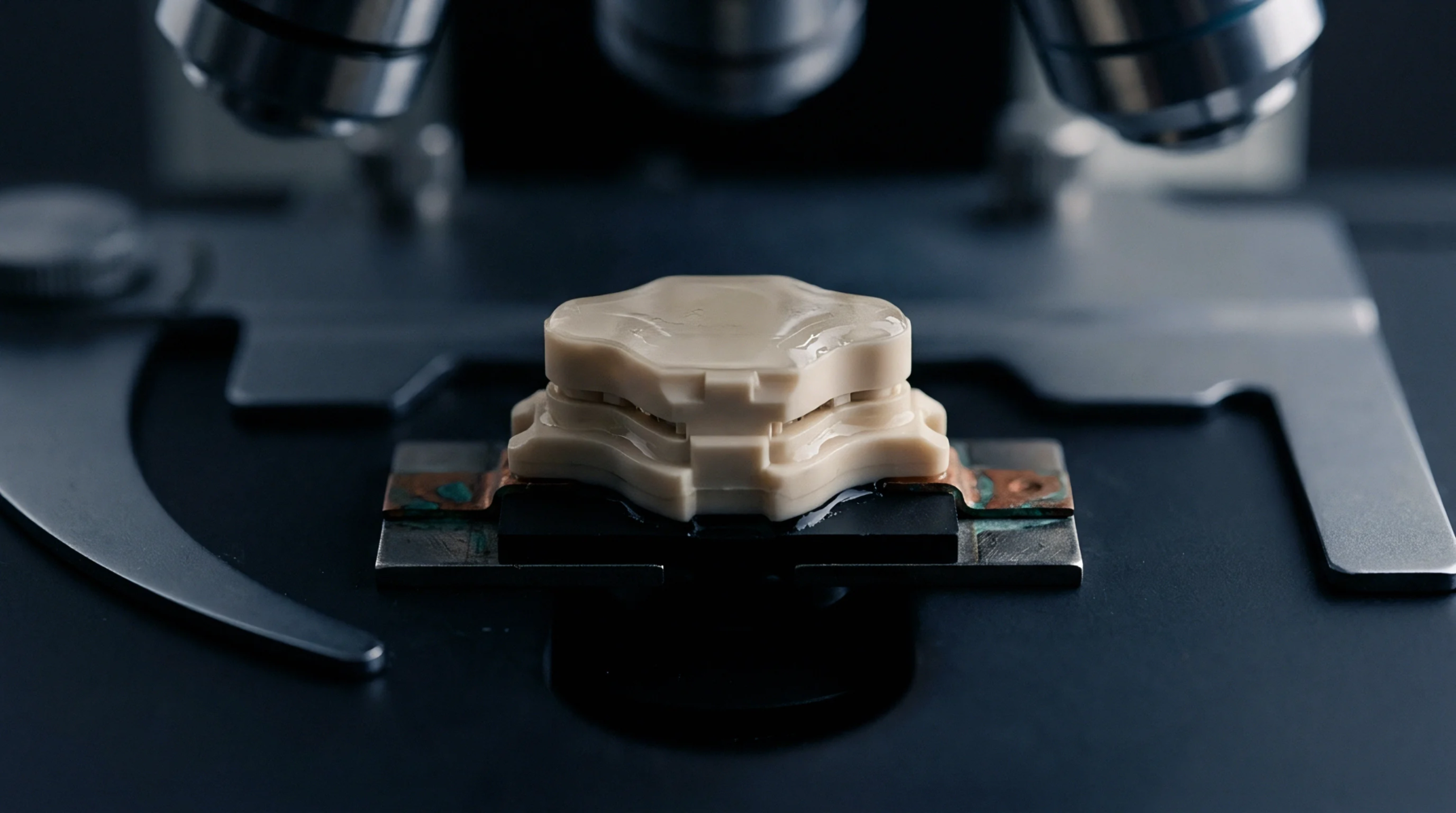
Material Variation
Directional differences in the physical, thermal, or mechanical properties of substrate materials occur due to the oriented structures of the reinforcing fibers within the matrix. This characteristic, known as package core anisotropy, leads to varying expansion and stiffness along different axes of the packaging substrate. Woven fiberglass reinforcing sheets exhibit higher strength and lower thermal expansion along the yarn directions than across the resin-rich thickness.
Understanding these directional differences is essential for predicting the mechanical response of organic chip carriers. The variance affects how the core behaves under the extreme temperatures of assembly.
Thermal Impact
Thermal expansion mismatches between the silicon die and the substrate core generate localized stresses that threaten solder joint integrity. Because package core anisotropy causes the substrate to expand at different rates in the in-plane and out-of-plane directions, the stress distribution is uneven. The copper-clad laminate behaves differently depending on the weave style of the glass cloth.
Designers must account for this directional behavior when modeling the thermal-mechanical reliability of high-density ball grid array packages.
Substrate Warpage
In-plane expansion differences cause the substrate to warp or twist when subjected to thermal cycling. This distortion leads to solder ball shearing or microvia cracking at the package boundaries. Selecting cores with balanced reinforcement patterns minimizes these directional variations and improves package co-planarity.