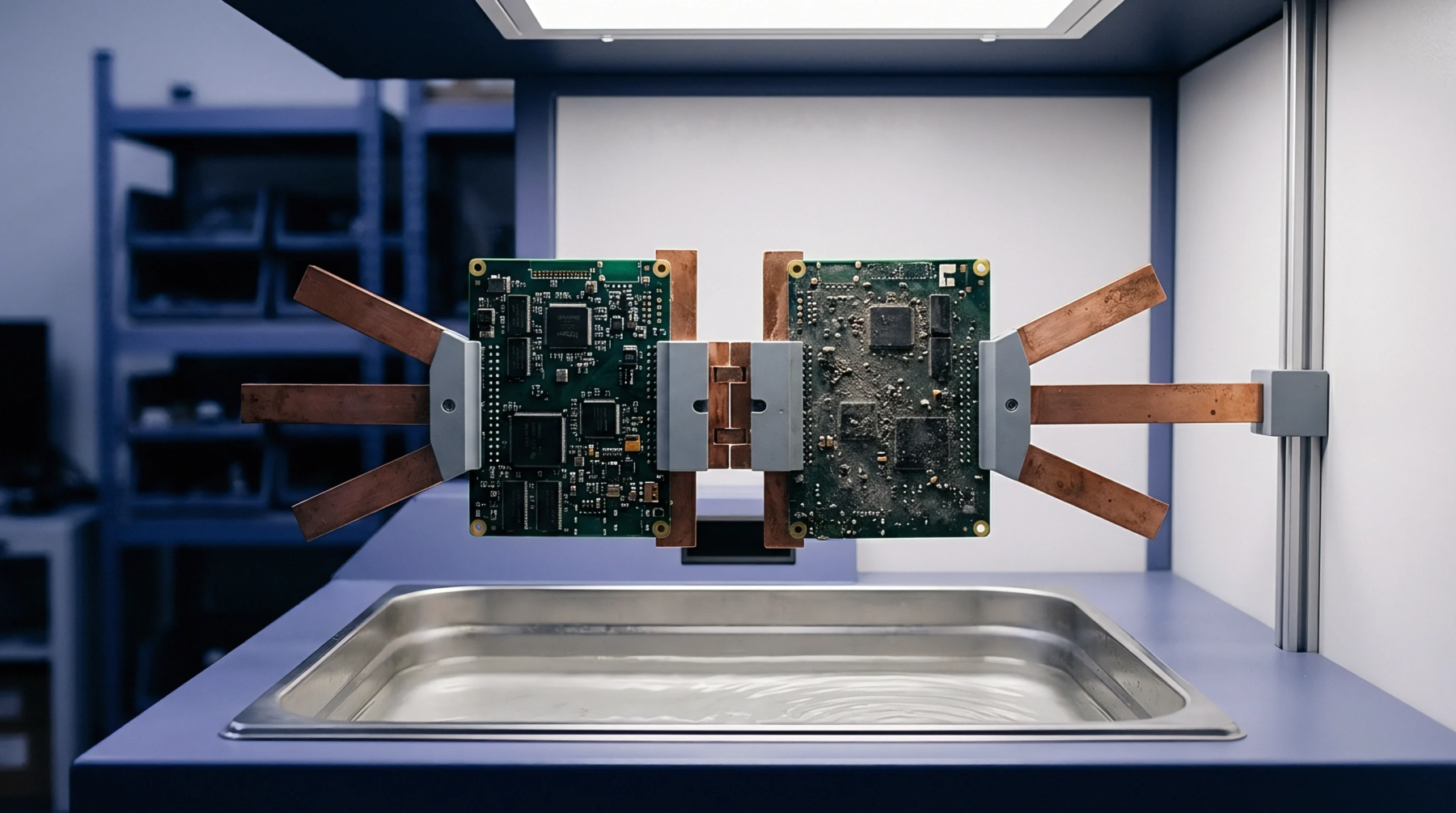
Separation Geometry
Kinetic tilt of a stencil as it lifts away from a printed circuit board determines the accuracy and volume of solder paste deposited on the surface pads. The paste release angle dictates how cleanly the solder paste separates from the aperture walls during the stencil breakaway phase, affecting the shape of the deposits.
Deposition Efficiency
Mechanical lift during the printing cycle must be carefully controlled to ensure a clean release of the paste. A suboptimal paste release angle can cause the paste to stick to the aperture walls, resulting in insufficient solder volume on the board pads. This defect often leads to open circuits or weak solder joints.
Stencil Optimization
Adjusting the separation speed and angle prevents the paste from being pulled back into the stencil. When the paste release angle is correctly calibrated, the stencil releases the paste with high fidelity, even for fine-pitch components. This optimization minimizes the need for frequent stencil wiping, thereby increasing the throughput of the assembly line and reducing the consumption of cleaning solvents.
Fine-tuning the mechanical lift profile represents a primary method for ensuring high yield in high-density surface mount technology assembly lines, where component spacing is highly restricted.