Etching Variance
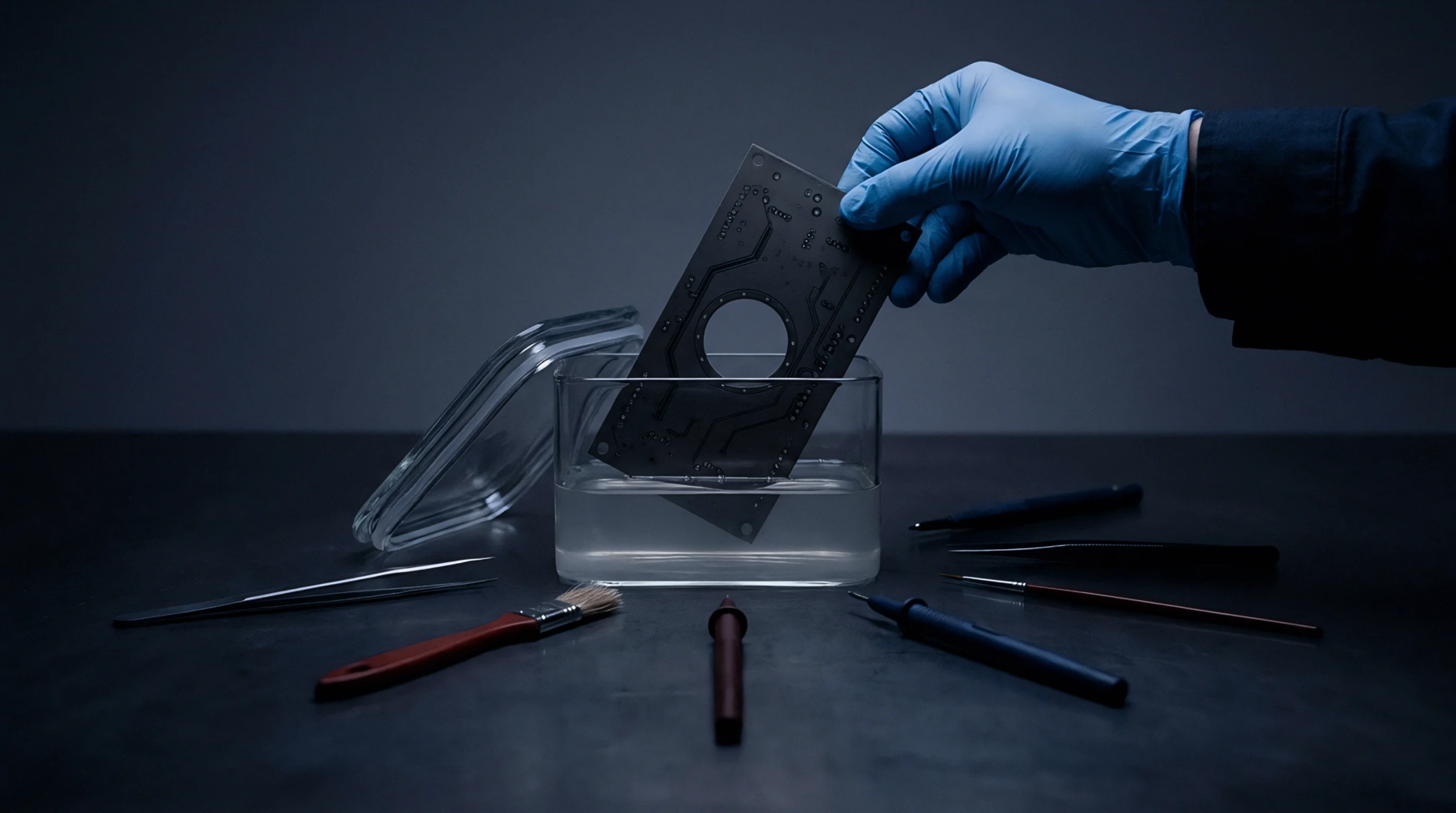
Chemical processing inside a narrow copper trace can leave behind undesirable remnants or lead to excessive metal removal. The presence of pattern wash occurs when high velocity liquid streams create uneven etch profiles across the surface of the panel. This phenomenon usually involves the lateral movement of the etchant solution under the dry film resist.
It results in conductors that do not meet the specified width at the top or bottom of the trace cross section.
Physical Displacement
Modern spray systems attempt to distribute pressure equally, yet fluid dynamics often result in pockets of higher activity near large open spaces. In areas of dense circuitry, the flow becomes restricted, but pattern wash happens in the regions where the liquid velocity increases and erodes more copper than planned. This creates an imbalance in impedance if the width deviation exceeds ten percent of the design intent.
Adjusting the spray nozzle angles or the oscillation speed of the conveyer belt reduces these localized defects. Advanced controls track the chemical concentration to prevent high activity levels from exacerbating the uneven wash away of the metal edges.
Acceptance Range
Final inspection systems use automated optical data to check that traces have maintained their straight perimeters without scalloped edges. Severe instances of this defect require the board to be scrapped to avoid signal integrity issues in high frequency applications.