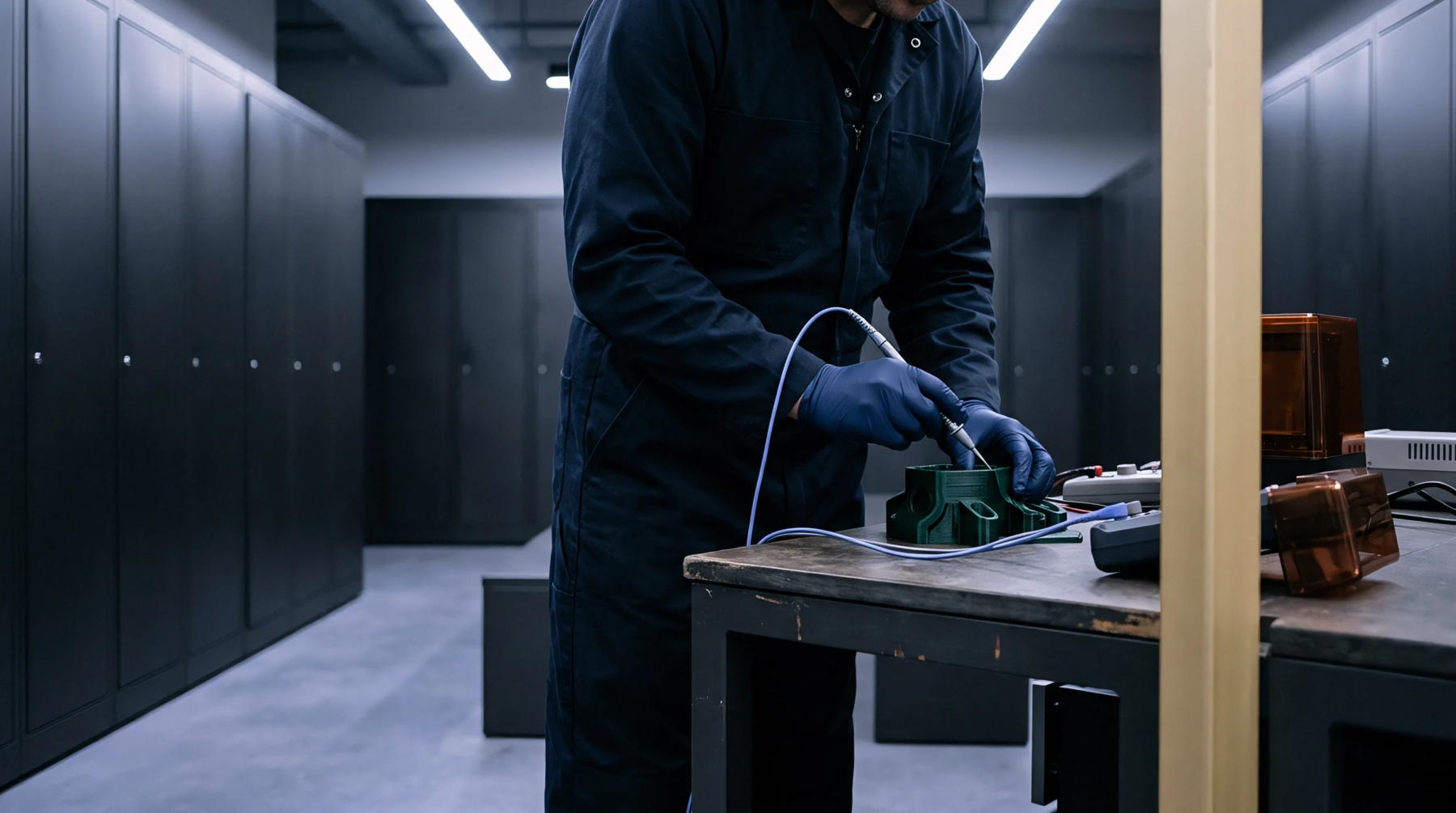
Fatigue Test
Environmental testing procedures subject populated circuit boards to controlled physical acceleration and vibration to expose latent workmanship defects before shipment. Using pcb mechanical stress screening prevents early field failures caused by weak solder joints or fractured internal vias. This screening does not simulate the actual lifetime environment but applies accelerated stresses to precipitate early failures without consuming the useful life of the assembly.
It is commonly implemented on high-reliability electronics destined for aerospace or industrial applications.
Screening Methodology
Mechanical vibration systems and pneumatic shakers subject the test boards to rapid transitions across a range of frequencies and acceleration levels. During this process, the boards are mounted in rigid fixtures to transfer the kinetic energy directly to the substrate, causing the assembly to flex and bend. This flexing triggers the failure of marginally attached solder spheres or fractured component leads that might otherwise pass standard electrical tests.
Continuous functional monitoring during the stress cycles allows test engineers to detect intermittent open circuits that only occur during physical agitation.
Reliability Limit
Physical damage to good components or excessive fatigue of healthy joints marks the boundary where the screening becomes destructive. Engineers must calibrate the intensity and duration of the stress to avoid microcracking the ceramic capacitors or damaging sensitive sensor membranes. When the screening parameters are correctly balanced, only assemblies with existing structural weaknesses fail.