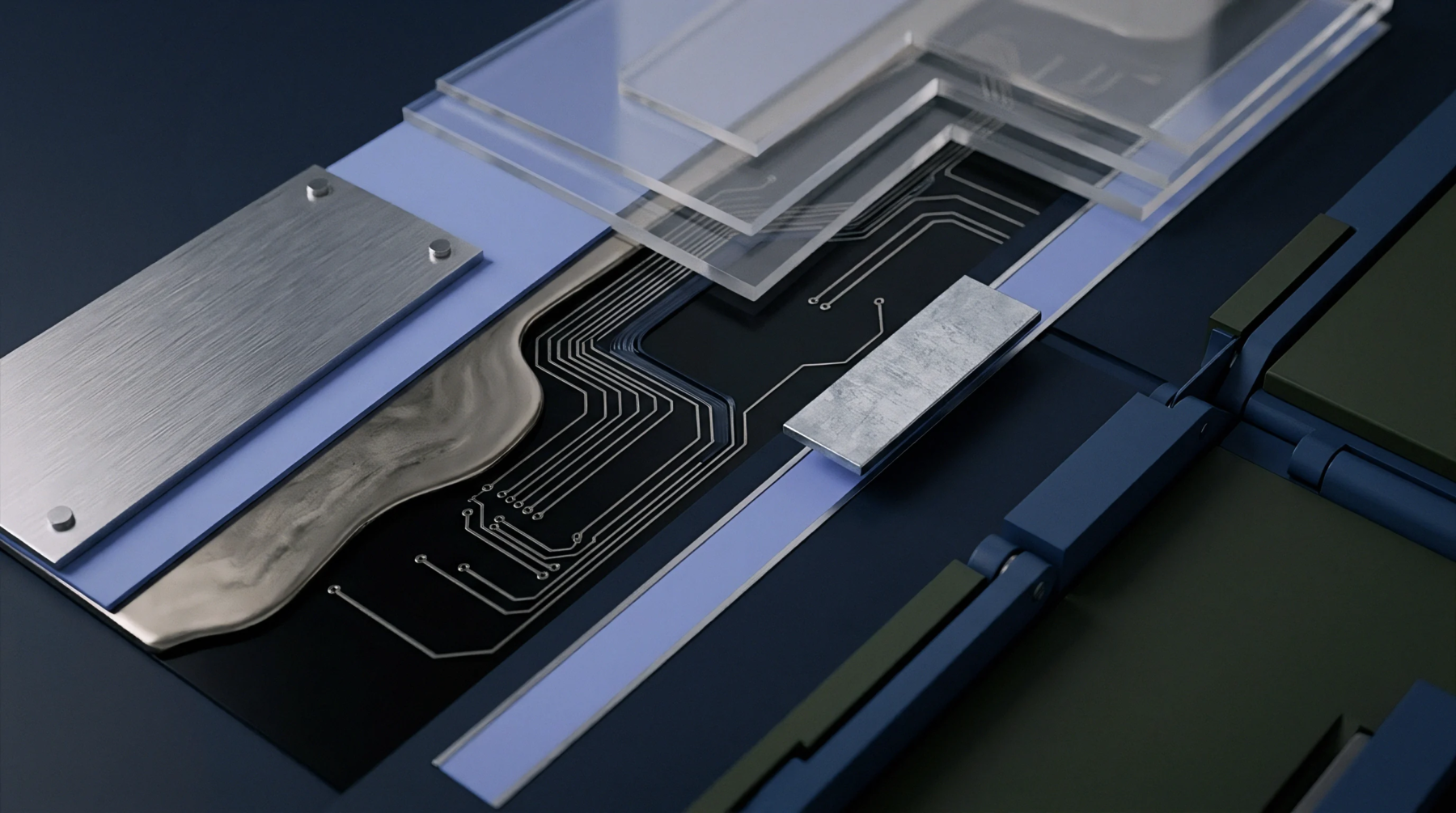
Focal Plane Synthesis
Radiographic synthesis algorithms generate focused two-dimensional horizontal slices through three-dimensional assemblies without mechanical layer destruction. Specialized automated inspection systems use planar reconstruction to isolate individual internal layers within densely populated multilayer boards and double-sided surface mount assemblies. By shifting and summing discrete X-ray transmission images collected along circular or raster projection paths, the algorithm brings features on a target z-plane into sharp focus while blurring out structures above and below.
This processing permits selective evaluation of buried power planes, inner conductor layers and specific solder ball levels. The method stops delivering artifact-free layer isolation when excessive projection angles cause neighboring high-density parts to shadow the region of interest.
Layer Separation
Inspection systems isolate top-side components from bottom-side hardware using focal synthesis techniques. Double-sided surface mount topologies generate tangled transmission images during conventional single-projection radiography, but planar reconstruction cancels opposing-side joint silhouettes through out-of-focus blurring. Engineers verify solder volume, void distribution and pin-in-paste wetting profiles on specific component layers without back-side interference.
Defect detection algorithms process the synthesized plane to measure ball diameter variations and annular ring margins on designated routing levels.
Reconstruction Fidelity
Focal slice thickness and depth resolution depend strictly on total X-ray source sweep angles and detector resolution. Narrow scanning sweeps produce thicker slice depths with residual out-of-plane ghosting, whereas broad sweep trajectories isolate thin focal depths at the cost of prolonged cycle times. Tomosynthesis algorithms compensate for non-linear blur functions using iterative deconvolution methods to restore edge sharpness.
Calibration fixtures with known metallic ball arrays map projection geometry and verify geometric alignment before inspection routines execute. Planar reconstruction remains an essential inspection methodology for complex surface-mount production lines where double-sided package layouts rule out traditional top-down X-ray imaging.