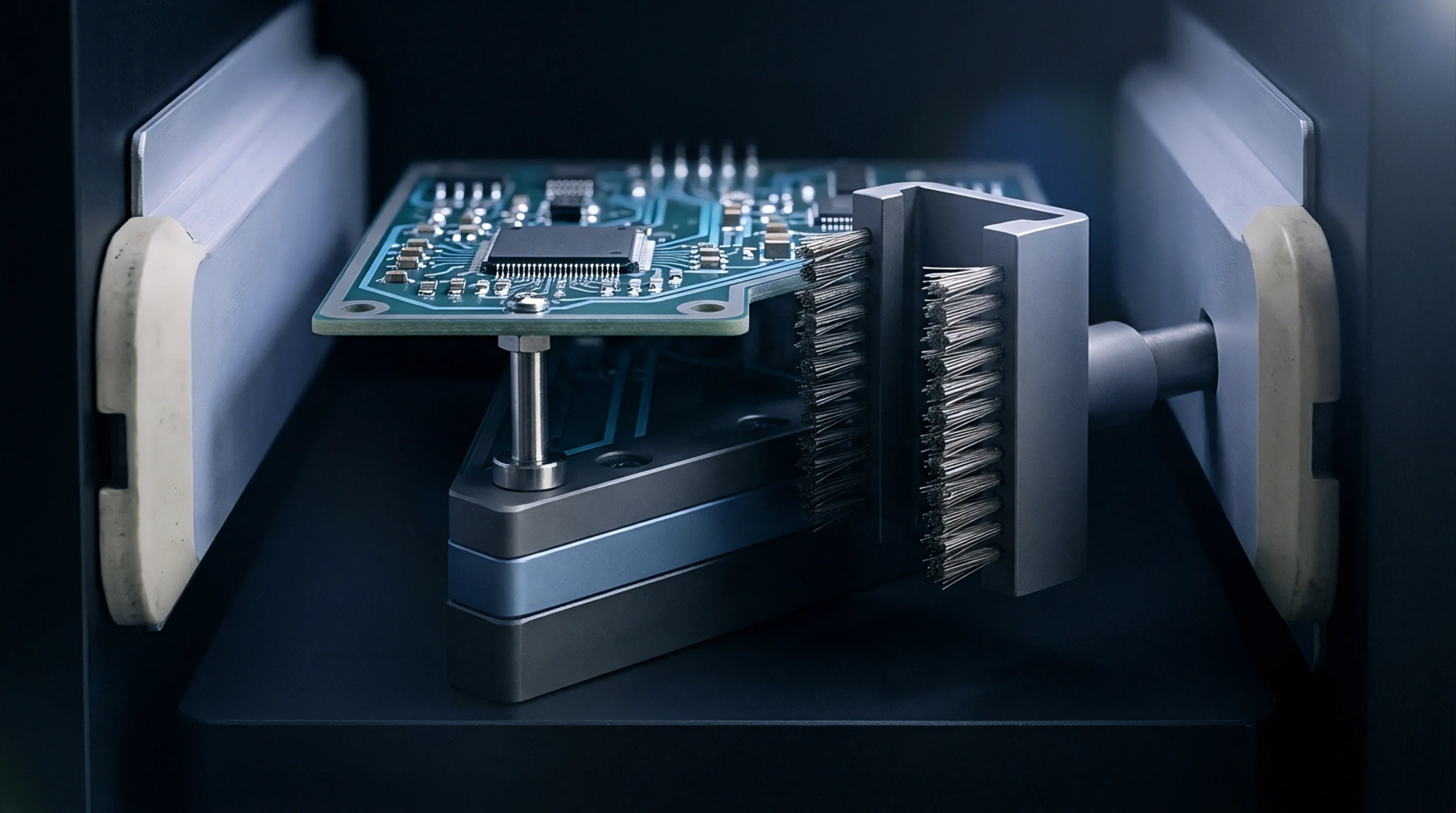
Coplanarity Deviation
Vertical variance between the solder balls on a ball grid array package dictates the physical connection quality during assembly. Planarization offset measures the specific distance separating the highest ball from a theoretical reference plane defined by the remaining contact points. This distance determines whether every lead makes firm contact with the printed circuit board pads upon reflow.
Excessive gaps prevent electrical connection and produce open circuits.
Alignment Constraint
Solder paste volume adjustments compensate for minor variations in the seating plane during the mounting process. Operators verify this gap using laser triangulation or shadow moiré systems to confirm that every ball rests within the specified tolerance zone. Components with values exceeding the limit undergo manual rework or rejection to prevent latent field failures.
Standard manufacturing tolerances for ball grid array devices typically require this offset to remain below a specific fraction of the solder ball diameter.
Surface Variation
Discrepancies in the molding process of the package body often contribute to the total measured skew. Thermal expansion coefficients during the soldering cycle introduce additional movement that modifies the final contact profile. Accurate measurement provides a baseline for predicting potential solder bridging or joint fracturing in high density interconnects.
Stable vertical profiles enable reliable mass production of complex circuit assemblies.