Dimensional Deviation
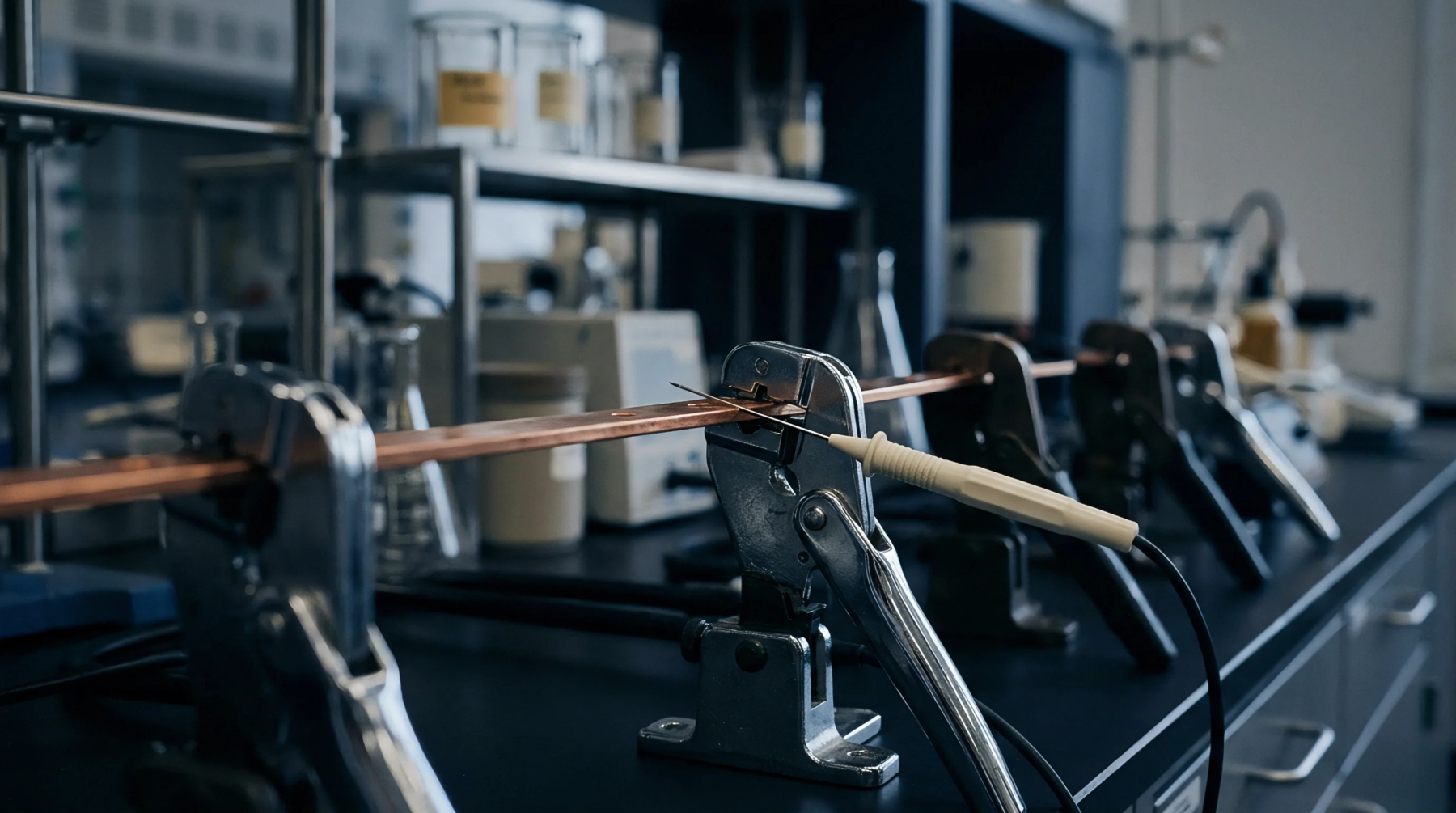
Thermal expansion mismatch during curing cycles determines the degree to which a substrate loses flatness. Polyimide flex sag occurs when unsupported areas of a circuit board deflect under gravity or residual stress. Mechanical fixtures must hold the panel during high temperature exposure to limit this deformation.
Excess movement compromises the registration of fine pitch components during later soldering steps.
Stress Mechanism
Gravitational forces pull flexible materials downward when internal tension releases at high temperatures. The polyimide flex sag behavior results from the base film softening as it reaches the glass transition point. Laminate construction variations influence how much the material yields before the cooling cycle locks the shape.
Rigid stiffeners provide support to prevent localized drooping across large unsupported spans. Engineers adjust oven profiles to manage the rate at which the material warms and cools.
Verification Protocol
Optical measurement systems track the profile of the circuit surface against a flat reference plane. Technicians quantify polyimide flex sag by calculating the maximum vertical displacement from the plane of the rigid support zones. Inspection occurs at the exit of the reflow furnace to confirm the board remains within required tolerances for pick and place equipment.
Tight control of these geometric boundaries maintains high yields in complex assemblies. Measured deflection beyond the allowance indicates an improper fixture design or incorrect material handling.