Aperture Defect
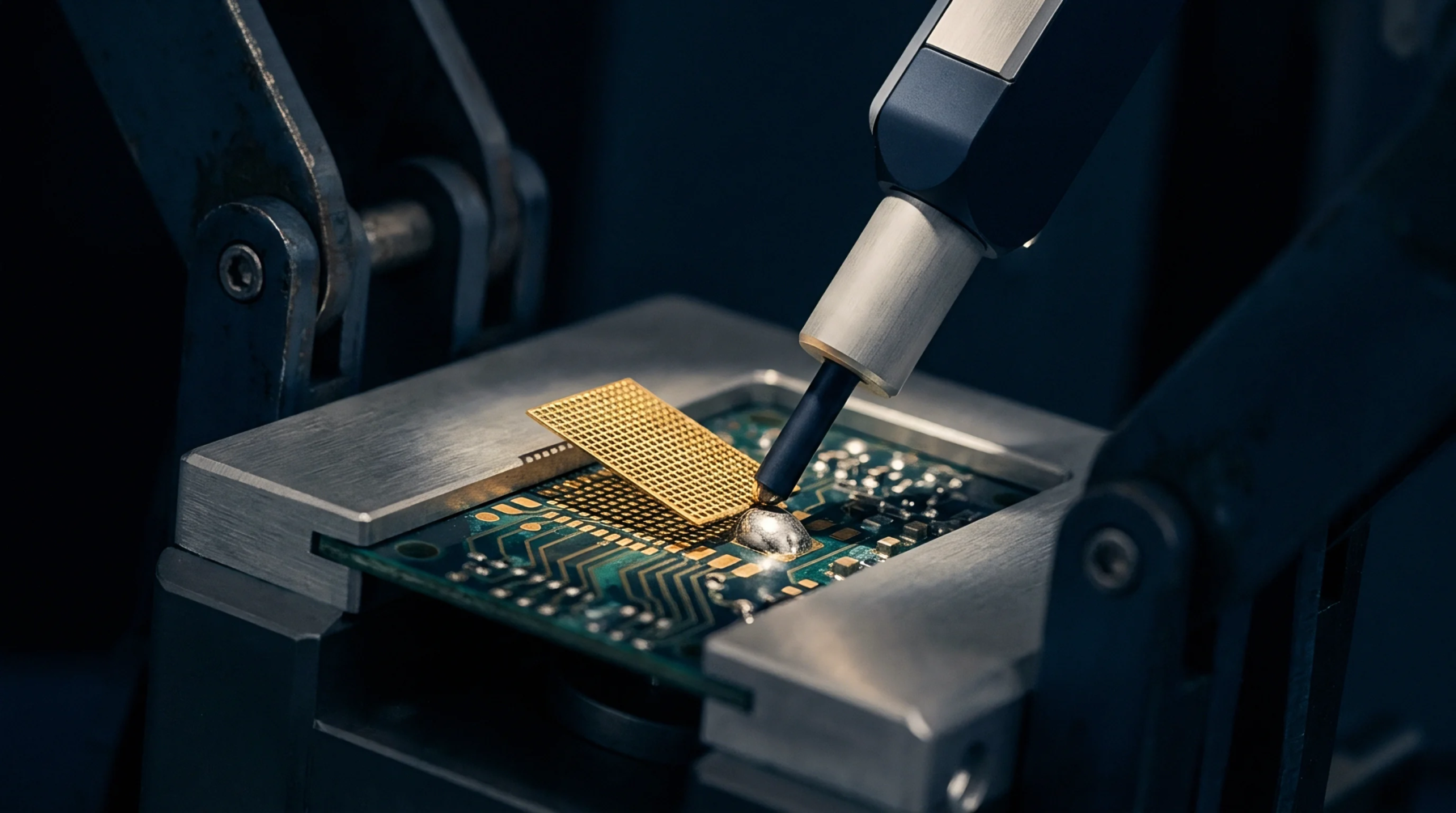
Screen printing anomalies occur when flexible squeegee blades penetrate large stencil apertures and physically extract solder paste deposits. Surface mount assembly engineers monitor print scooping because the defect reduces paste volume on large land areas such as power ground pads and thermal sinks. Downward blade deflection hollows out the deposit center, leaving an irregular concave profile across the copper pad.
Polyurethane blades produce greater cavity depth than nickel-coated stainless steel squeegees.
Volume Depletion
Solder joint integrity degrades downstream when hollowed deposits supply insufficient alloy mass to complete joint fillets during reflow. Automated three-dimensional solder paste inspection systems flag print scooping through depressed profile scans and diminished volumetric readings. Solder starvation under large integrated circuit thermal pads increases thermal impedance, leading to field failures under continuous power operation.
Bridging risks also escalate as displaced paste squeezes toward pad edges during squeegee traverse. Stencil designers mitigate this cavity defect by segmenting broad apertures into arrays of smaller individual openings, creating bridging webs that support the squeegee edge. Reduced squeegee pressure and harder blade compounds limit blade entry into exposed aperture pockets.
Process Limitation
Squeegee angle adjustments can minimize cavity formation, but lower attack angles increase vertical hydrodynamic lift forces on the paste bank. Thinner stencils reduce absolute paste volume, making print scooping far more catastrophic for component stand-off height preservation. Process acceptance standards reject printed panels when deposit volume drops below eighty percent of nominal aperture capacity.
Inline optical profilometers verify that remaining solder paste height satisfies minimum solder fillet requirements. Squeegee speed increases exacerbate paste excavation when paste formulations display insufficient yield stress under high shear. Solder mask dam height adjacent to large lands also influences blade deflection during printing passes.