Internal Tension
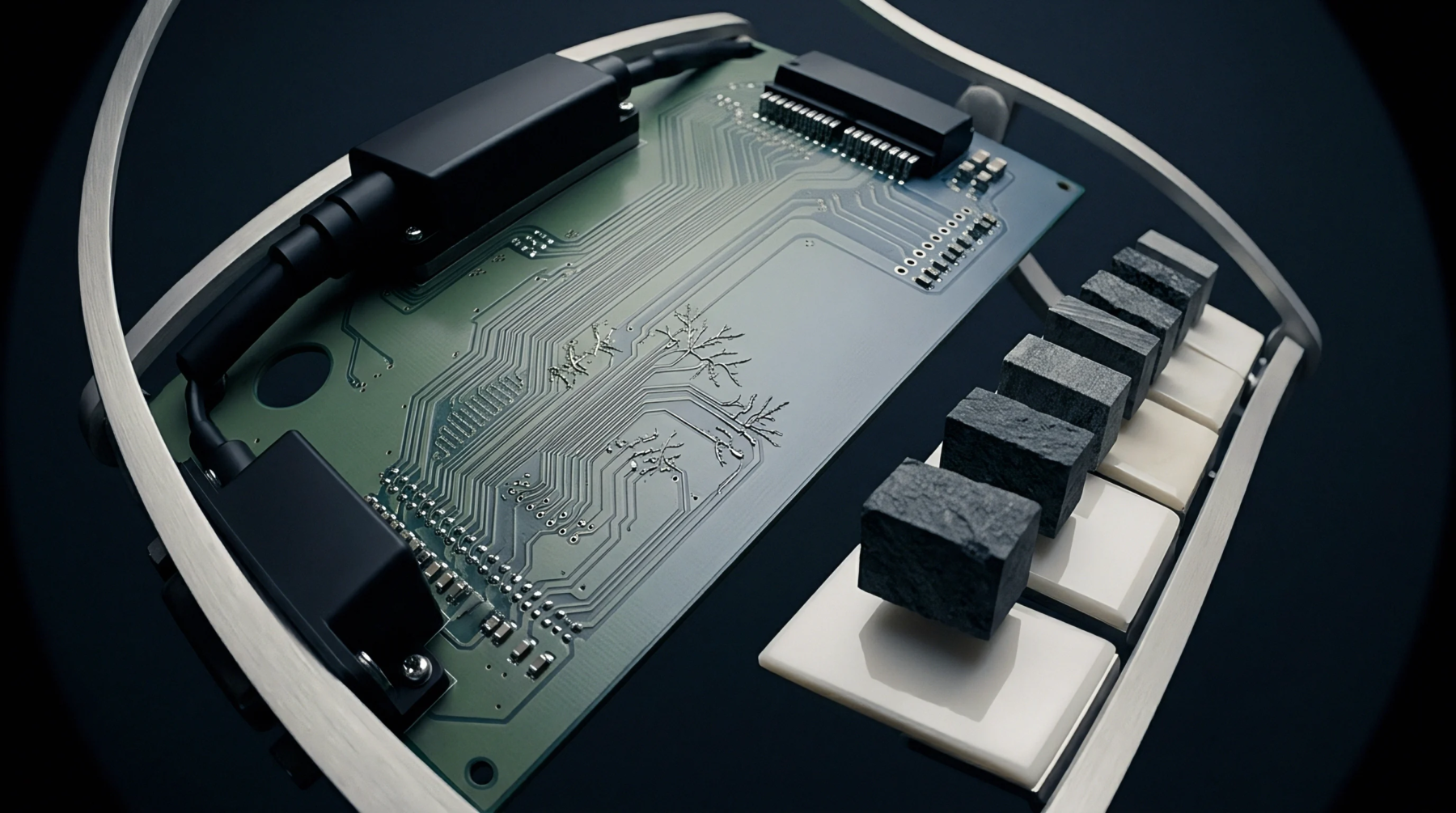
Residual mechanical forces develop within the organic matrix of a circuit board as the polymer molecules crosslink during heat treatment. This tension, called resin cure stress, arises because the curing resin contracts while constrained by the glass-weave reinforcement. It creates internal shear stress at the interface between the metal traces and the dielectric layer.
This force remains locked within the board after the manufacturing process completes.
Thermal Cycle
The magnitude of the internal tension depends on the rate of chemical conversion and the mismatch between thermal expansion coefficients. During the lamination cycle, the liquid epoxy resin transitions from a fluid state to a highly crosslinked solid. If the cool-down phase of the lamination cycle is too rapid, the polymer chains do not have enough time to relax.
This rapid cooling locks the high-temperature state of the polymer into the rigid glass structure, resulting in high frozen-in stresses. These stresses are amplified when asymmetric copper layouts are used on the outer layers. The unbalanced metal density causes the substrate to relieve the locked stress by twisting or bowing.
This mechanical instability complicates the automatic placement of fine-pitch components during assembly.
Warpage Evaluation
Warpage analysis machines utilize shadow moire patterns to measure the flat profile of the board under simulated soldering temperatures. Post-cure baking steps are often employed to release the resin cure stress before the panels are sent for component assembly. Proper stack-up design with symmetric copper distribution helps distribute these internal forces evenly to prevent deformation.