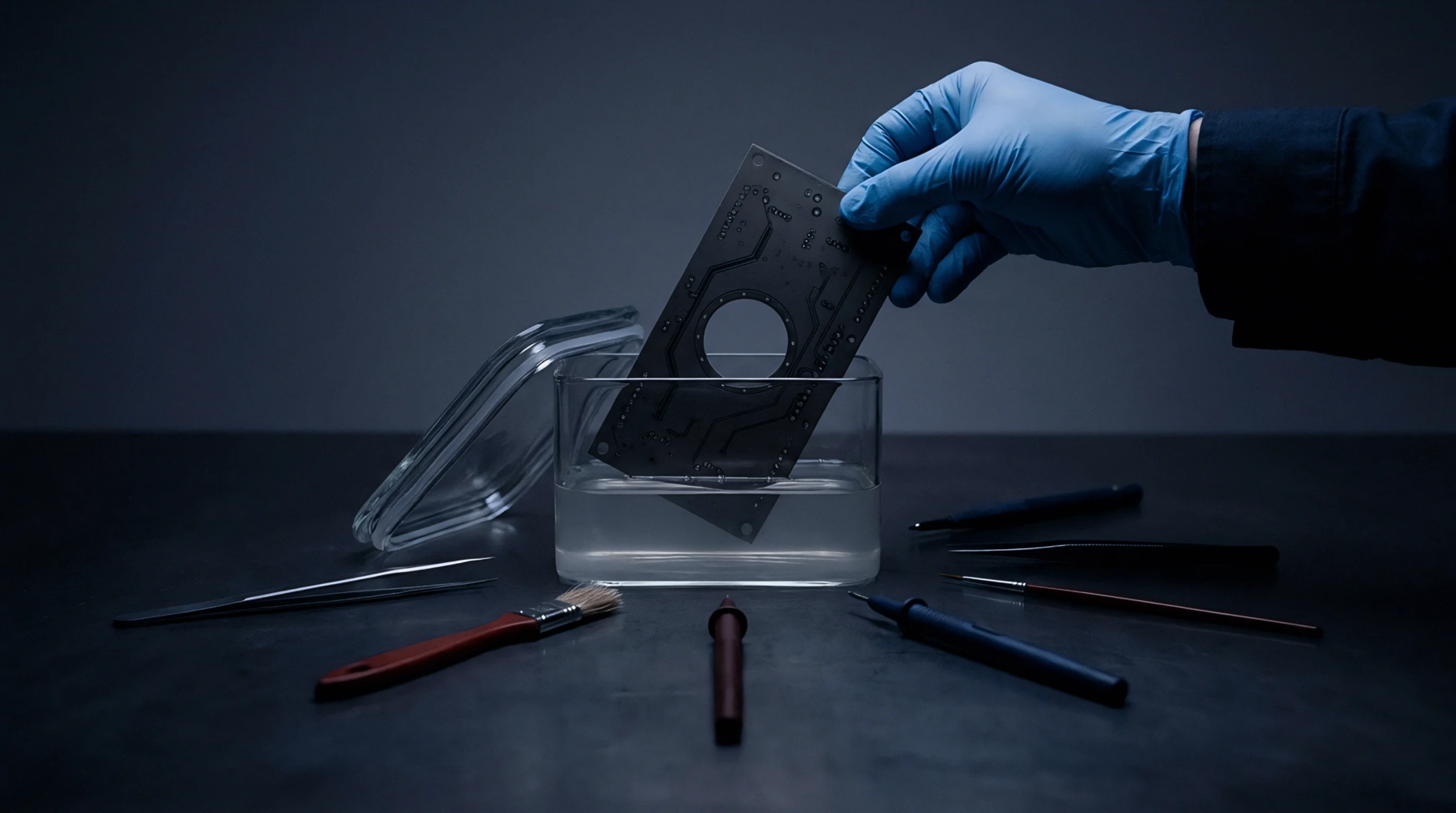
Alloy Erosion
Kinetic measurements quantify the speed at which solid metals dissolve into a molten solder bath. The sac305 dissolution rate is particularly important when using lead free alloys that have a high tin content, which is chemically aggressive toward copper. As the molten solder flows over a circuit board or through a wave soldering machine, it pulls copper from the traces and pads into the liquid solution.
Excess copper contamination changes the melting point and flow characteristics of the solder.
Copper Leaching
Thin copper foils on high density boards are vulnerable to being completely consumed if they stay in contact with the liquid alloy for too long. Measuring the sac305 dissolution rate allows engineers to set maximum dwell times for wave soldering and rework operations. A higher temperature significantly increases the speed of this metal loss, meaning that a small increase in the solder pot temperature can lead to open circuits.
Protective coatings or nickel barriers are sometimes used to slow this process when multiple heat cycles are required. Monitoring the copper concentration in the solder pot provides an indirect measure of how much material is being lost from the products.
Reliability Margin
Mechanical strength in a solder joint depends on a healthy intermetallic layer rather than a depleted copper pad. If the sac305 dissolution rate is left unmanaged, the copper foil becomes too thin to support the physical stresses of the application. Engineers verify the remaining copper thickness through cross sectional analysis to ensure that the finished assembly meets the required performance standards.