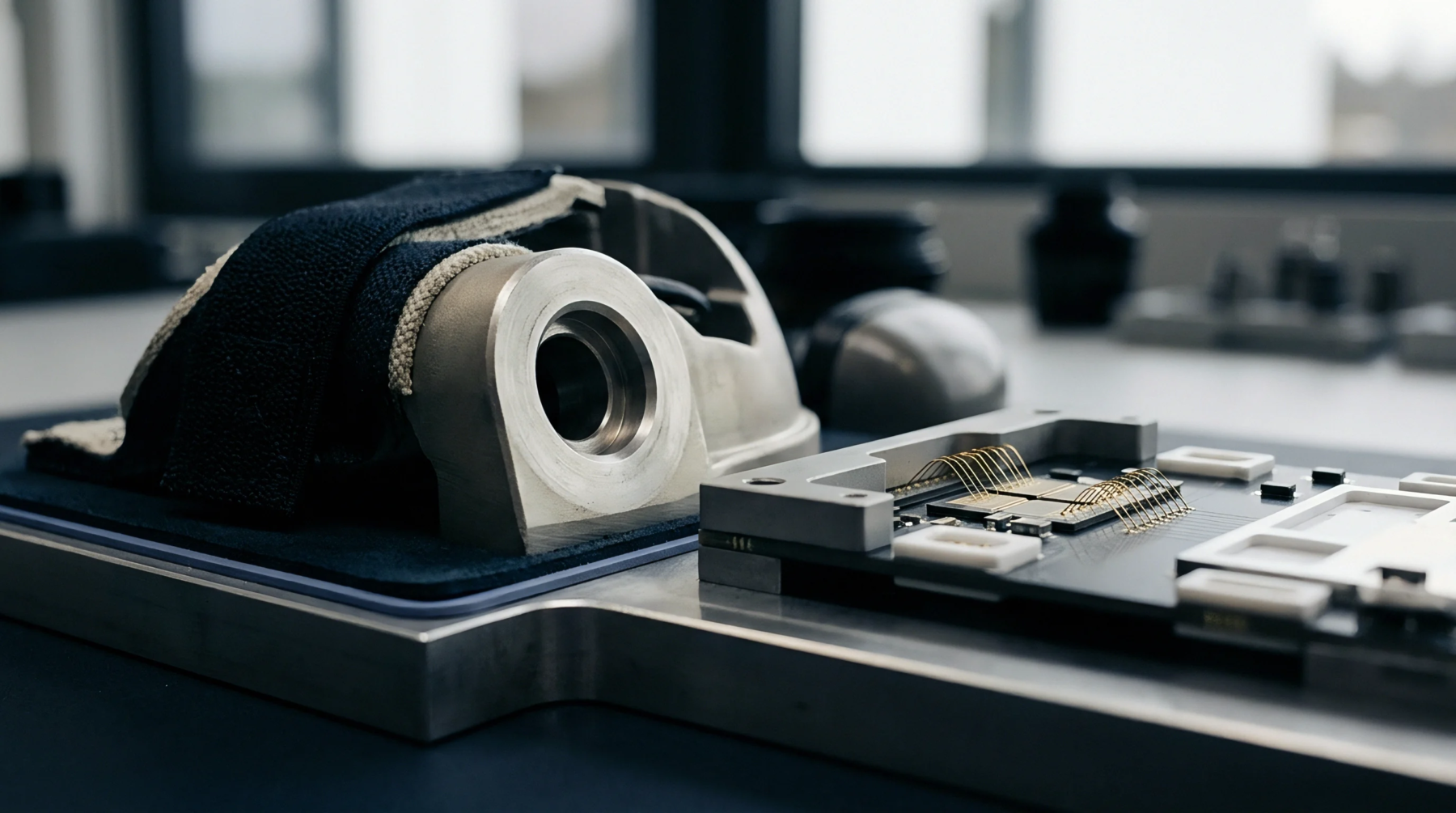
Tooling Classification
Rigid ground steel or aluminium plate inserted between individual printed circuit board panels inside a lamination press book to distribute pressure and heat evenly. A separator caul plate provides flat parallel contact surfaces, preventing surface defects and resin thickness variation across lamination loads. Standard IPC-4101 material specifications outline thermal performance requirements for lamination press tooling.
The definition applies to rigid tooling plates used within multilayer press books and excludes sacrificial release films.
Thermal Transfer
High mechanical flatness and surface finish quality determine the transfer accuracy of hydraulic press pressure to laminate panels. Thermal mass within heavy metal plates absorbs heat from press platens, regulating temperature ramp rates across inner-layer prepreg stacks. Surface scratches or distortion on caul plates transfer directly onto outer copper foils, creating topography defects that cause etching defects downstream.
Routine surface polishing maintains plane parallelism, preventing localized pressure drops that cause internal resin voids. Tooling thermal expansion must match press platen movement to avoid panel shearing.
Tooling Maintenance
Coordinate measuring machines check surface flatness across caul plate surfaces to detect warping beyond specified tolerances. Optical profilometers measure surface roughness parameters to ensure compliance with copper foil contact requirements. Plates exceeding deflection limits undergo re-grinding or scrap disposal.