Tooling Component
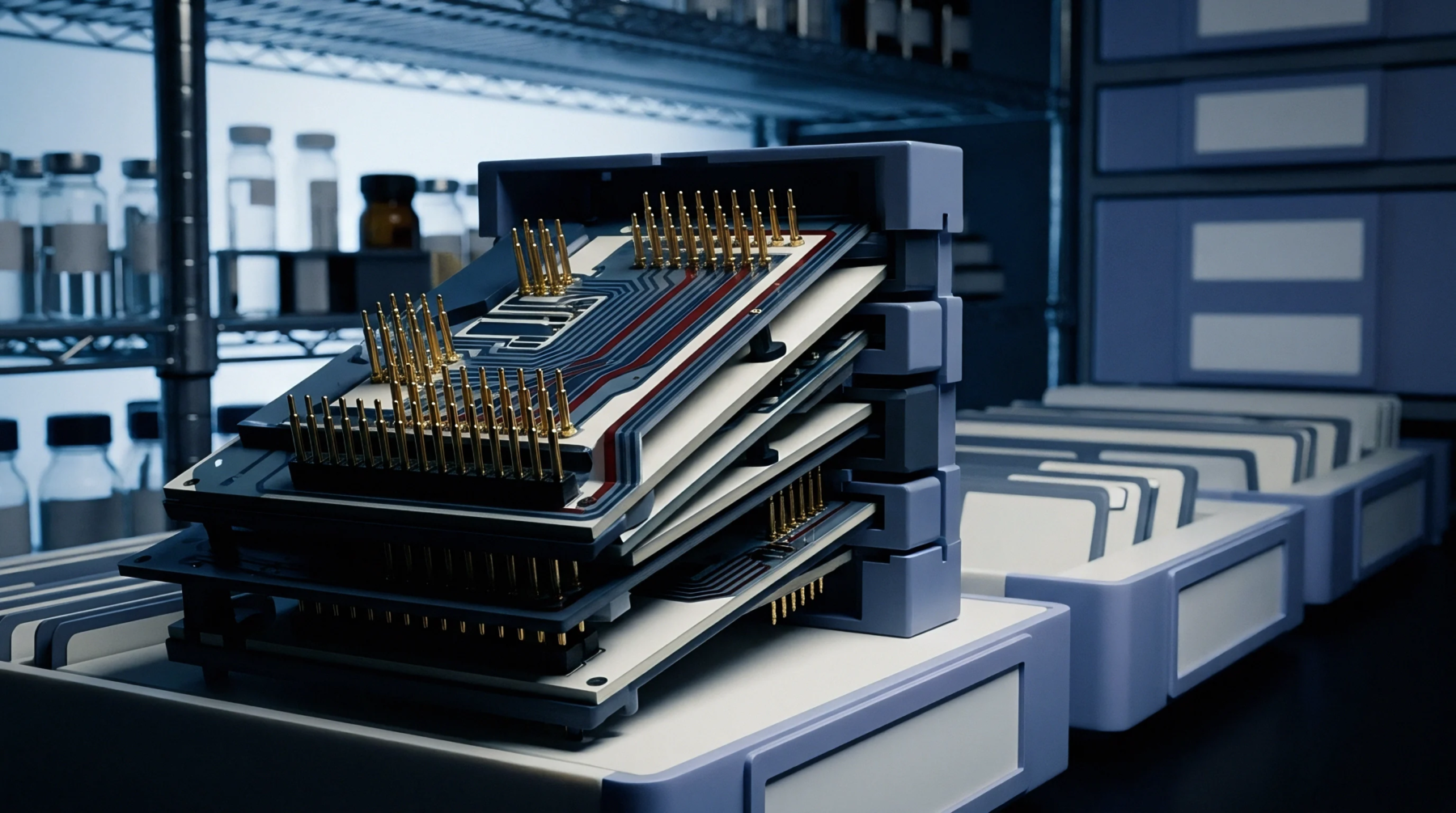
Polished stainless steel sheets divide individual board panels inside a multi-opening vacuum press during the lamination process. Manufacturing lines utilize separator plates to ensure a uniform surface finish and to transfer heat evenly to the epoxy-glass stack. These plates must remain perfectly flat and scratch-free to prevent surface defects from transferring onto the copper foil of the circuit boards.
This step ensures that each layer is cured under identical thermal and physical conditions. By maintaining precise parallelism, the plates minimize thickness variations across the finished panels.
Material Constraint
The steel plates must withstand extreme pressures of up to four hundred pounds per square inch and temperatures exceeding two hundred degrees Celsius. High-tensile stainless steel alloys are selected to prevent thermal warping or mechanical deformation over repeated heating and cooling cycles. Regular maintenance schedules include mechanical cleaning and surface polishing to remove any resin residue that could cause indentations on subsequent board panels.
Operational Life
The plates are handled by automated loaders to prevent human oils and scratches from degrading the polished surfaces. Over time, repeated thermal stress causes micro-cracking and loss of flatness, requiring the plates to be reground or replaced. Keeping these plates in optimal condition is necessary to maintain the tight dielectric tolerances demanded by high-frequency circuit designs.