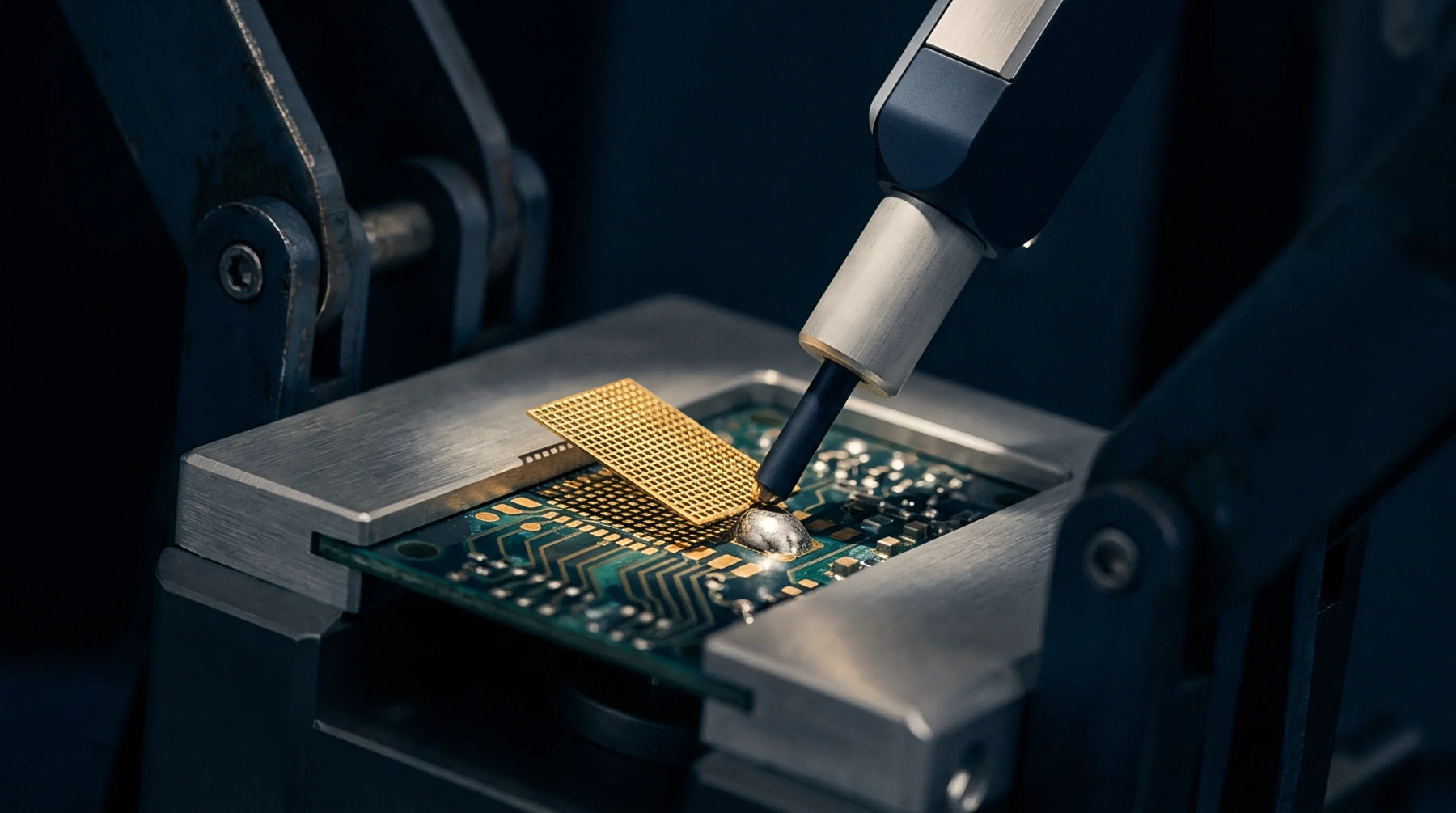
Material Integrity
A crystalline separation within the intermetallic compound layer of a solder joint occurs during thermal or mechanical stress cycles. This solder ball micro fracture propagates through the thin reaction zone between the lead and the substrate pad, potentially compromising the electrical path. Brittle failure occurs when the mechanical load exceeds the fatigue limit of the fragile bond.
High copper content or improper ramp rates during reflow promote the formation of these delicate intermetallic layers.
Detection Strategy
Automated optical inspection remains incapable of identifying these subsurface discontinuities because the external geometry of the joint appears intact. X-ray imaging techniques occasionally reveal the feature if the crack width allows sufficient attenuation differential for the sensor. Cross-sectional analysis via scanning electron microscopy provides the primary method for confirming the presence of the defect after the assembly fails functional verification.
Engineers perform dye and pry tests to expose the fracture planes on suspected non-conforming joints.
Failure Mechanism
Thermal expansion mismatches between the ceramic package and the printed circuit board generate shear forces that concentrate at the board interface. The fracture grows until the electrical connection becomes intermittent or fails entirely under vibration. Constant temperature fluctuations force the separation to expand along the grain boundaries of the brittle intermetallic phase.
The physical break stops conducting current once the gap distance exceeds the threshold for contact.