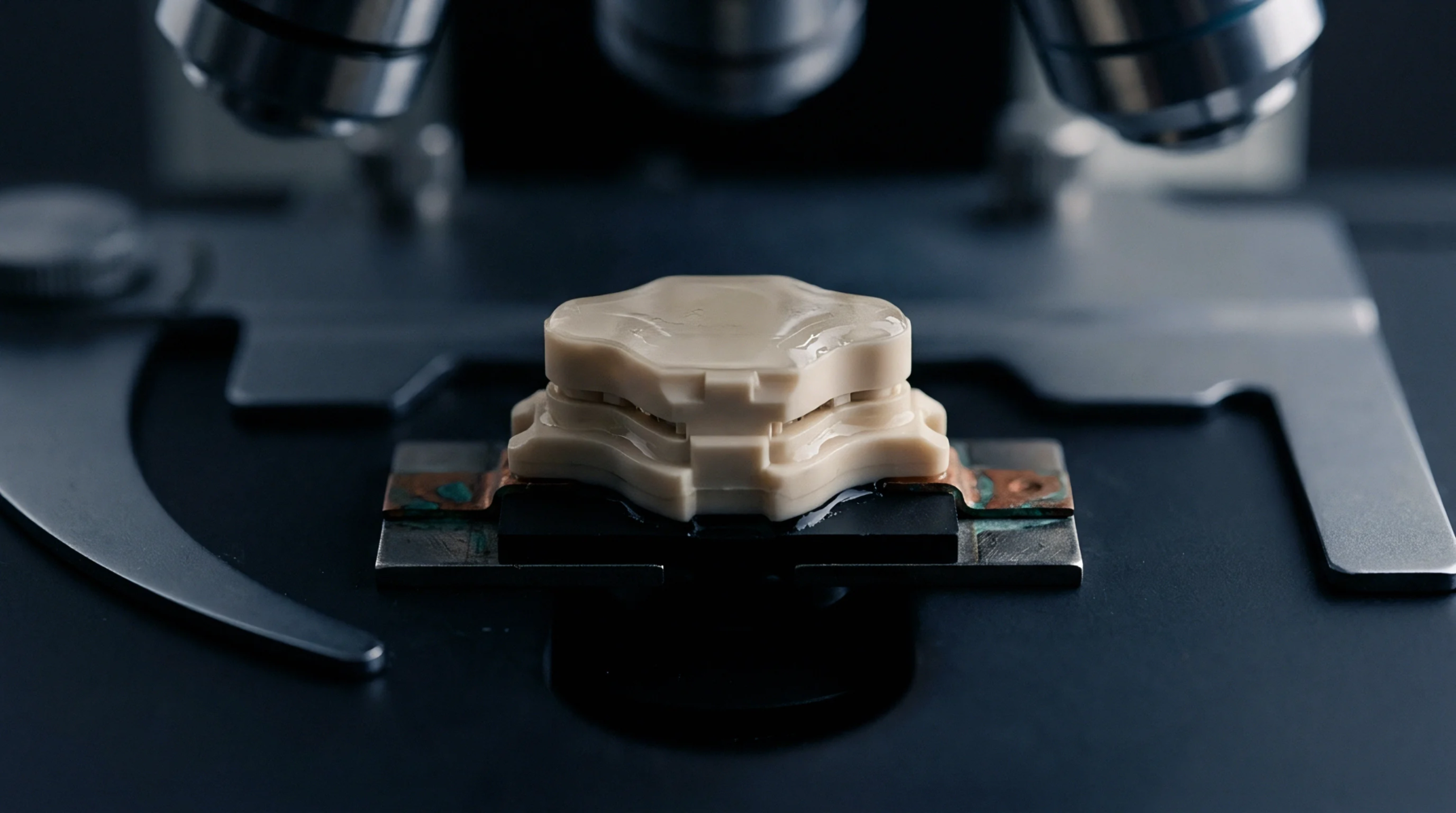
Plastic Displacement
Progressive structural damage accumulated through repeated plastic deformation causes mechanical rupture in surface-mount electronic interconnects exposed to thermal cycling. Cyclic temperature changes create severe strain range conditions that drive solder joint low cycle fatigue in electronic assemblies. Dissimilar thermal expansion coefficients between silicon IC packages and organic PCB laminates generate cyclic shear displacement.
The mechanism operates under high strain amplitudes where plastic strain dominates elastic strain during every thermal excursion.
Strain Accumulation
Thermal cycling pushes solder materials past their yield point into non-linear plastic strain regimes. Fatigue damage accumulates rapidly in solder joints because operating temperatures represent a high fraction of the alloy melting point. Coarsening microstructures concentrate shear strain along grain boundaries and intermetallic interfaces.
Micro-cracks initiate at stress concentration points along fillet margins and coalesce into macro-cracks across the primary load-bearing path.
Failure Threshold
Coffin-Manson empirical relationships predict cycle count to failure based on plastic strain range per thermal cycle. Test protocols subject assembly test vehicles to accelerated thermal cycling between negative forty and one hundred twenty-five degrees Celsius. Continuous resistance monitoring detects micro-crack propagation when joint electrical resistance increases above baseline thresholds.
Proper component pitch selection and underfill encapsulation mitigate cumulative fatigue damage in high-reliability applications. Reducing component footprint dimensions decreases overall thermal expansion mismatch forces driving solder joint fatigue.