Resonant Structure
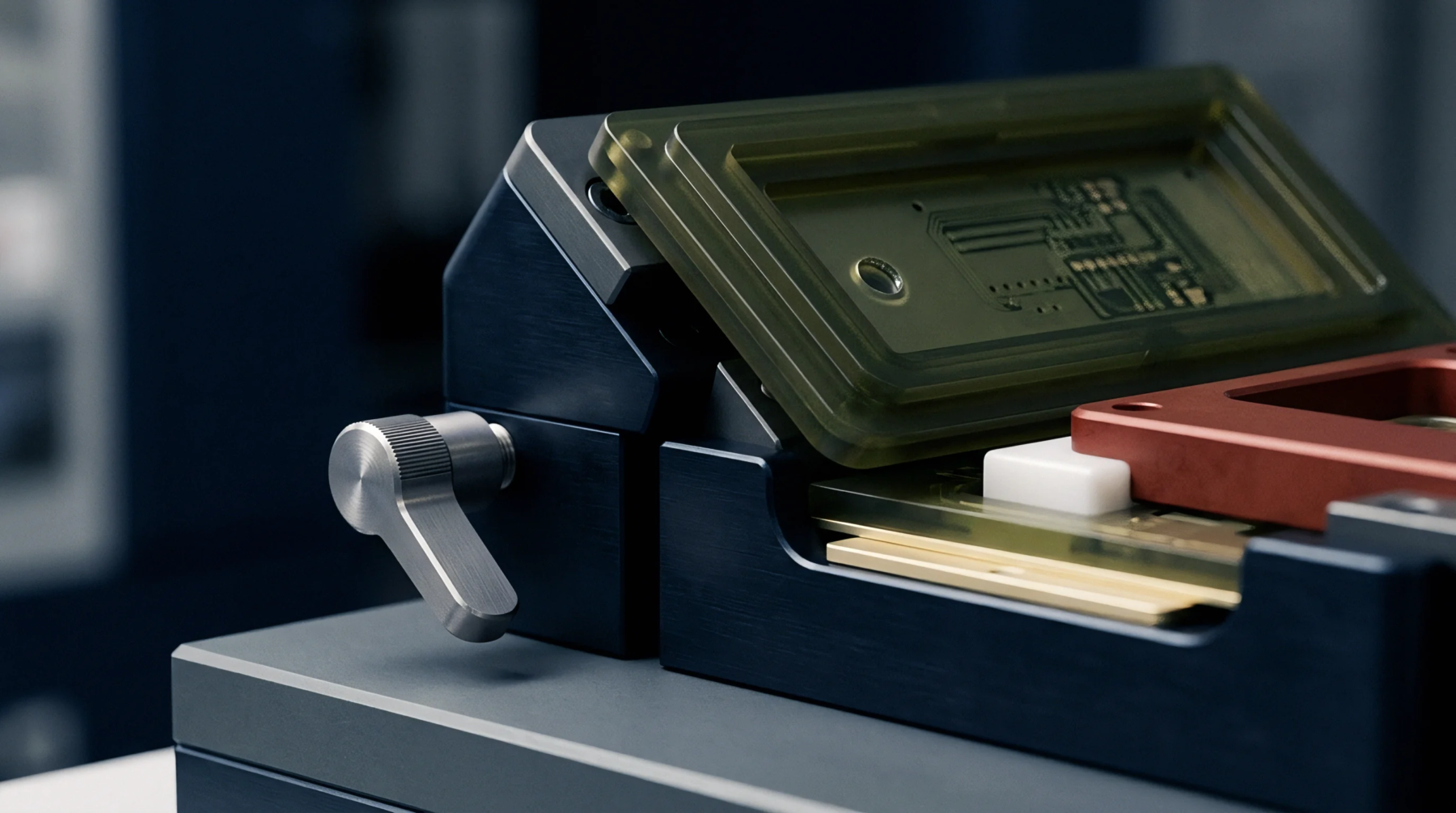
High-frequency material testing employs specialized resonant enclosures to measure the permittivity and loss tangent of dielectric sheets. The split-post cavity acts as a precise measurement fixture, utilizing two separate dielectric posts aligned along a single axis with a small gap between them. The split configuration concentrates the electromagnetic field in the gap, allowing direct insertion of the material under test.
Measurement Sequence
During a measurement, the test operator first sweeps the empty fixture to establish the baseline resonant frequency and quality factor. Next, inserting a laminate sample into the split-post cavity shifts the resonant frequency and reduces the quality factor due to the dielectric properties of the material. Computer software calculates the complex permittivity and loss tangent from these observed shifts in the resonant response.
The non-destructive test takes only a few seconds and requires no special sample preparation or copper cladding removal. Precise control of the gap size and alignment ensures that the measurement is highly repeatable across different material batches.
Material Evaluation
Dielectric characterization using this method is ideal for high-speed circuit boards where signal loss must be kept to a minimum. Laminate manufacturers use these measurements to verify that each production batch meets the required specifications for high-frequency performance. Constant monitoring of material properties helps maintain consistent impedance across complex multi-layer boards.