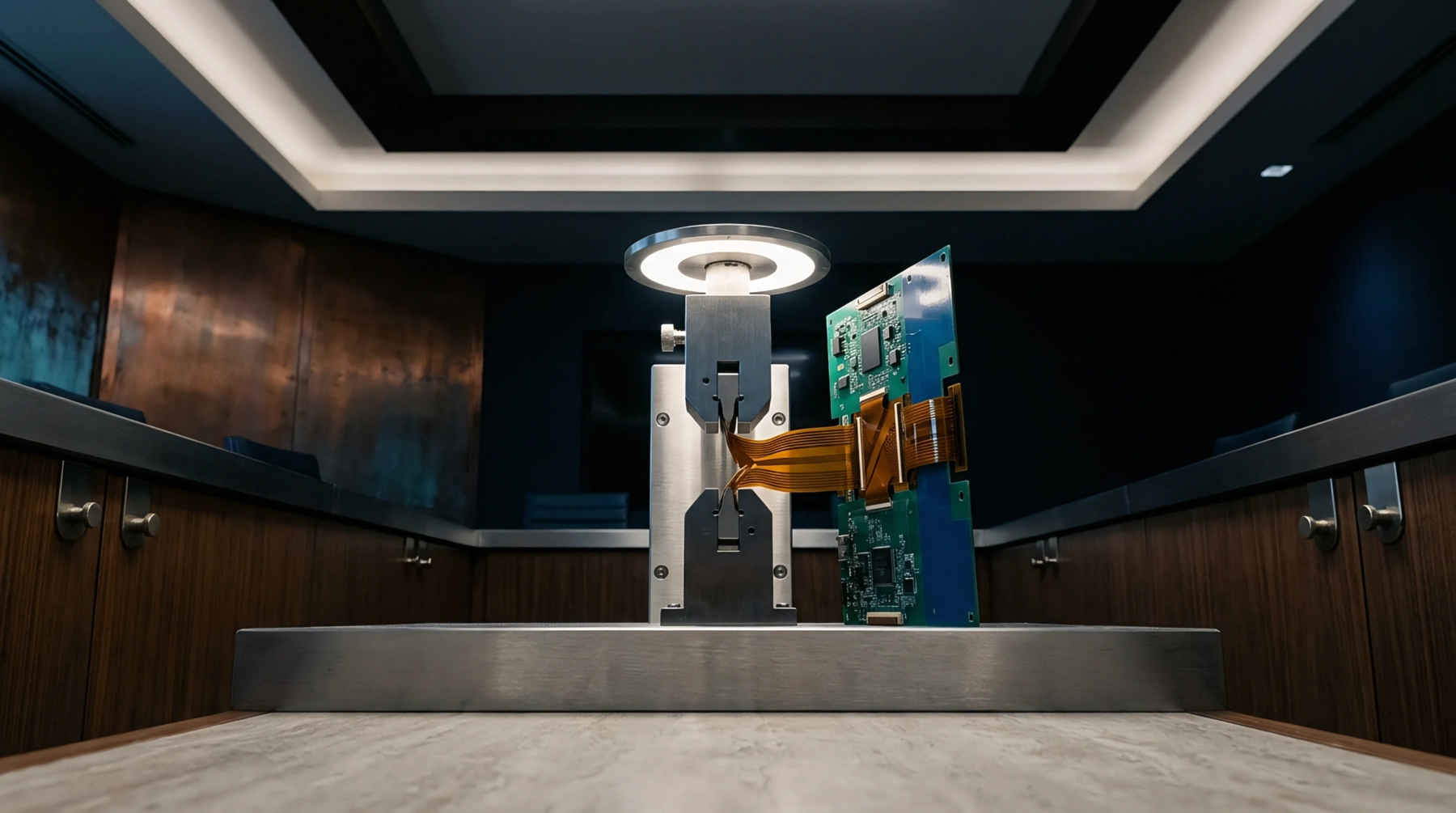
Thermal relaxation Measurement
Molecular rearrangement velocity describes the rate at which polymer chains return to an equilibrium state after the removal of an external load. Within structural recovery kinetics, the speed of this return dictates the dimensional stability of molded dielectric substrates. Heat cycles encountered during subsequent surface mount soldering trigger internal stress release.
Excessive velocity in this transition leads to board warping or shifting of copper features.
Material Elasticity Constraint
Deformation energy accumulates inside laminate materials when layers undergo compression or stretching during the lamination phase. Structural recovery kinetics dictate how rapidly these trapped forces dissipate upon exposure to high processing temperatures. Manufacturers monitor the transition threshold to prevent solder joint fractures caused by substrate motion during reflow.
Controlled cooling rates effectively slow down these molecular shifts to preserve the registration of fine pitch components.
Process Stability Metric
Latent stress profiles define the duration required for a material to reach a neutral mechanical state after exiting the press. Structural recovery kinetics characterize the window of time where board dimensions remain vulnerable to permanent alteration. Deviations in the expected rate signal inconsistencies in the raw resin batch or the curing profile.
Accurate prediction of this time constant ensures that rigid structures maintain their alignment through every thermal excursion.